Pump problem

Cavitation Explained

Cavitation happens when vapor bubbles form and collapse inside a pump. It often points toward poor inlet conditions, excessive restriction, wrong operating range, or a system asking the pump to do something it should not do.

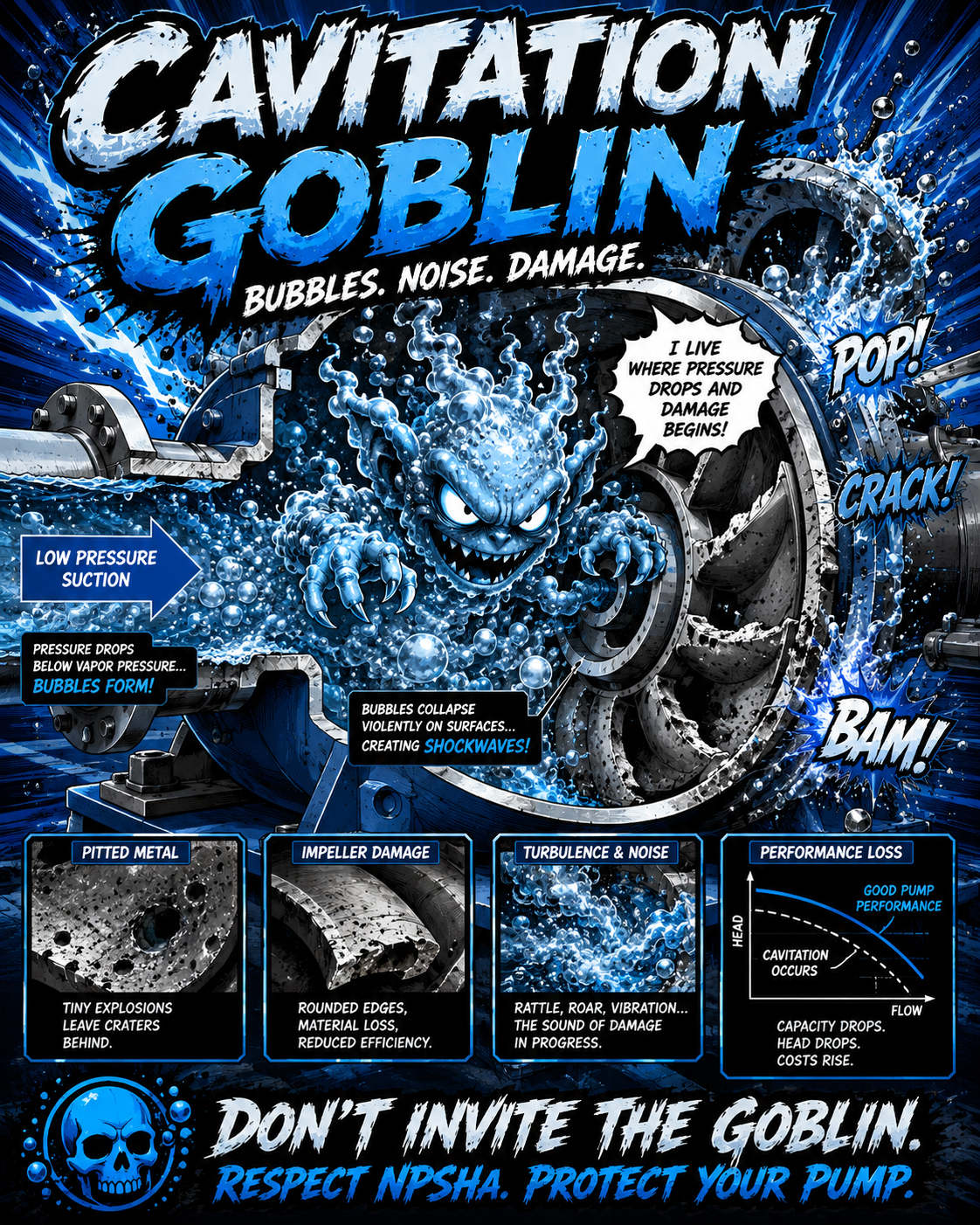
Cavitation bubbles and Cavitation Goblin damaging a pump system

Plain-English answer

Cavitation is vapor bubbles forming and collapsing where they should not.

When pressure drops too low inside part of the pump, the liquid can form vapor bubbles. When those bubbles move into a higher-pressure area, they collapse. That collapse can create noise, vibration, pitting, heat, and equipment damage.

Cavitation is not just a sound. It is a warning that the pump environment may be wrong.
Sound

It may sound like gravel or rocks.

A cavitating pump may sound rough, rattly, or like gravel moving through the casing. The sound is a clue, but not every noisy pump is cavitating. Bearings, debris, air, vibration, and water hammer can also make noise.

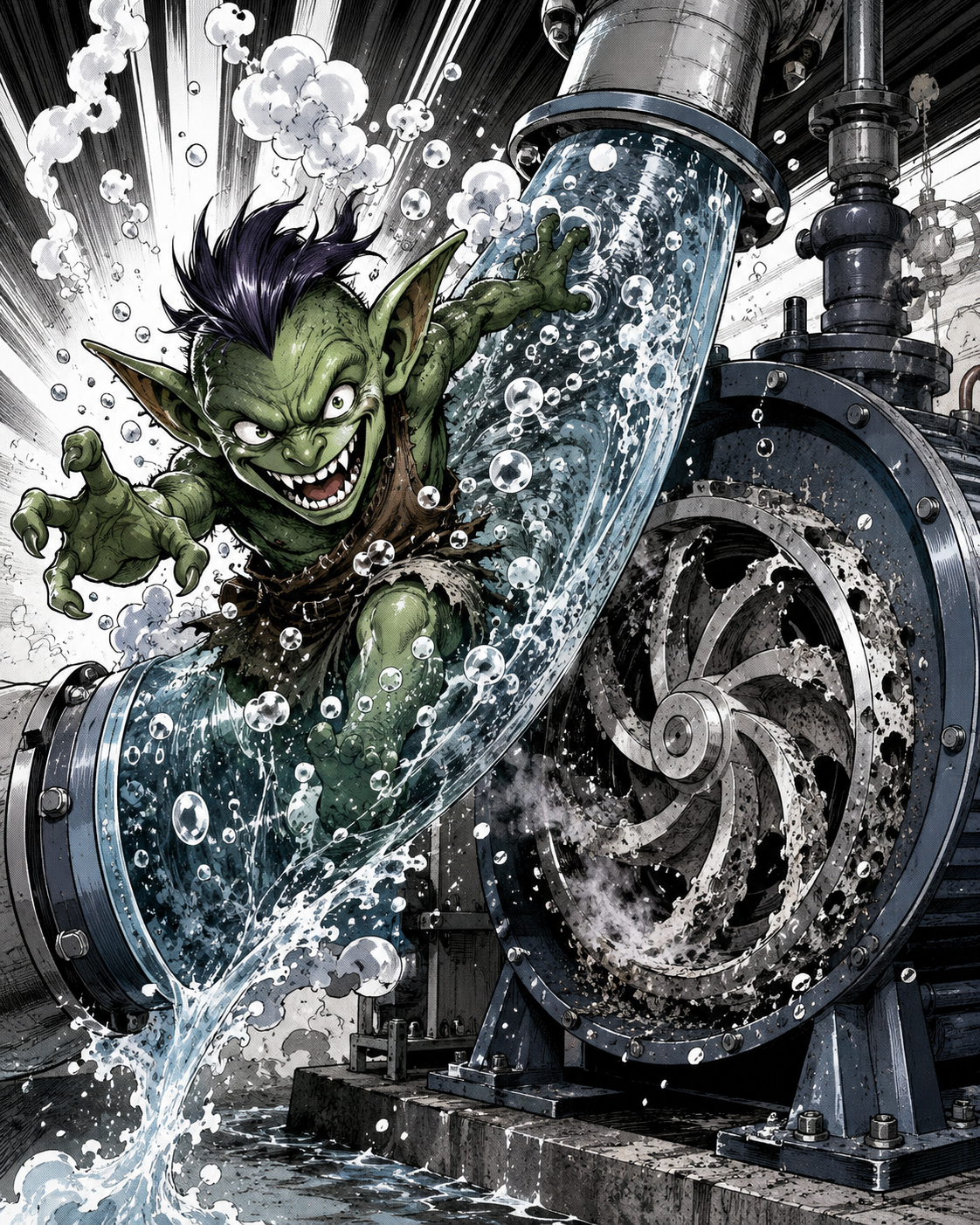
Cavitation Goblin hiding in a pump suction line
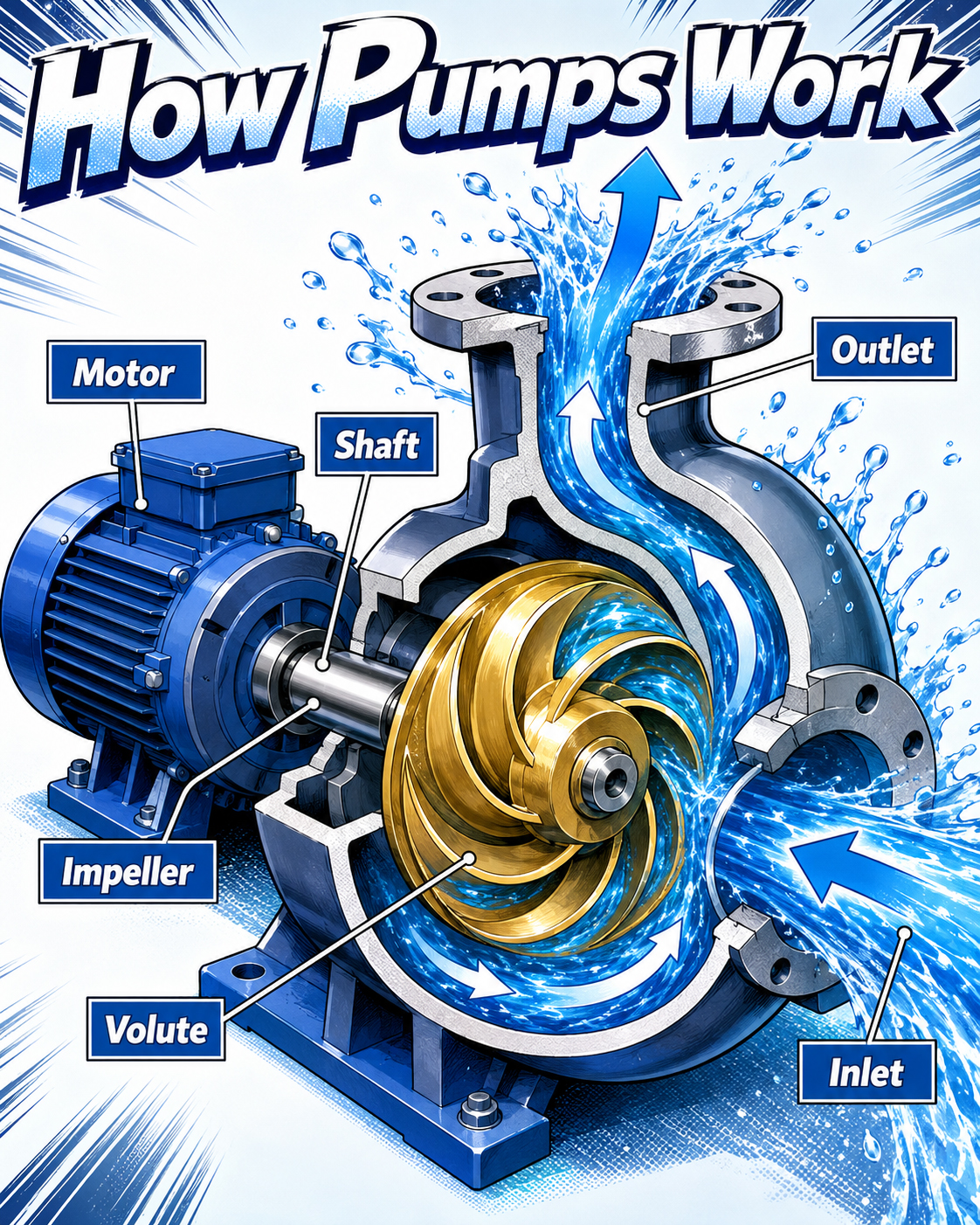
Pump impeller cutaway showing water entering the pump
Suction side

Bad inlet conditions are a common suspect.

Clogged strainers, undersized suction pipe, too many fittings, a partly closed valve, excessive suction lift, low source water, high temperature, air leaks, or poor layout can reduce inlet conditions.

The pump needs water to arrive smoothly before it can move water usefully.

Operating range

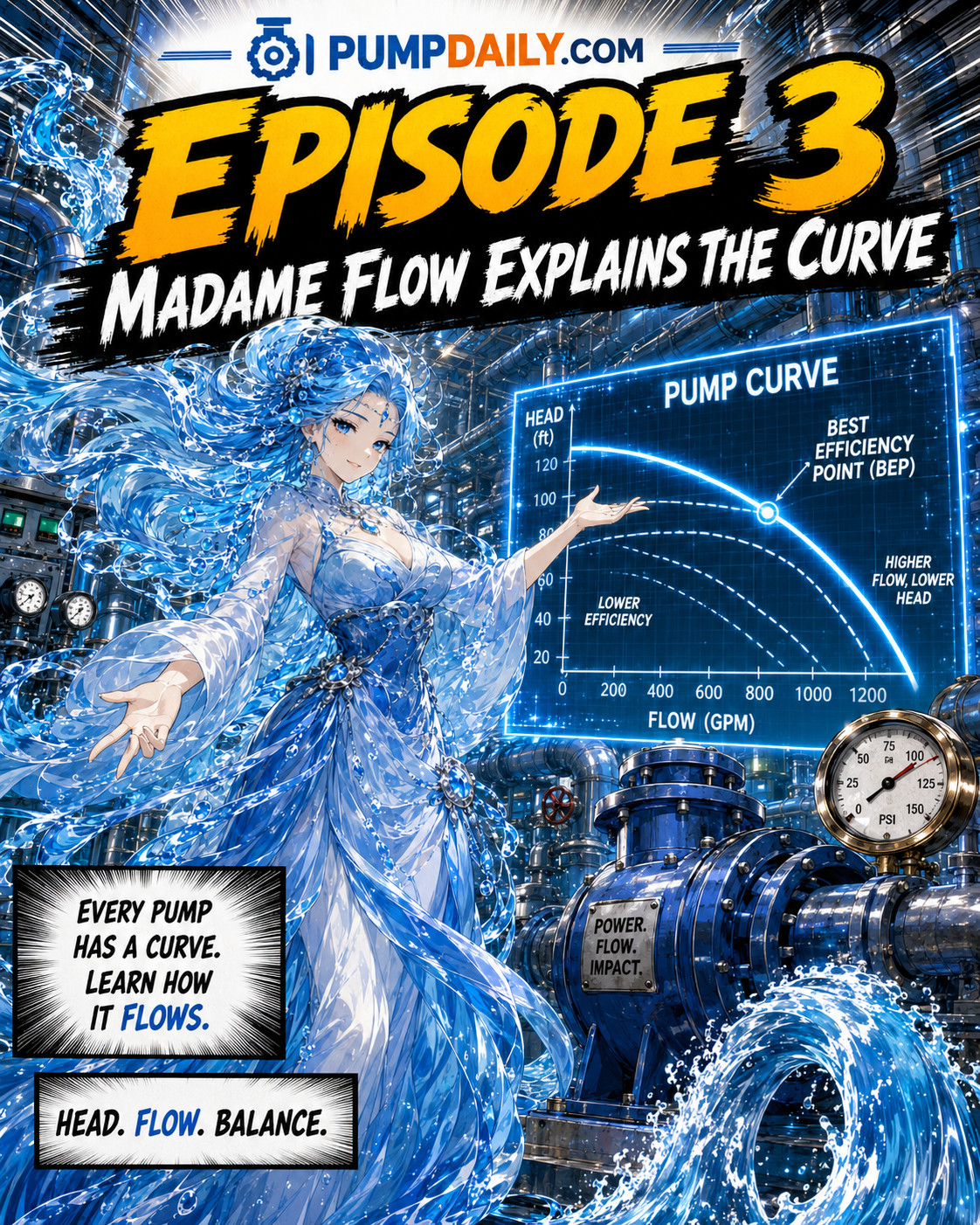
The pump curve matters.

Cavitation risk can increase when the pump is forced to operate far from its intended range. The system curve, pump curve, valve positions, filters, and discharge restrictions all affect the actual operating point.

Do not ask the pump curve to forgive a bad system curve.
Madame Flow explaining the pump curve
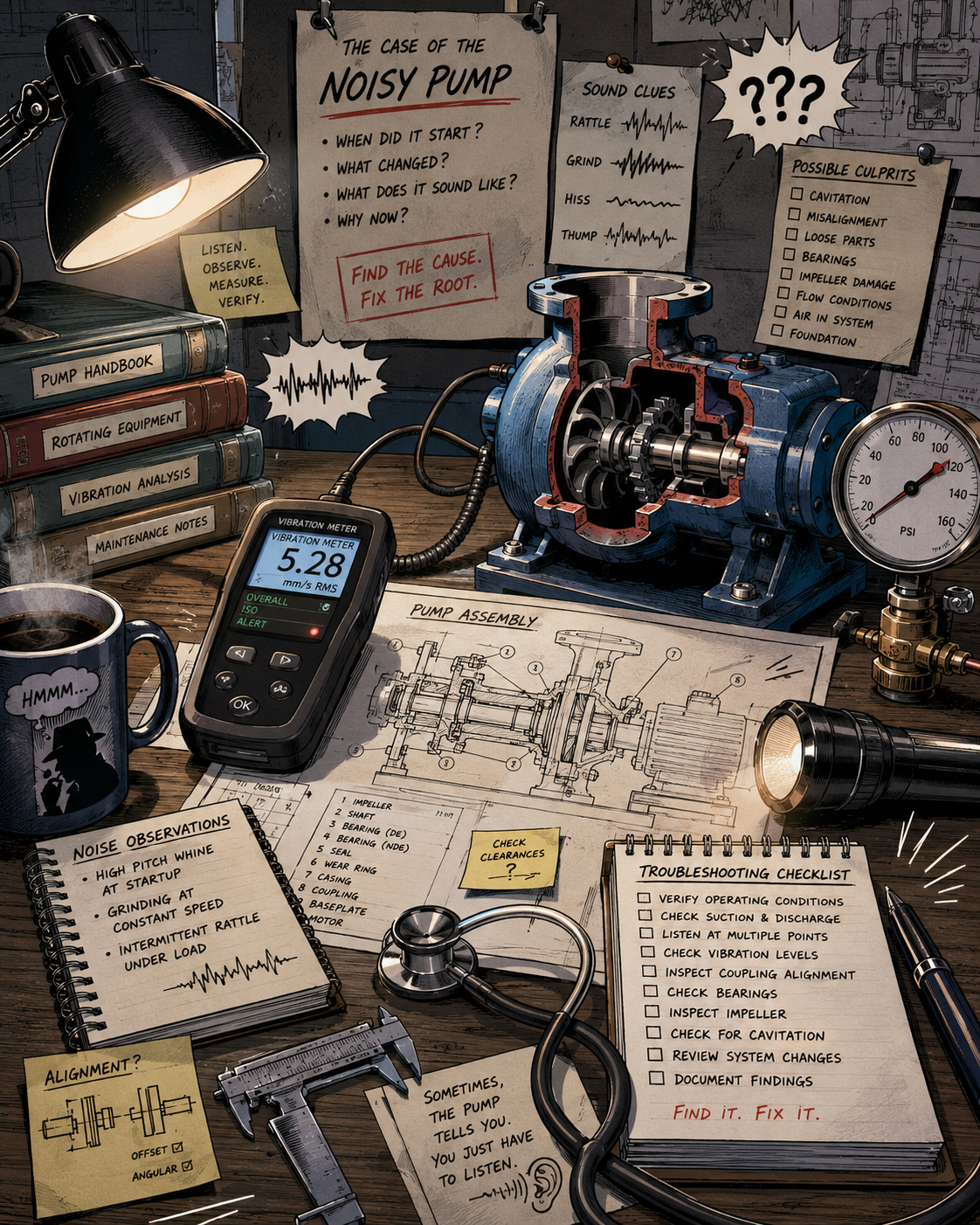
Pump troubleshooting desk with noise and diagnostic clues
Damage

The collapse can hurt pump parts.

Repeated bubble collapse can pit metal, erode impellers, increase vibration, damage seals, reduce performance, and shorten equipment life.

The earlier the cause is found, the better the chance of avoiding expensive damage.

Prevention

Give the pump better water conditions.

Prevention may involve cleaning strainers, opening valves, reducing suction restrictions, correcting pipe size or layout, reducing suction lift, maintaining adequate source level, checking air leaks, and selecting a pump suited to the duty point.

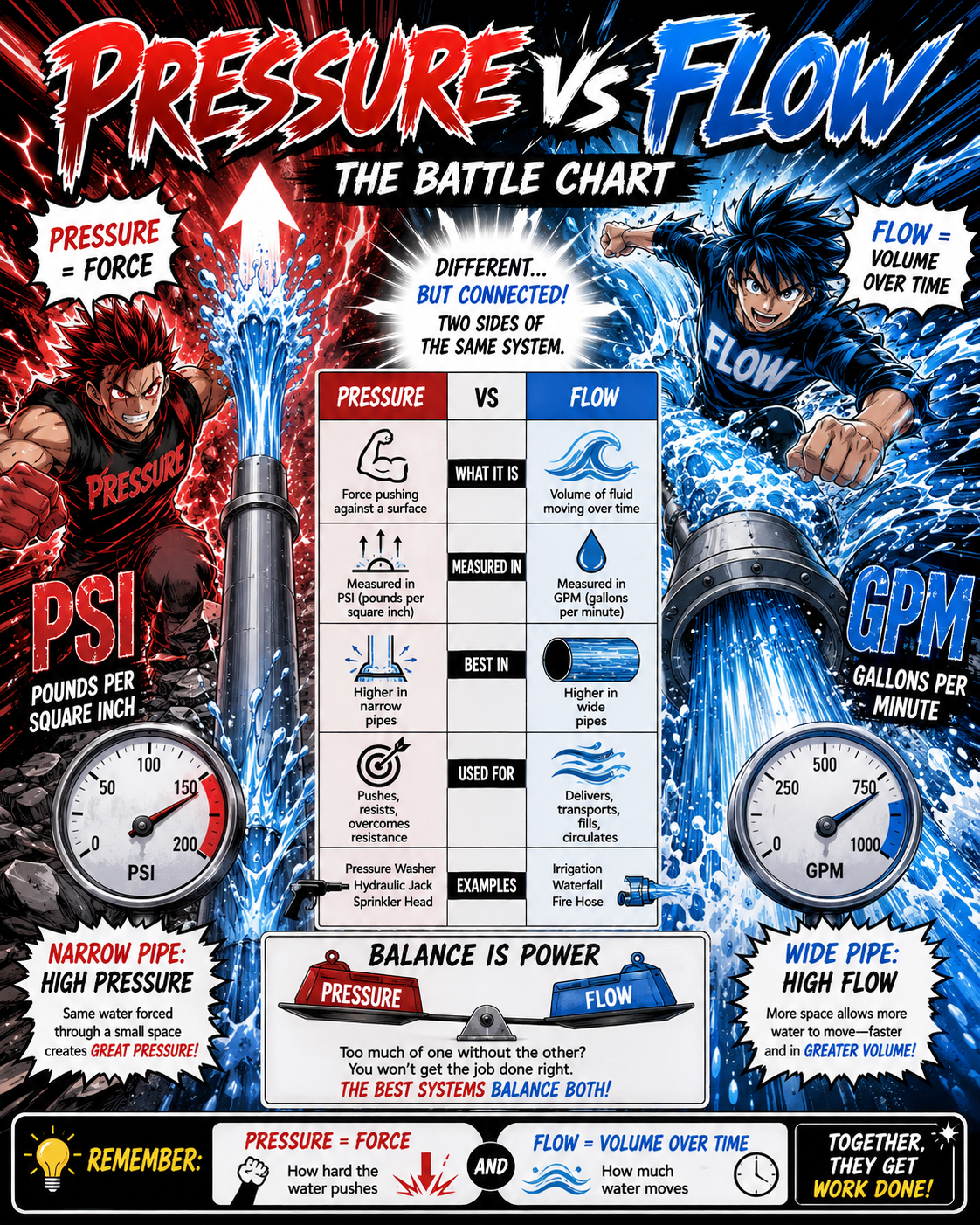
Pressure versus flow chart showing pump system conditions

Cavitation quick guide

Clue Possible meaning What to investigate
Gravel-like sound Possible cavitation or severe hydraulic noise. Suction side, water level, strainer, valves, pump curve.
Vibration Bubbles collapsing, poor hydraulics, or mechanical issue. Operating point, mounting, bearings, pipe support.
Low flow Restriction, inlet problem, wrong pump, or damaged parts. Flow rate, filters, suction, impeller, discharge path.
Impeller pitting Possible long-term cavitation damage. NPSH/inlet conditions, system design, duty point.
Air bubbles May be suction air leak or entrained air, not always cavitation. Lid seals, fittings, unions, source turbulence, water level.
Repeating failures System problem not solved by replacing the pump. Pipe design, controls, source, valves, pump selection.
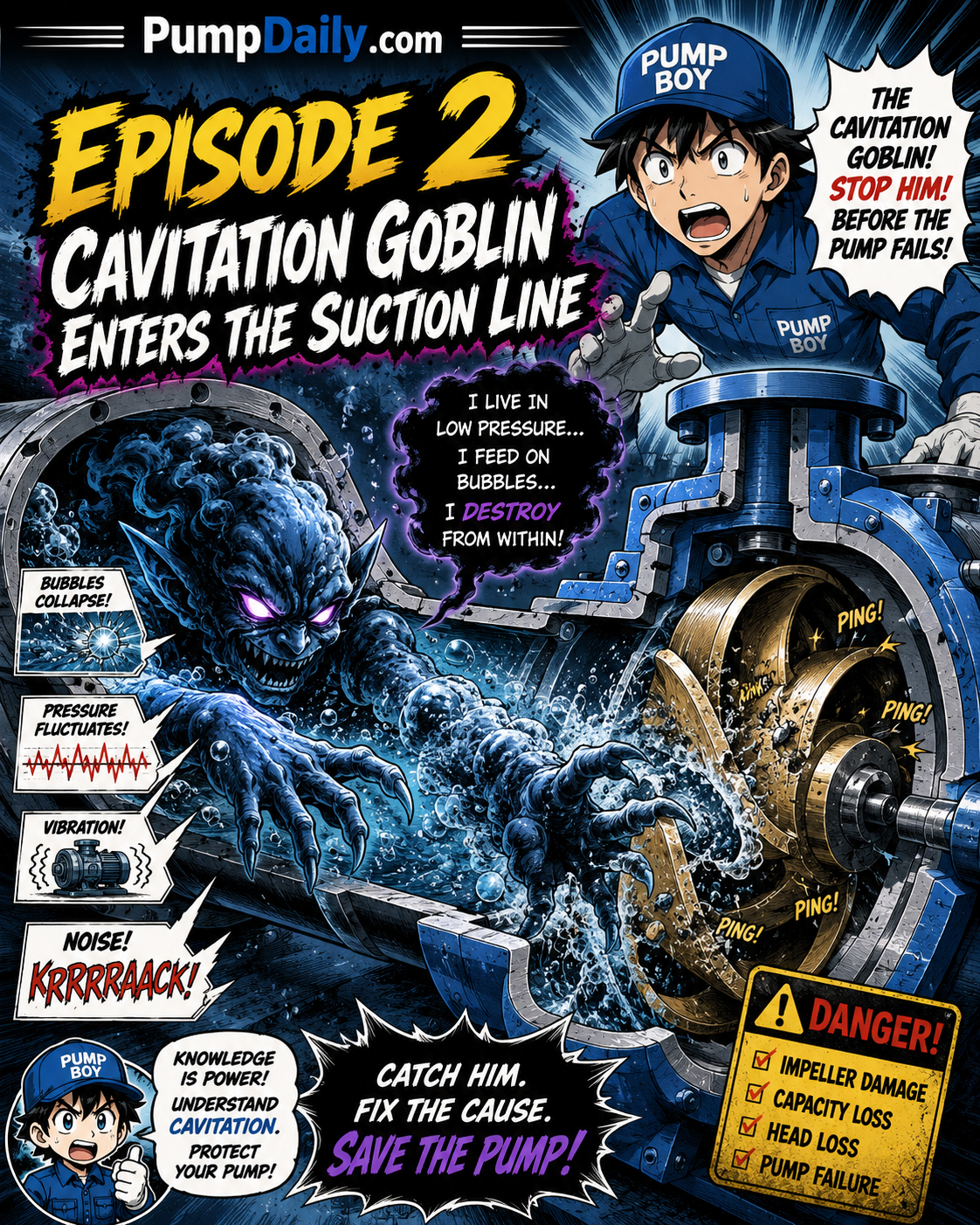
Episode 2 cover showing Cavitation Goblin entering the suction line
Goblin lesson

The Goblin loves when people replace pumps without fixing the cause.

A new pump installed into the same bad suction conditions may suffer the same fate. Cavitation troubleshooting should look at the full system, not just the damaged part.

If the system starves the pump, the Goblin comes back.

Keep learning

Related PumpDaily guides

Safety note: Cavitation diagnosis may involve running equipment, electricity, pressure, hot water, industrial systems, confined spaces, and equipment damage risk. PumpDaily is educational only.