Troubleshooting

Pump Troubleshooting

Good troubleshooting follows the system before blaming the pump. Check power, controls, water source, suction, pump body, discharge, valves, filters, pressure tanks, and the actual destination.

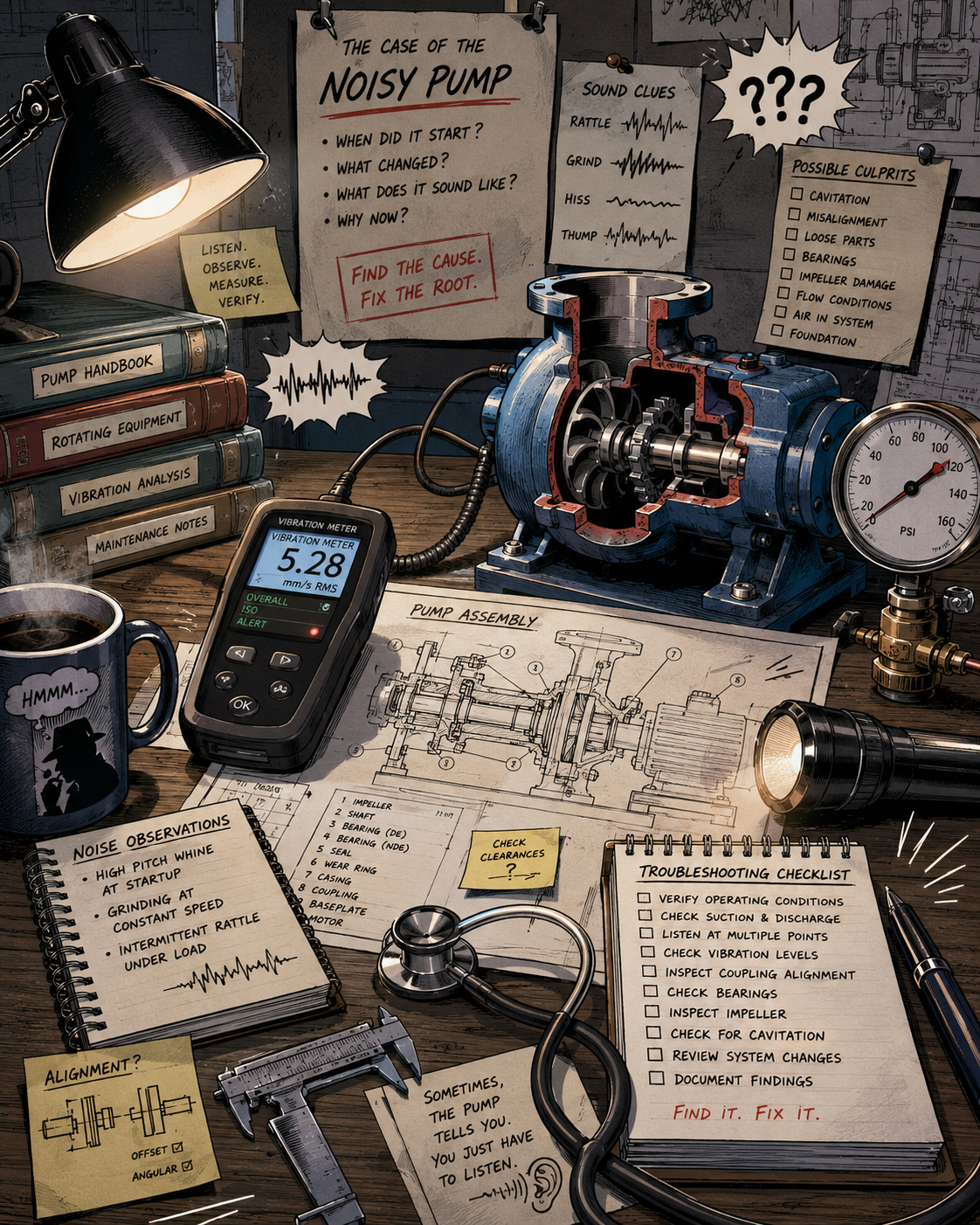
Pump troubleshooting desk with gauges, notes, diagrams, and diagnostic clues

Plain-English answer

Do not replace the pump before diagnosing the system.

A pump complaint may actually be a power problem, control problem, suction problem, filter problem, check valve problem, pressure tank problem, water source problem, or piping problem.

If there is flooding, electrical danger, fire protection trouble, sewage backup, contamination, or life-safety risk, stop reading and contact qualified help or emergency services.
Order

Follow the pump system path.

Start with the power source and controls. Then check the water source, suction side, pump, discharge side, valves, filters, check valves, tanks, and final destination.

The symptom appears at the pump, but the cause may live somewhere else.
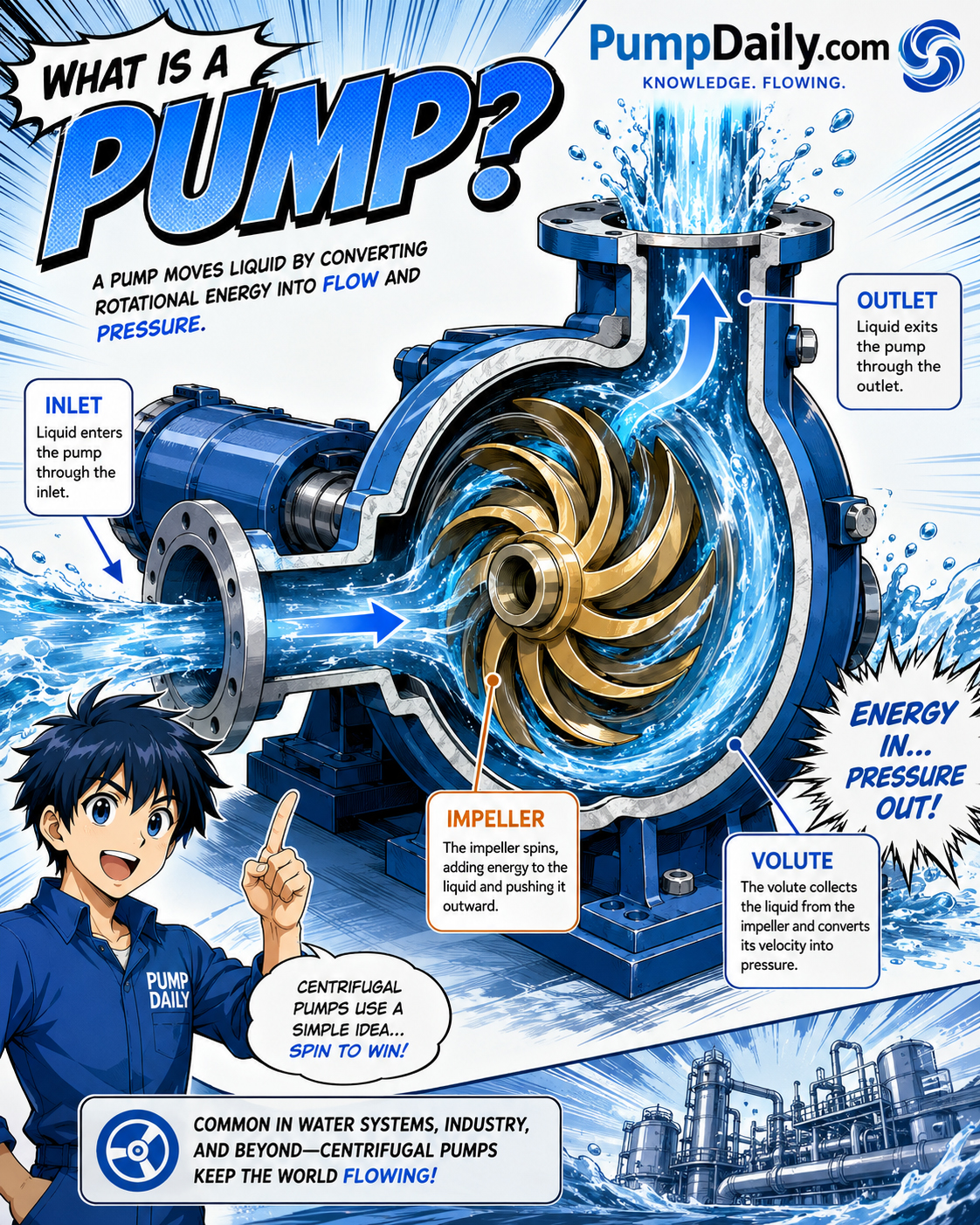
Manga diagram showing a pump system path from suction to discharge
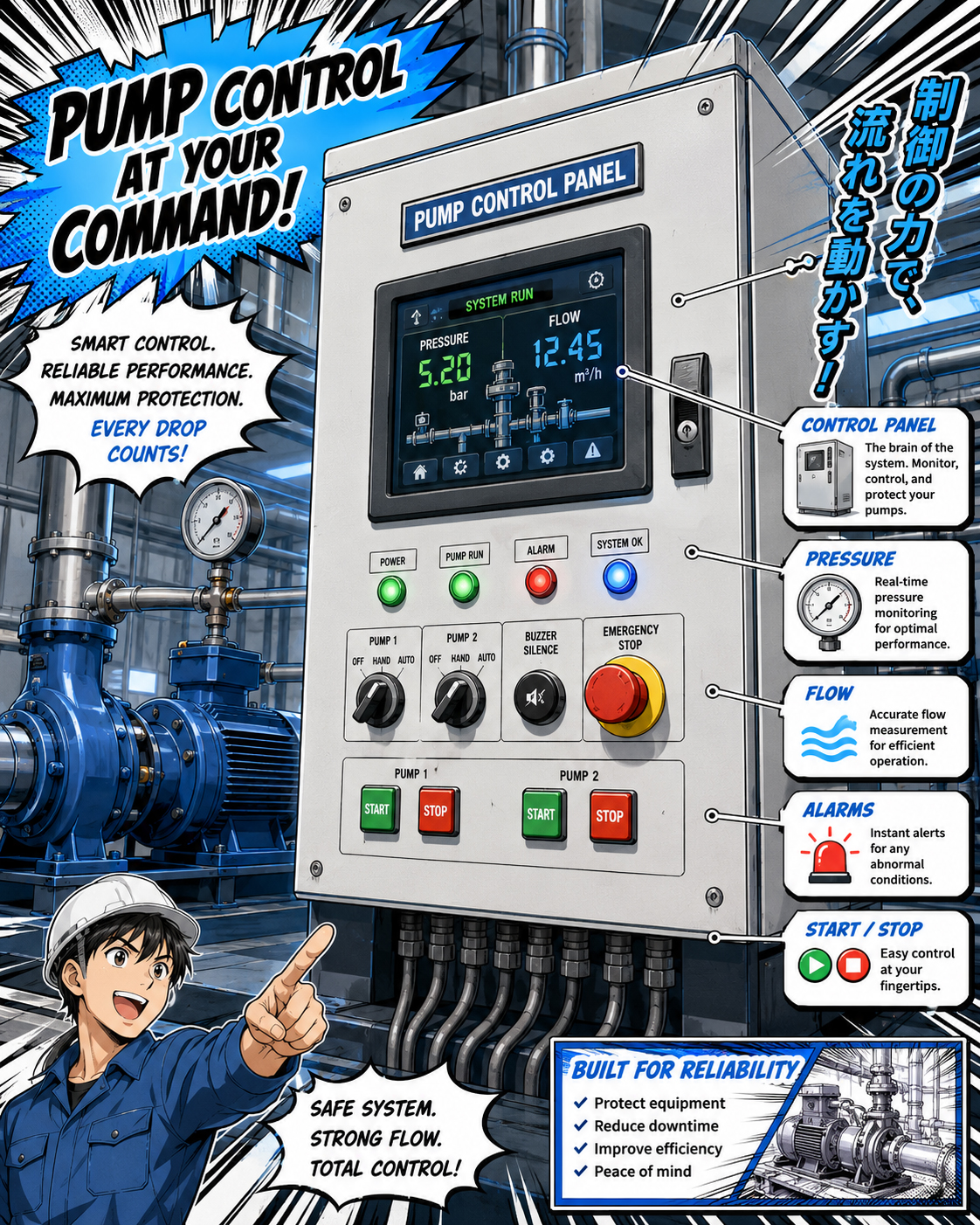
Pump control panel with switches and warning lights
No start

If the pump will not start, look at power and controls first.

Possible causes include no power, tripped protection, failed switch, bad float, bad pressure switch, controller fault, dry-run protection, failed motor, or wiring issues.

Electrical troubleshooting belongs to qualified people when voltage, panels, motors, wet locations, or code work are involved.

Low flow

Low flow does not always mean weak pump.

Low flow can come from clogged filters, blocked strainers, closed valves, undersized piping, air leaks, poor source water, wrong rotation, cavitation, dirty impellers, or an operating point far from the pump curve.

Before buying a new pump, ask what is restricting the old one.
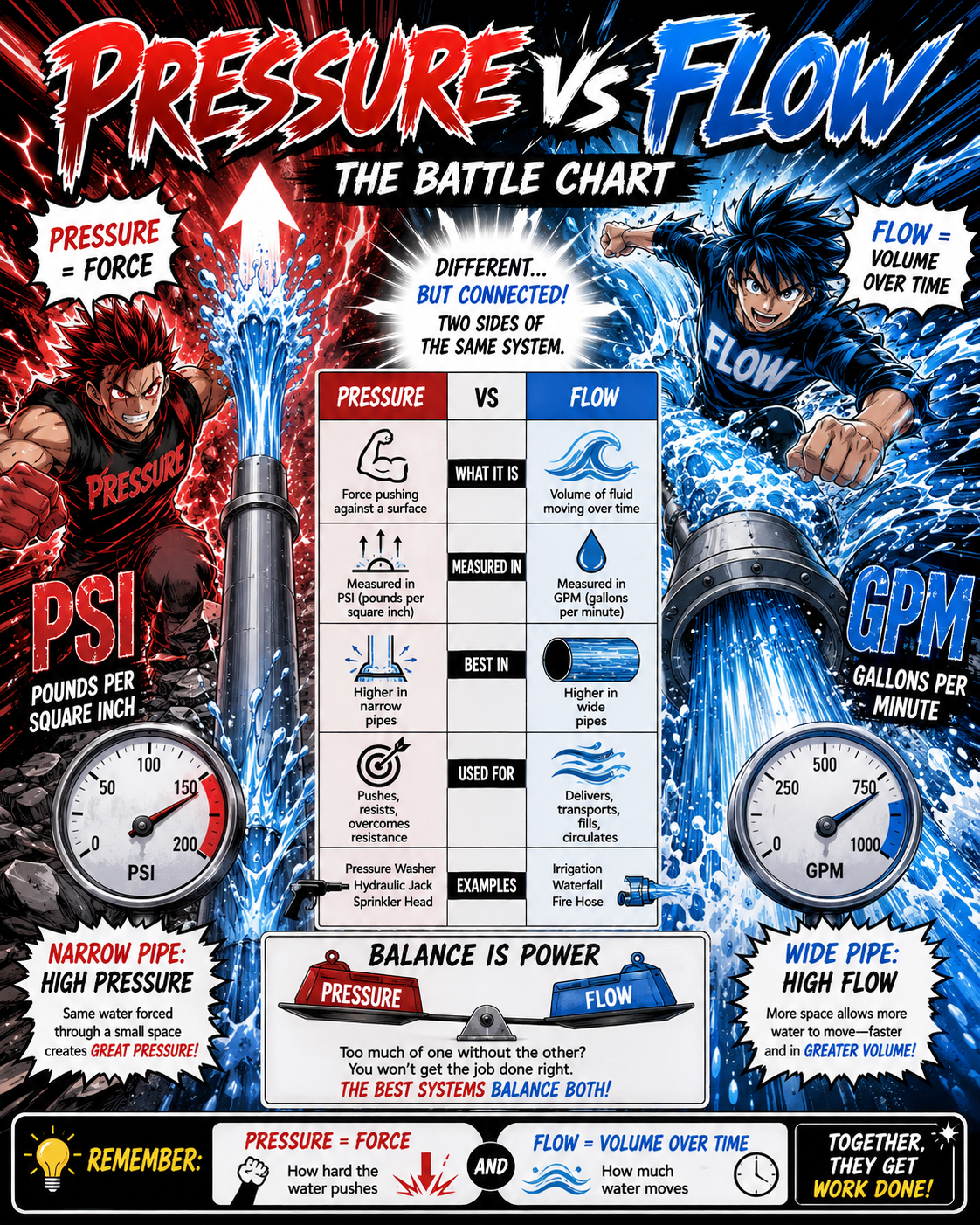
Pressure versus flow chart for pump troubleshooting
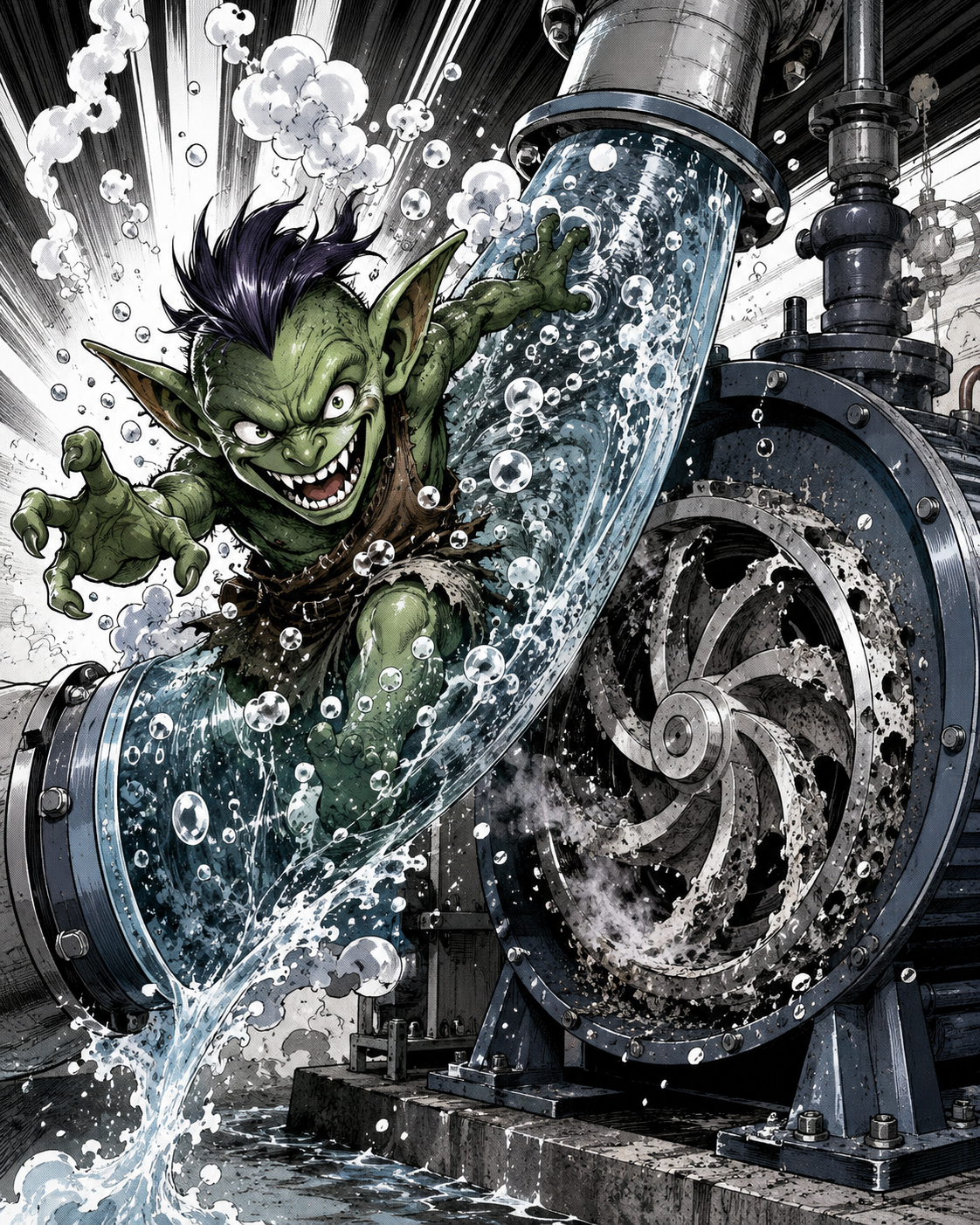
Cavitation Goblin hiding in the suction line
Noise

Noise is a clue, not a diagnosis.

Grinding, rattling, gravel-like sound, vibration, humming, banging, or squealing can point to different problems: cavitation, bearings, debris, air, water hammer, mounting, motor trouble, or pipe stress.

A gravel-like sound often deserves a suction-side investigation.

Cycling

Short cycling usually means the system is not stable.

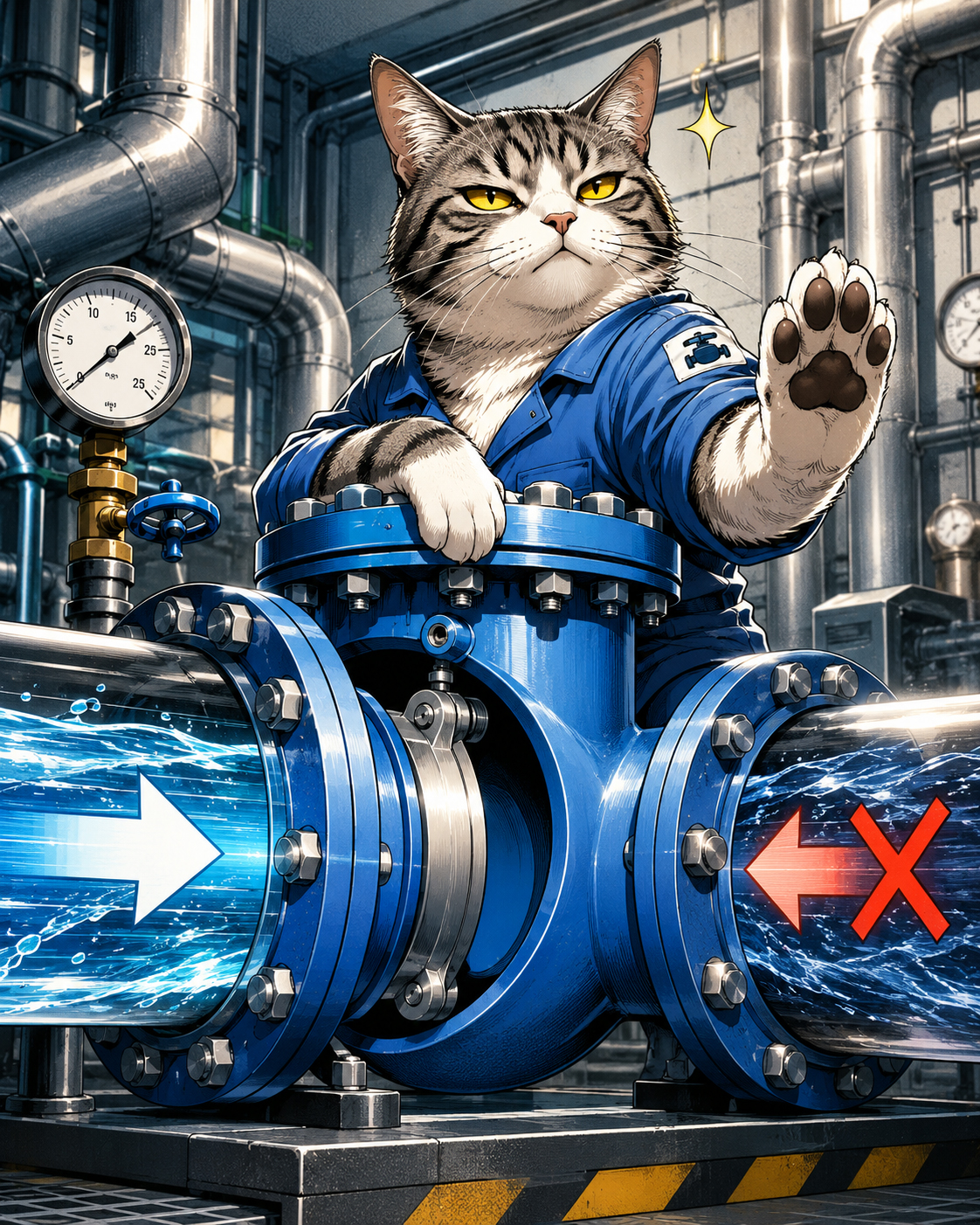
Rapid starts and stops may come from a bad pressure tank, wrong pressure switch settings, leaks, failed check valve, stuck float, undersized basin, oversized pump, or controller issue.

Cycling is not just annoying. It can shorten equipment life.
Check Valve Cat stopping reverse flow that can cause cycling

Troubleshooting quick guide

Symptom Possible causes First questions
No water No power, failed control, no source water, lost prime, blocked suction, failed pump. Is there power? Is the pump commanded on? Is water available?
Low pressure Low supply, high demand, leak, bad tank, clogged filter, wrong pump, control issue. Pressure where? Static or running? What flow is occurring?
Low flow Restriction, dirty filter, closed valve, undersized pipe, suction issue, worn impeller. What changed recently? Are filters/valves/strainers clear?
Noisy pump Cavitation, air, bearings, debris, vibration, water hammer, motor problem. What kind of noise? When does it happen? Suction or discharge clue?
Short cycling Pressure tank, switch setting, leak, failed check valve, stuck float, oversized pump. How fast does it cycle? Is pressure dropping? Does water return?
Trips breaker/protection Electrical fault, overload, jammed pump, wrong voltage, water intrusion, controller fault. Stop and use qualified electrical help where required.
Float Switch Fairy checking a sump pump control
Controls

A good pump can be betrayed by a bad control.

Float switches, pressure switches, controllers, relays, VFDs, level sensors, alarms, and dry-run protection can all create symptoms that look like pump failure.

Ask who told the pump to start, and who told it to stop.
Document

Write down what you observe.

Useful notes include model number, voltage, breaker size, controller status, pressure readings, flow observations, water level, filter condition, valve position, alarm status, and what changed recently.

Photos of labels, piping, controls, gauges, and the pump installation can make troubleshooting much clearer.

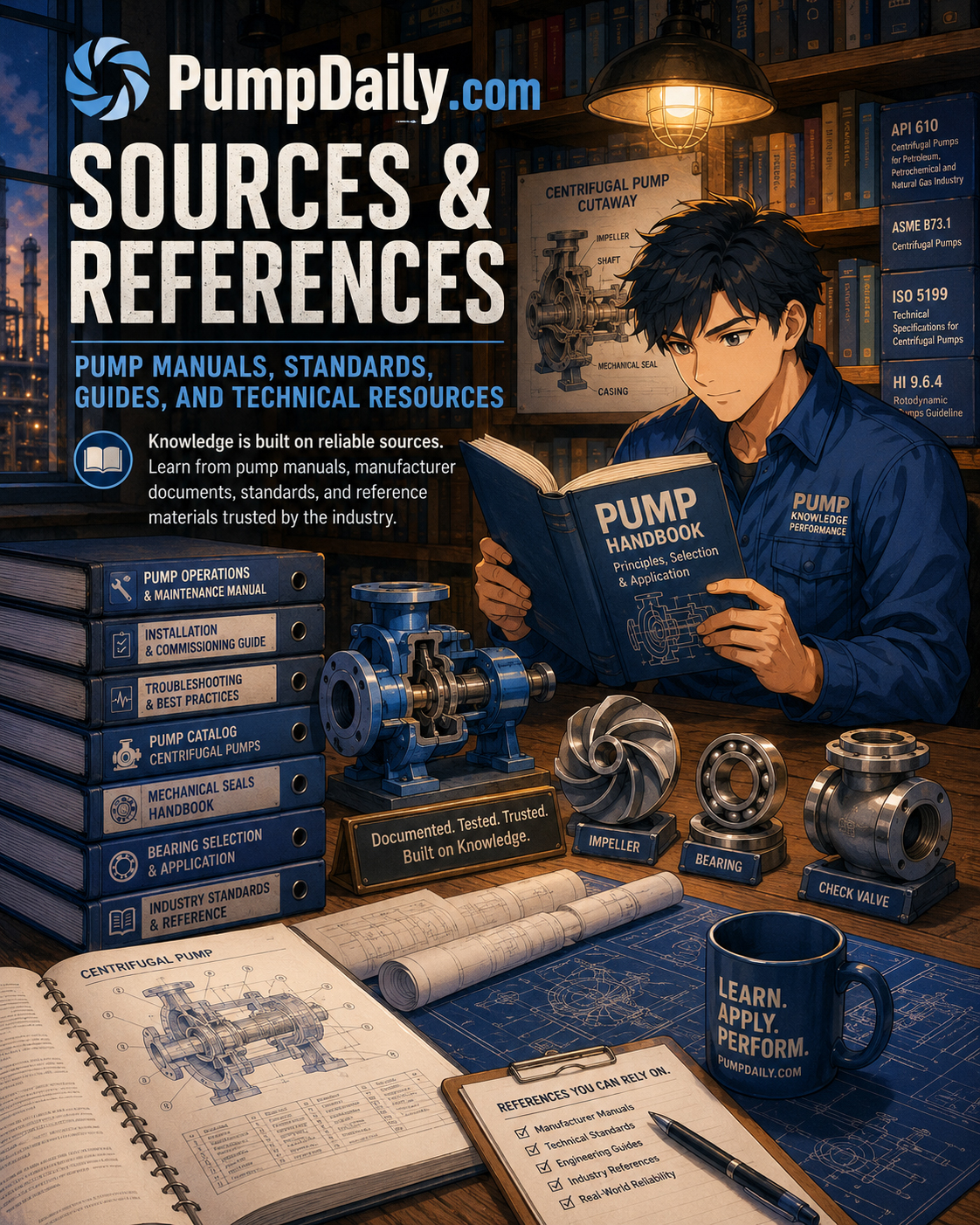
Pump manuals and troubleshooting references in a PumpDaily library

Keep learning

Related PumpDaily guides

Safety note: Pump troubleshooting may involve electricity, wet locations, pressure, flooding, wastewater, potable water, fire protection, confined spaces, and code-regulated work. PumpDaily is educational only.