Valve basics

Check Valves

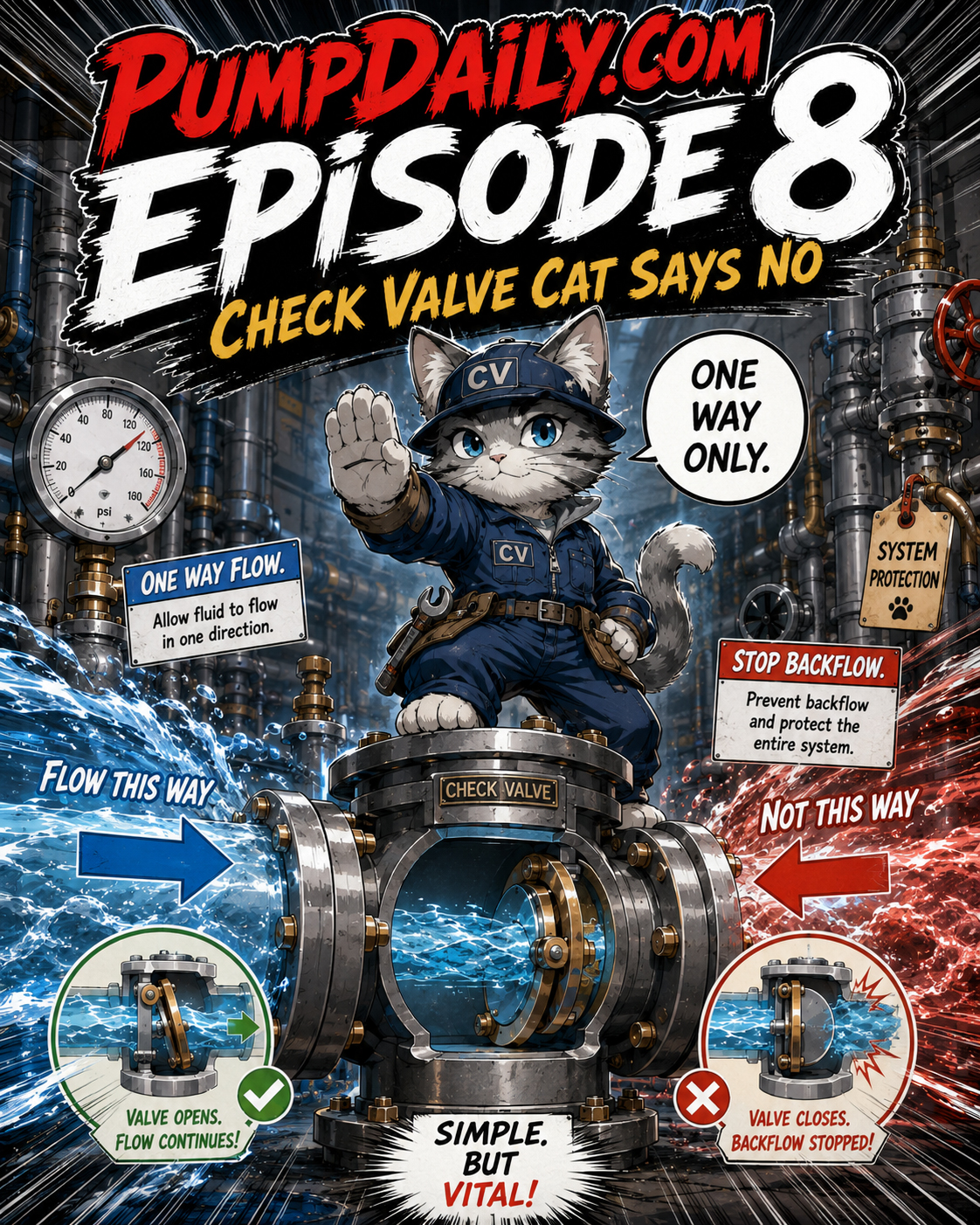
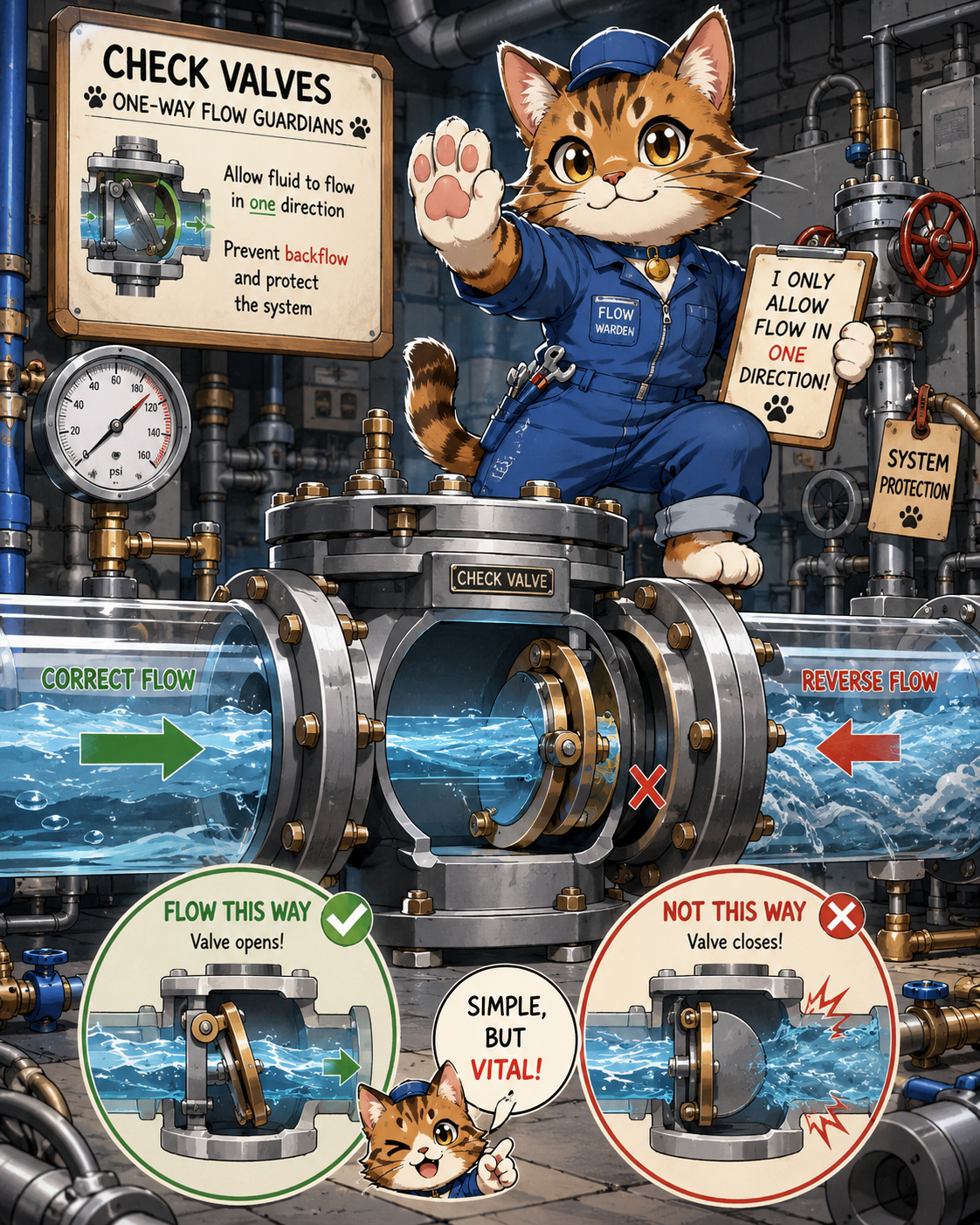
A check valve allows flow in one direction and helps stop water from flowing backward. It can protect pumps, keep sump discharge from returning, help maintain prime, and prevent confusing reverse-flow problems.

Check Valve Cat guarding one-way water flow in a pump system

Plain-English answer

A check valve says yes one way and no the other way.

When water flows the intended direction, the check valve opens. When water tries to reverse, the valve closes or resists reverse flow. That simple job can prevent repeated pumping, line drain-back, loss of prime, and some equipment problems.

The valve type, orientation, pressure rating, material, location, and service conditions all matter.
Direction

The arrow matters.

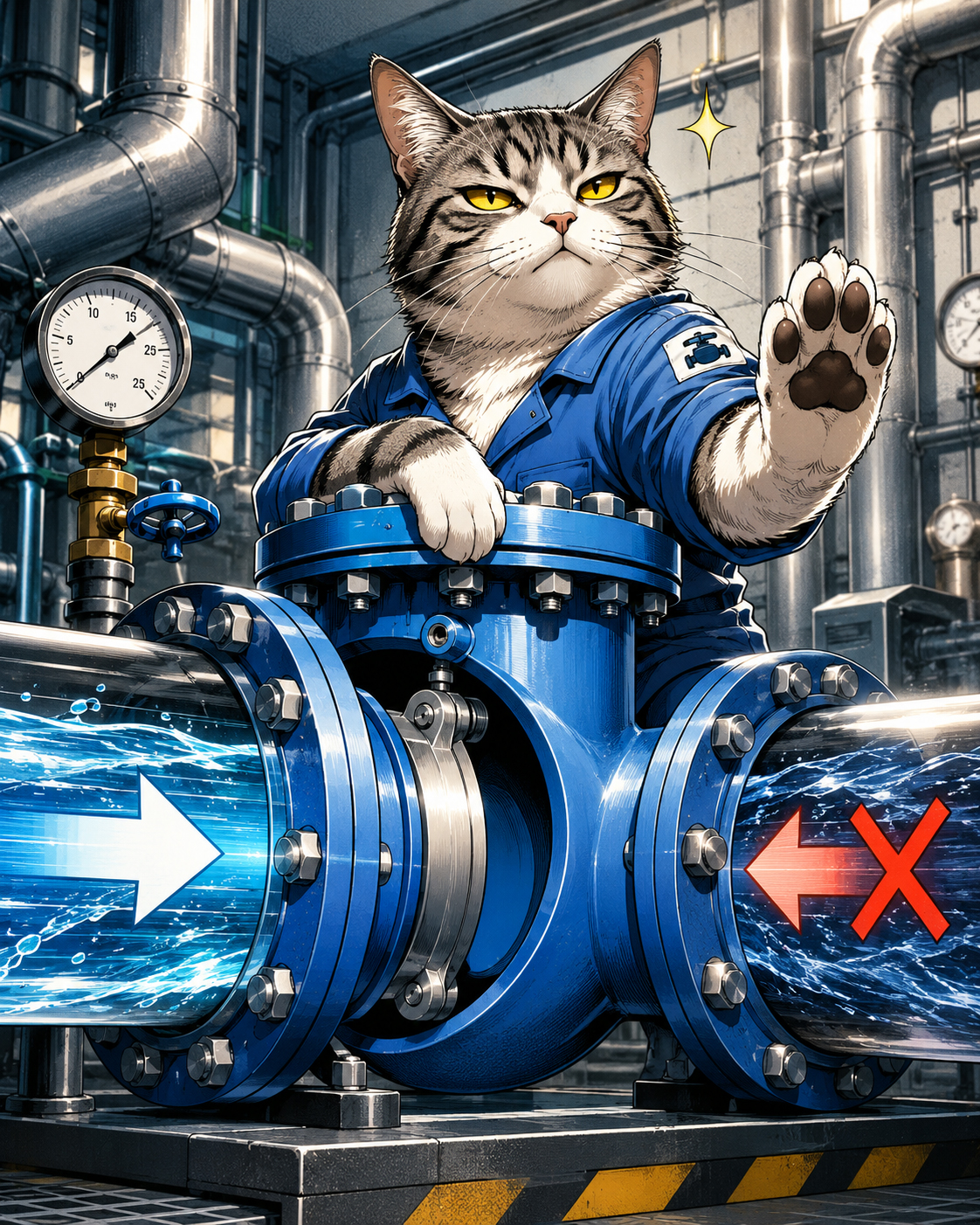
Most check valves have a flow arrow or directional marking. Installing the valve backward can block flow or make the system behave like the pump is broken.

Direction is not decoration. Check Valve Cat is very clear about this.
Check Valve Cat saying no to backward flow
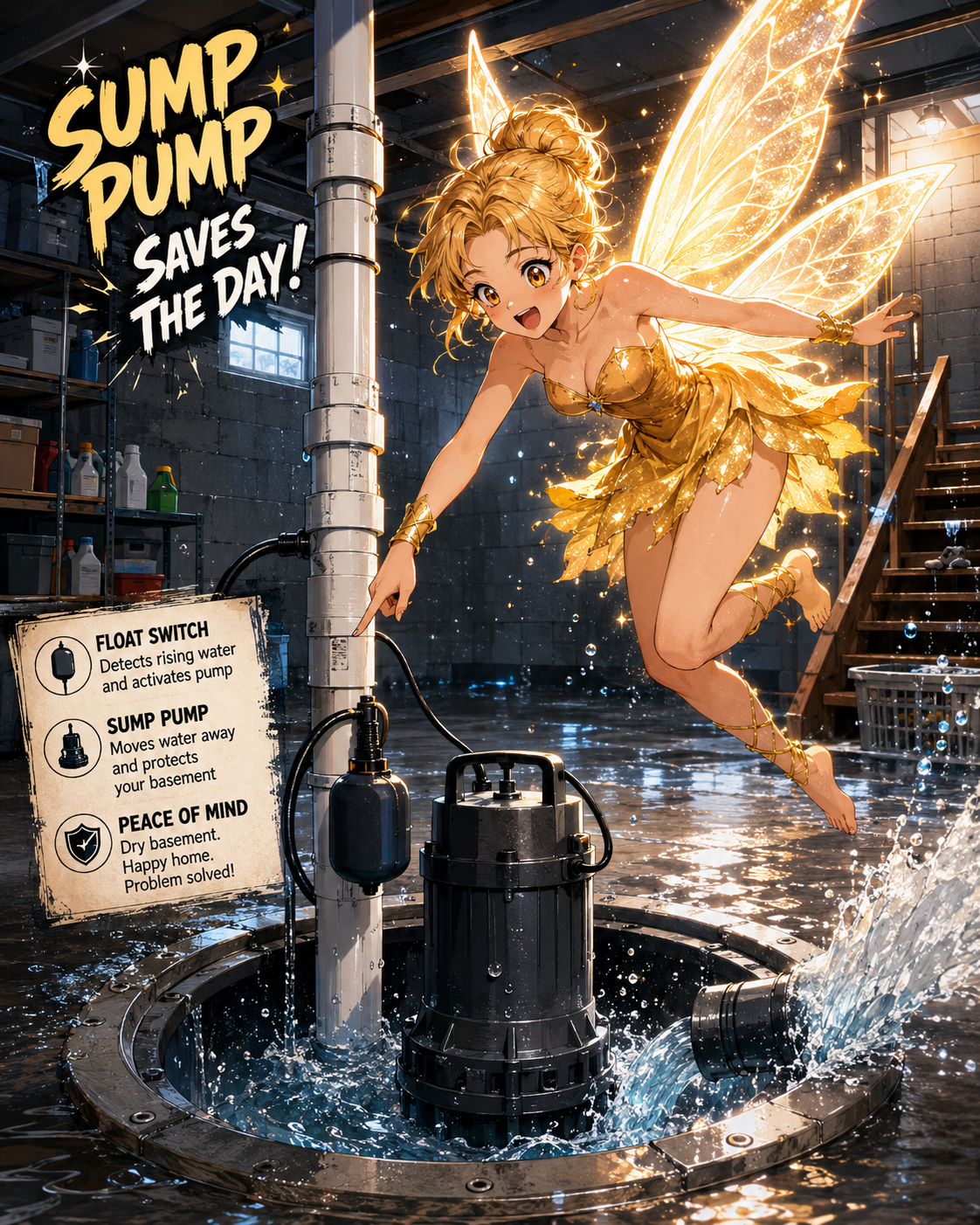
Sump pump basement scene with Float Switch Fairy and check valve lesson
Sump systems

They keep discharge water from returning to the pit.

In a sump pump discharge line, water left in a vertical pipe can fall back into the basin after shutoff. A check valve helps keep the same water from being pumped again and again.

A failed or missing check valve can cause repeated cycling and poor flood protection.

Prime

They can help systems stay ready.

In some pump systems, check valves or foot valves help keep water in the line so the pump does not lose prime. If the valve leaks or sticks, the pump may struggle to restart.

Losing prime may be a valve problem, not only a pump problem.
Manga pump diagram showing suction and discharge flow path
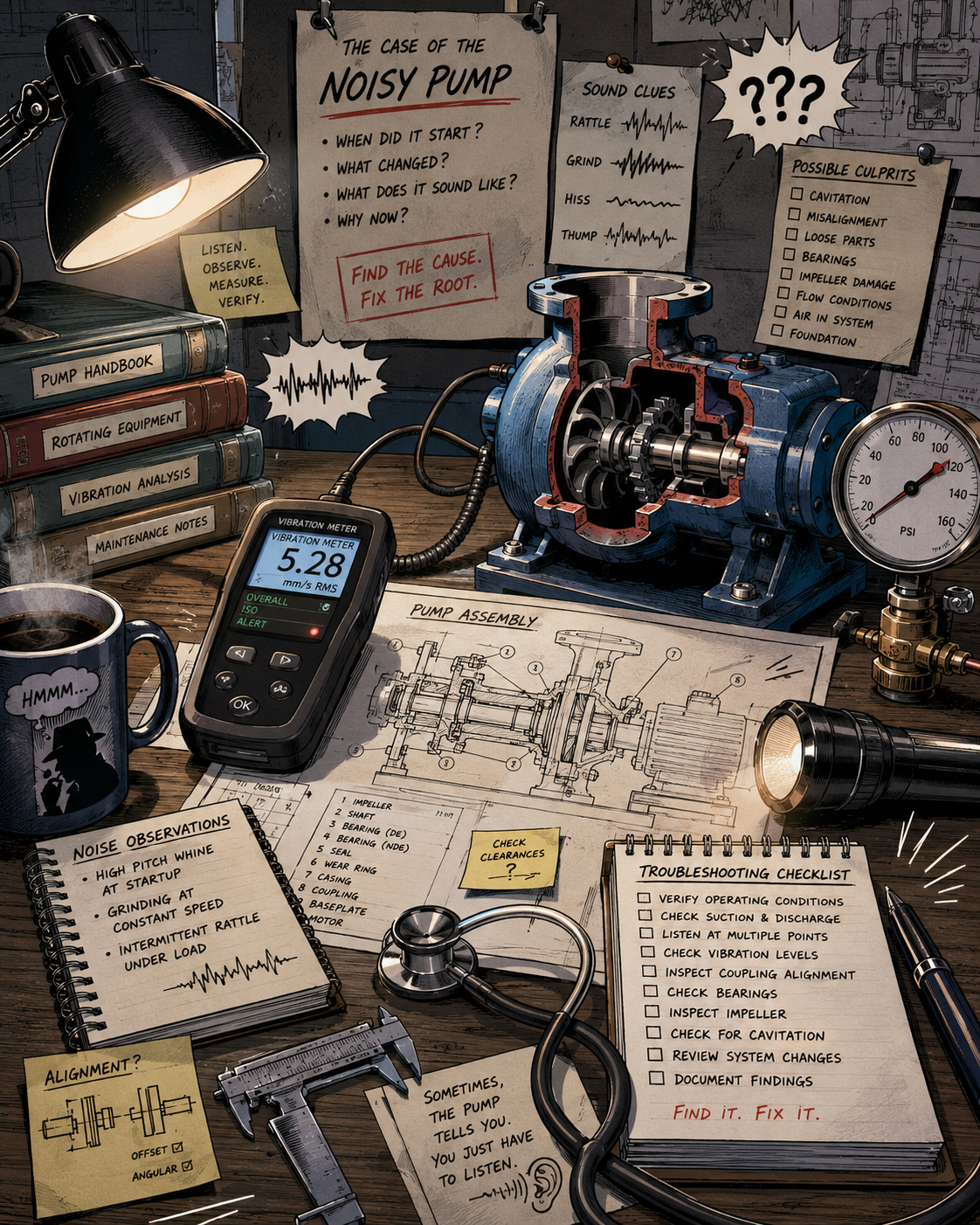
Pump troubleshooting desk with notes about water hammer and reverse flow
Water hammer

A check valve can prevent one problem and create another if misapplied.

A valve that closes too abruptly in the wrong system can contribute to banging, shock, vibration, or water hammer. Flow speed, pipe support, valve type, spring action, and location all matter.

The right check valve should stop reverse flow without turning the pipe into a drum solo.

Selection

Application decides the valve.

Check valves differ by type, material, pressure rating, orientation, solids tolerance, service access, noise behavior, and maintenance needs.

A valve for clean water is not automatically right for sewage, fire protection, irrigation, high pressure, or dirty water.

Manga portrait of pump and valve system characters

Check valve quick guide

Symptom Possible check-valve issue What to investigate
Pump cycles repeatedly Water draining back through a leaking or missing check valve. Valve condition, discharge line, pressure tank, leaks.
Sump pit refills after pump stops Discharge water falling back into the basin. Check valve presence, orientation, debris, seal condition.
Pump loses prime Foot valve or check valve leaking backward. Suction line, valve seal, air leaks, water source.
Banging pipe noise Valve closing abruptly or water hammer condition. Valve type, flow speed, pipe support, system design.
No flow after repair Valve installed backward or stuck closed. Flow arrow, orientation, debris, installation location.
Dirty water service failure Wrong valve type for debris or solids. Solids rating, service type, maintenance access.
Episode 8 cover showing Check Valve Cat stopping reverse flow
Troubleshooting

A small valve can create big confusion.

A bad check valve can make a pump look weak, noisy, stuck, short-cycling, or unreliable. Before blaming the pump, ask whether water is sneaking backward when it should not.

Sometimes the pump is fine. The Cat fell asleep.

Keep learning

Related PumpDaily guides

Safety note: Check valves may affect pressure, water hammer, contamination risk, pump protection, fire protection systems, sewage systems, and code compliance. PumpDaily is educational only.