Pump basics

Pressure vs Flow

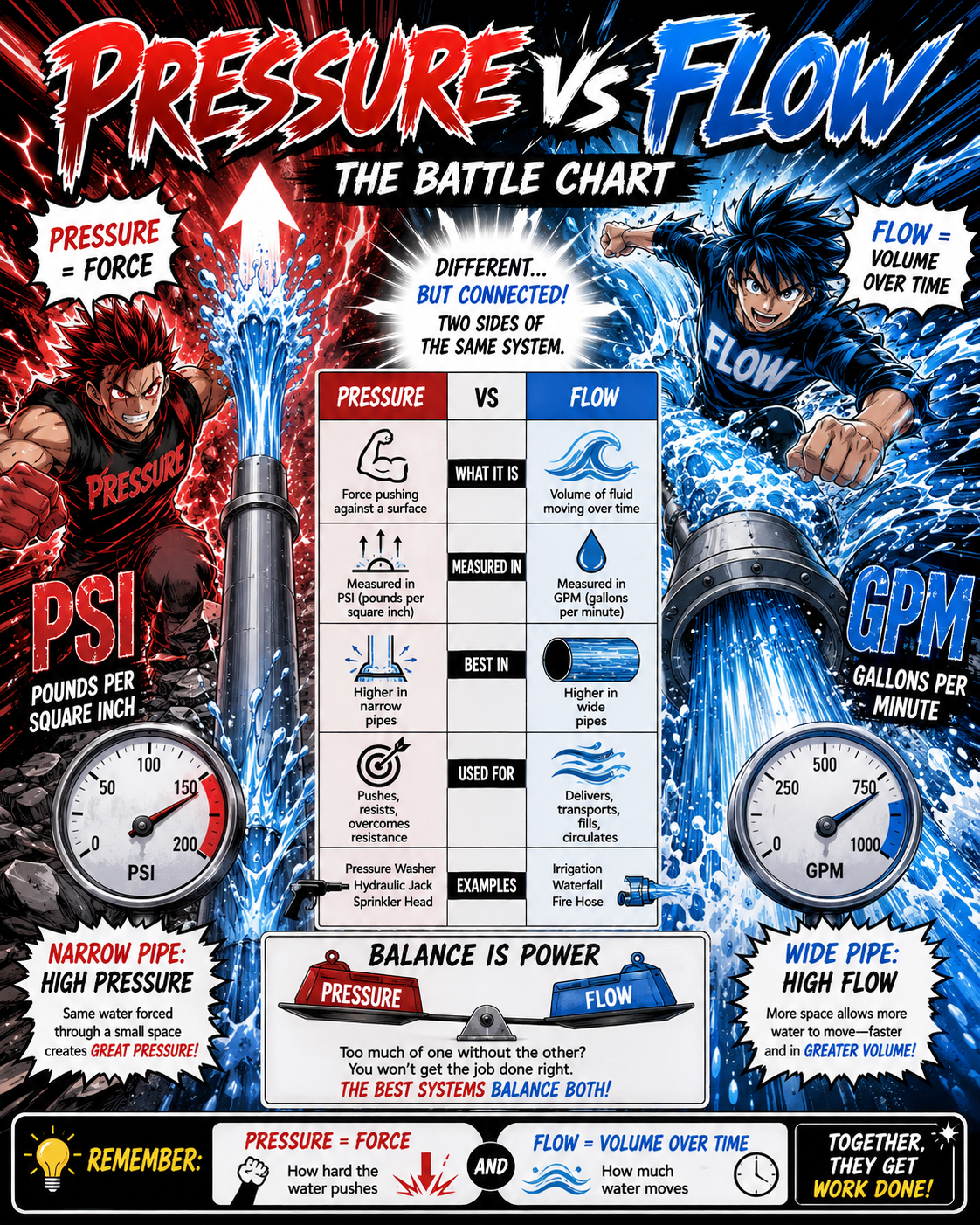
Pressure is force. Flow is volume moving over time. A pump system can have pressure with poor flow, or strong flow at modest pressure. Confusing PSI and GPM is one of the fastest ways to misdiagnose a pump.

Manga-style pressure versus flow chart showing PSI and GPM as different forces

Plain-English answer

Pressure and flow are related, but they are not interchangeable.

Pressure is usually shown as PSI. Flow is often shown as GPM. A pressure gauge can rise when a valve closes, even though useful flow is dropping. That is why a single gauge reading rarely tells the whole pump story.

A good pump diagnosis asks both questions: how much pressure, and how much water is actually moving?

Pressure

Pressure is force in the system.

Pressure is the push available in the pipe. It helps water overcome elevation, restrictions, nozzles, filters, fixtures, valves, and other system resistance.

A high PSI reading does not automatically mean the system is delivering enough water.
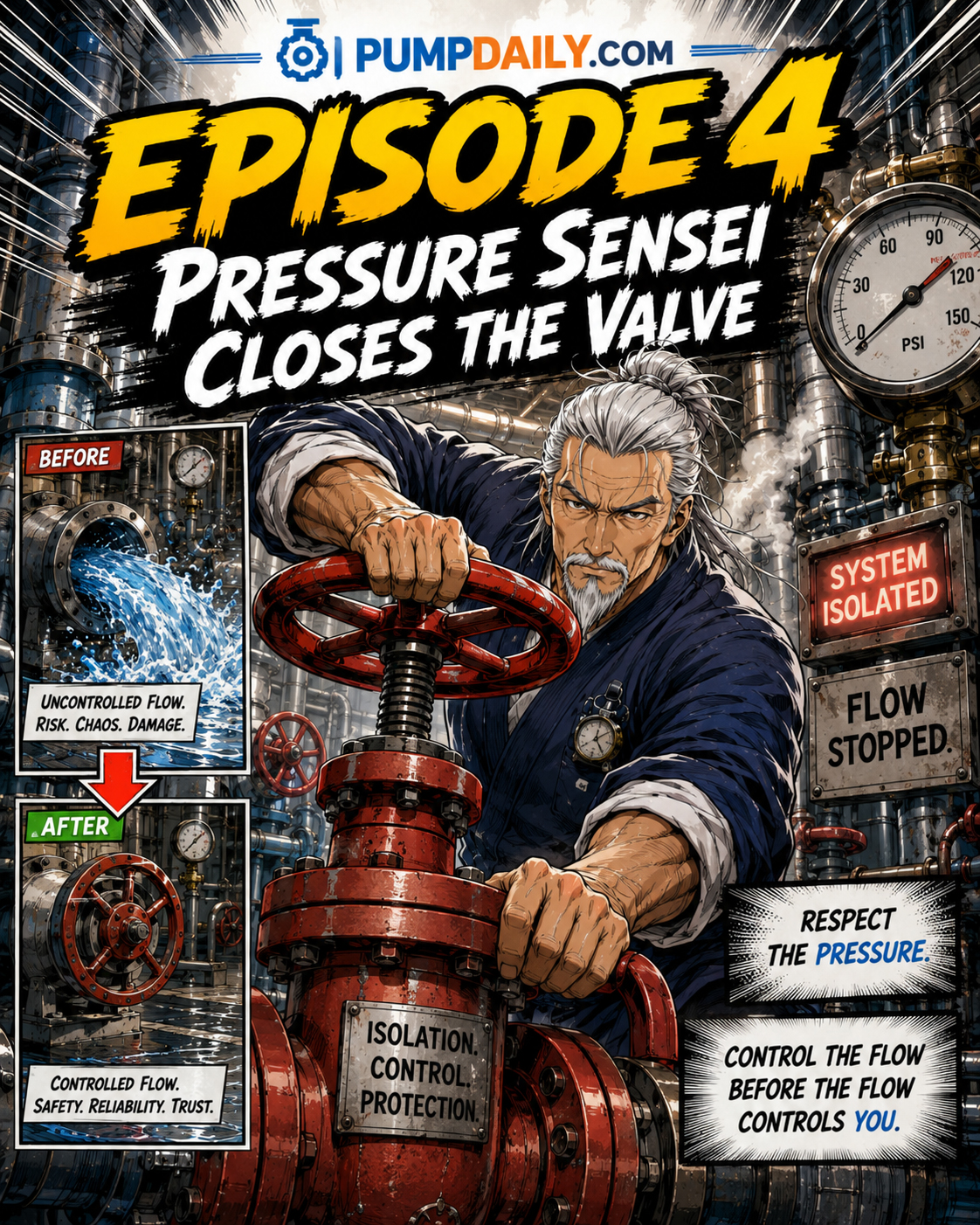
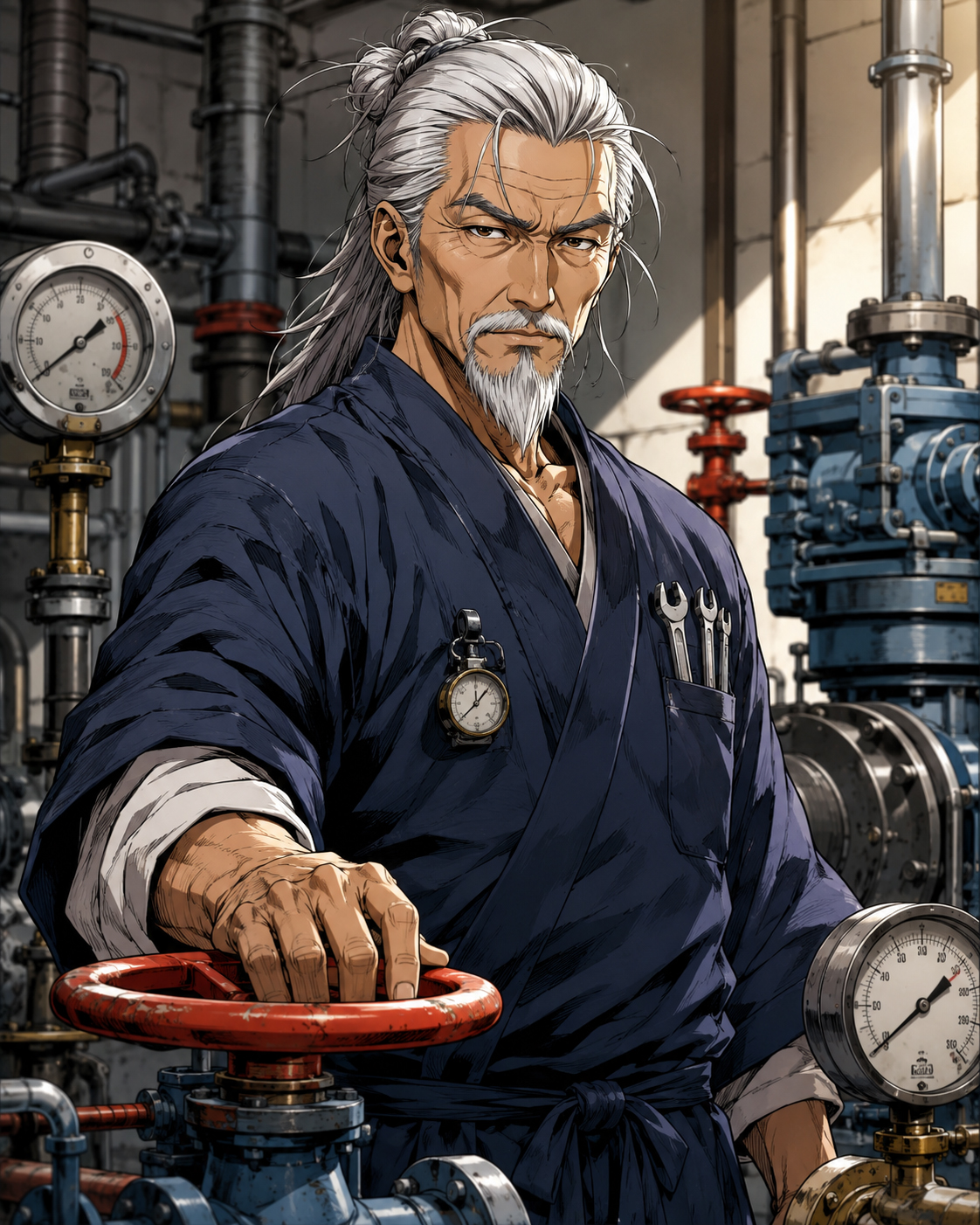
Pressure Sensei teaching PSI and system pressure
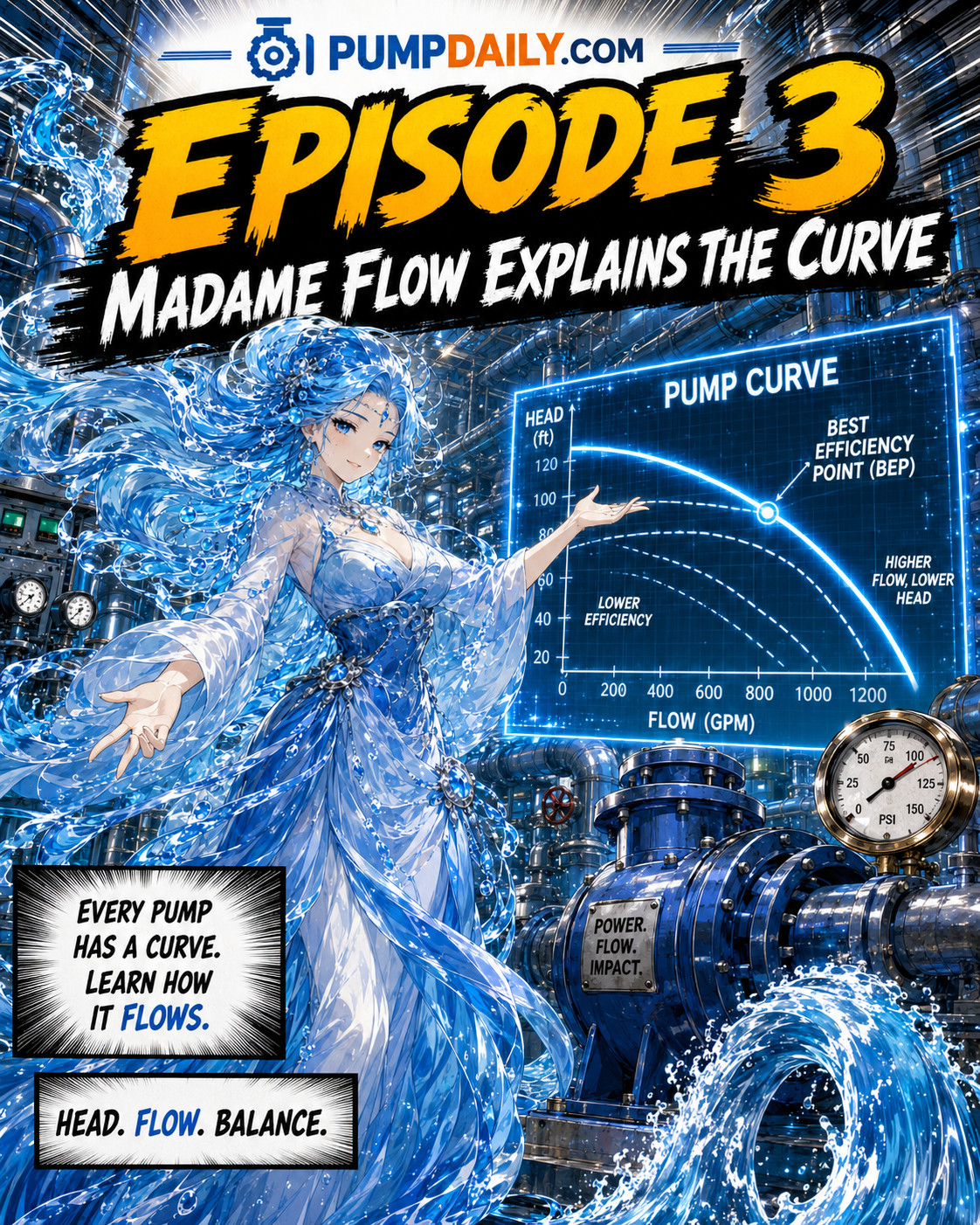
Madame Flow representing water movement and flow
Flow

Flow is how much water is moving.

Flow is the volume of water moving through the system over time. In many water systems, it is expressed in gallons per minute. The destination usually cares about flow: fixtures, sprinklers, filters, tanks, pools, wells, and irrigation zones all need enough water moving.

Valve lesson

Closing a valve can raise pressure and reduce flow.

When a discharge valve is partly closed, the restriction increases. A nearby pressure gauge may rise, but the actual flow through the system may fall.

This is why Pressure Sensei warns: a gauge can be honest and still not tell the whole story.
Pressure Sensei closing a valve while explaining pressure and flow
Madame Flow explaining the pump curve
Curves

The pump curve meets the system curve.

A pump has a performance curve. The piping system has resistance. The real operating point is where those two realities meet. Change pipe size, elevation, filter condition, valve position, or demand, and the operating point changes.

Restriction

Restrictions steal flow.

A dirty filter, clogged strainer, undersized pipe, partly closed valve, kinked hose, blocked nozzle, or excessive fittings can reduce flow while leaving misleading pressure clues.

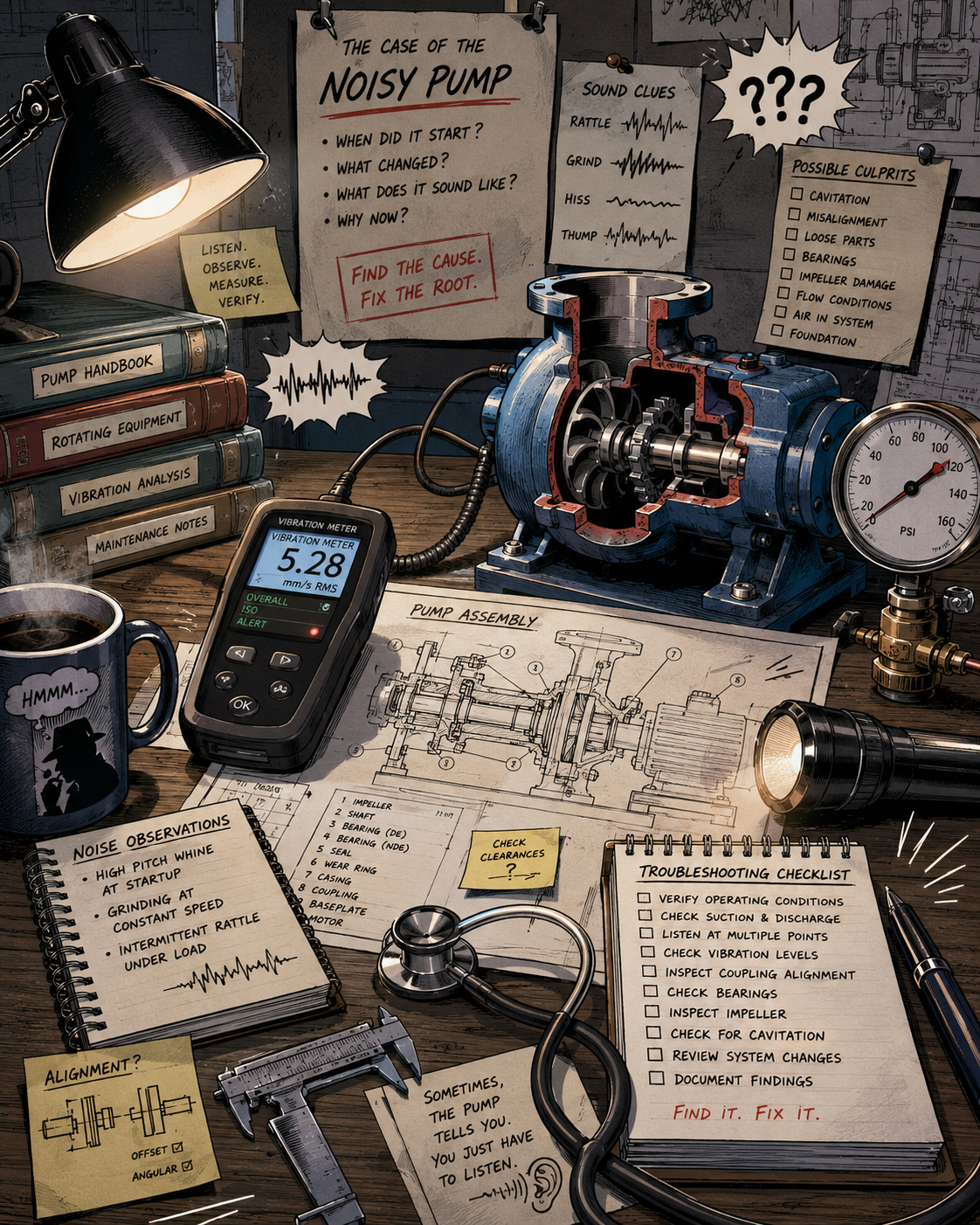
Pump troubleshooting desk with gauges and diagnostic notes
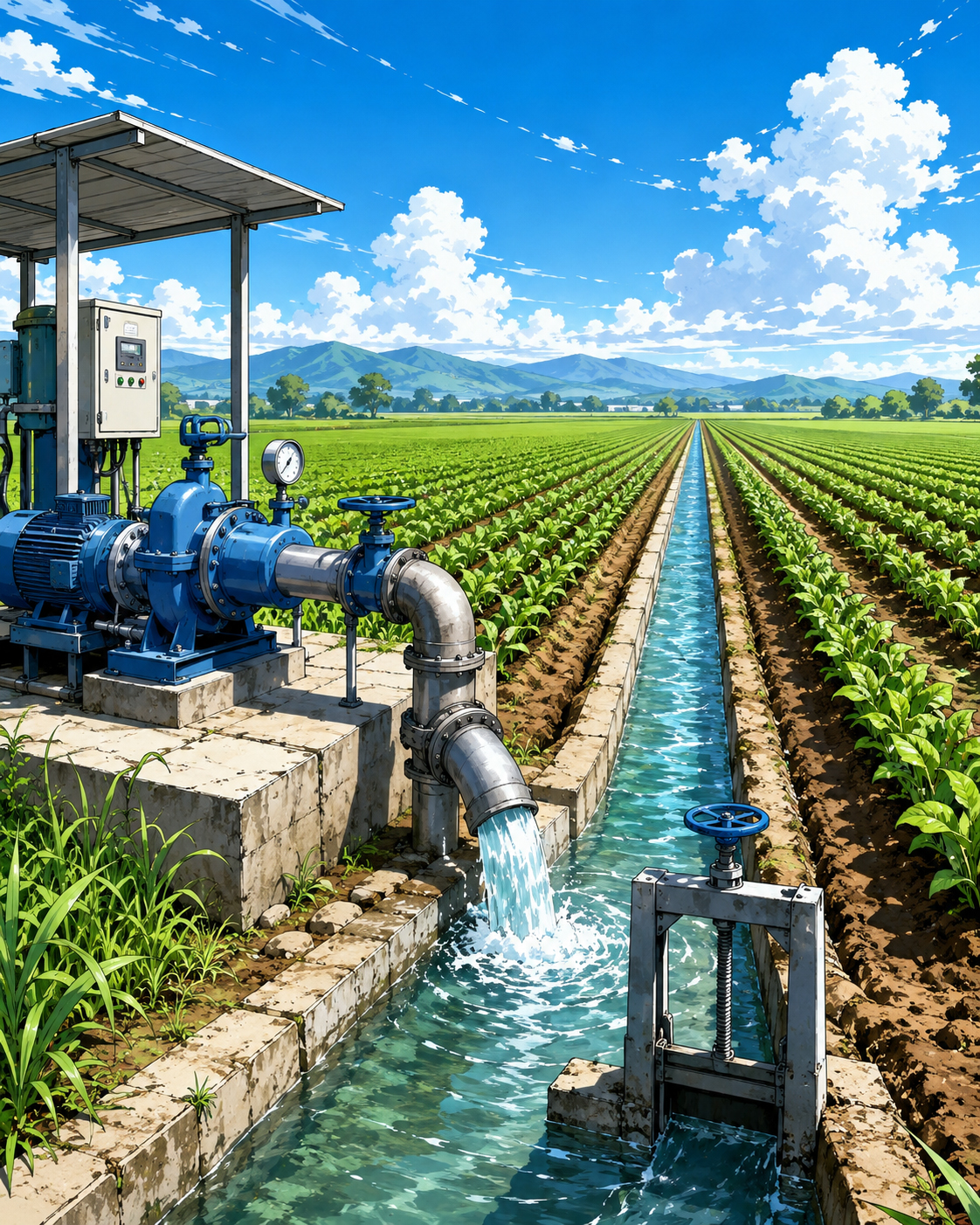
Irrigation pump field lines showing long pipe runs and water demand
Destination

The far end matters.

A gauge near the pump does not prove that water is arriving where it is needed. Check the actual fixture, tank, field, pool return, standpipe, emitter, or process point.

The pump room can look good while the far end is still thirsty.

Pressure vs flow quick guide

Question Pressure clue Flow clue
What is it? Force in the system, often measured in PSI. Water volume moving over time, often measured in GPM.
What does a closed valve do? May raise pressure near the pump. Usually reduces flow through the line.
What does a dirty filter do? May create a pressure difference across the filter. Often reduces useful delivery.
What does undersized pipe do? Increases friction loss. Limits delivery and wastes pump energy.
What does elevation do? Requires head/pressure to lift water. Can reduce available flow if the pump is not suited.
What should you check? Gauge location, static pressure, running pressure, pressure drop. Actual discharge, fixture performance, tank fill rate, meter readings.
Bad diagnosis

Do not replace the pump because one gauge looks wrong.

A pump may be blamed for a closed valve, clogged filter, bad check valve, air leak, failing pressure tank, undersized pipe, wrong control setting, or poor source condition.

Always ask: pressure where, flow where, under what operating condition?
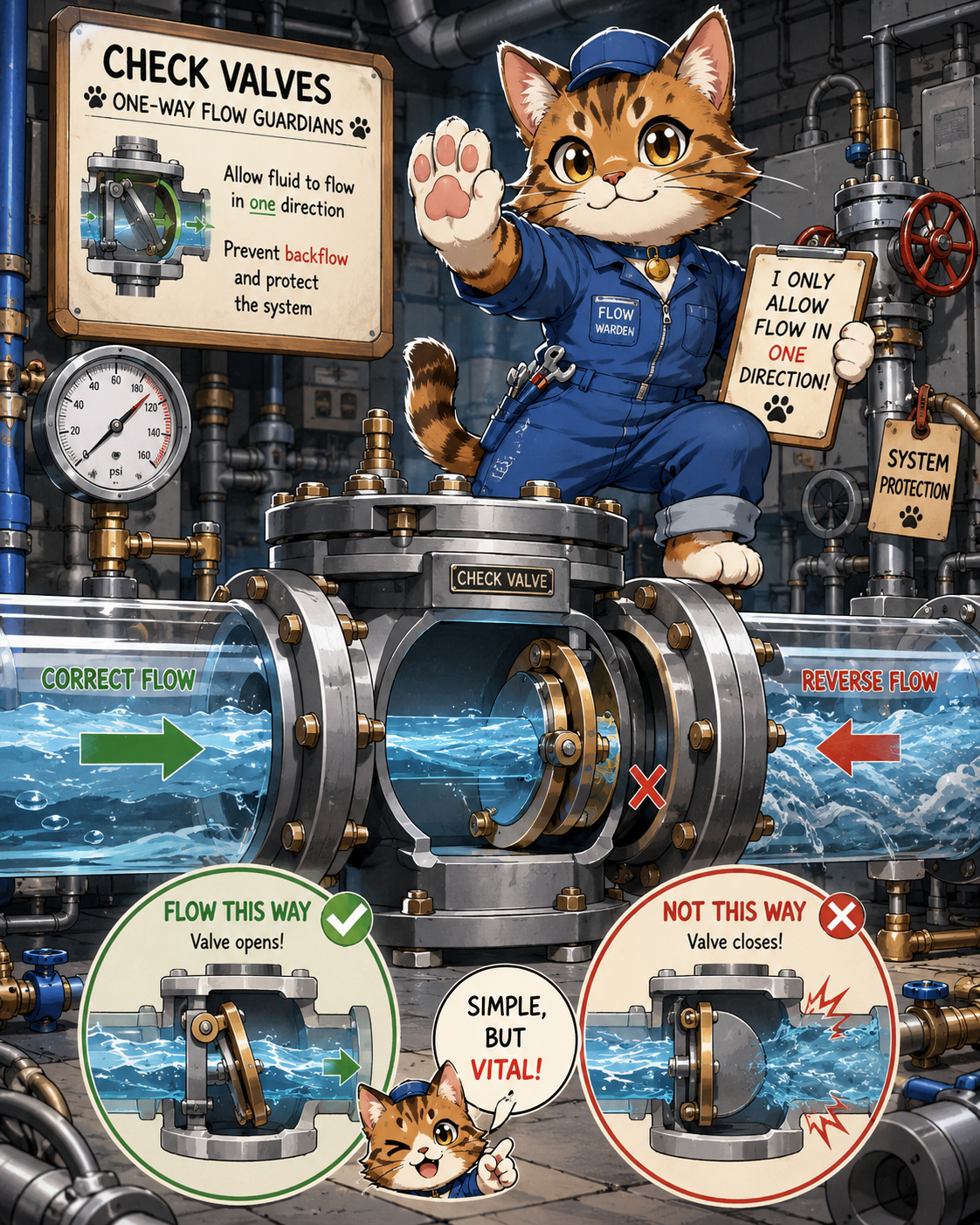
Check Valve Cat guarding one-way flow in a pump system

Keep learning

Where to go next

Safety note: Pressure systems can create leaks, bursts, scalding, flooding, equipment damage, and safety hazards. PumpDaily is educational only.