Pump basics

How Pumps Work

Most pump problems get easier when you follow the energy path: power turns a motor, the motor turns pump parts, the pump adds energy to water, and the system turns that energy into pressure and flow.

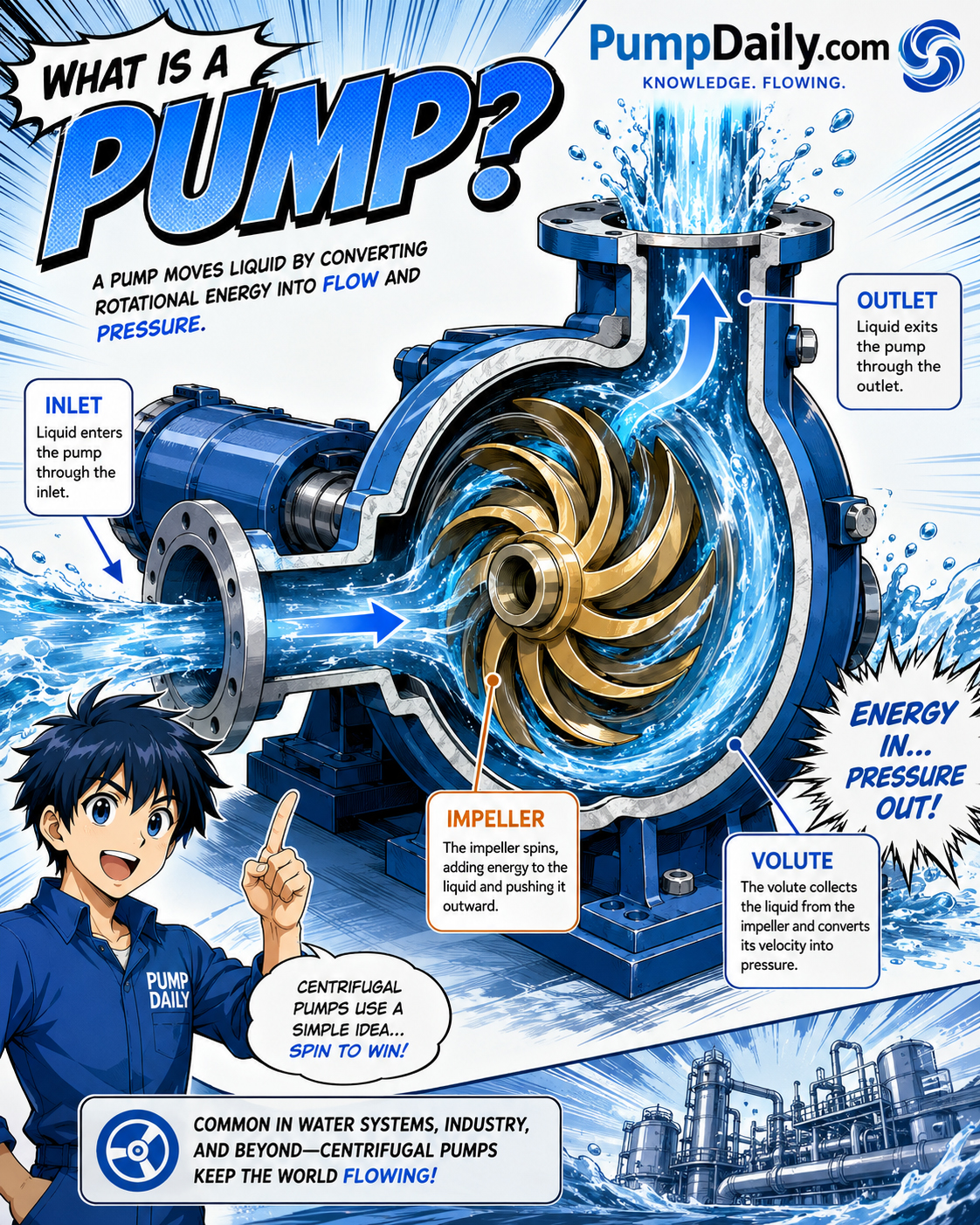
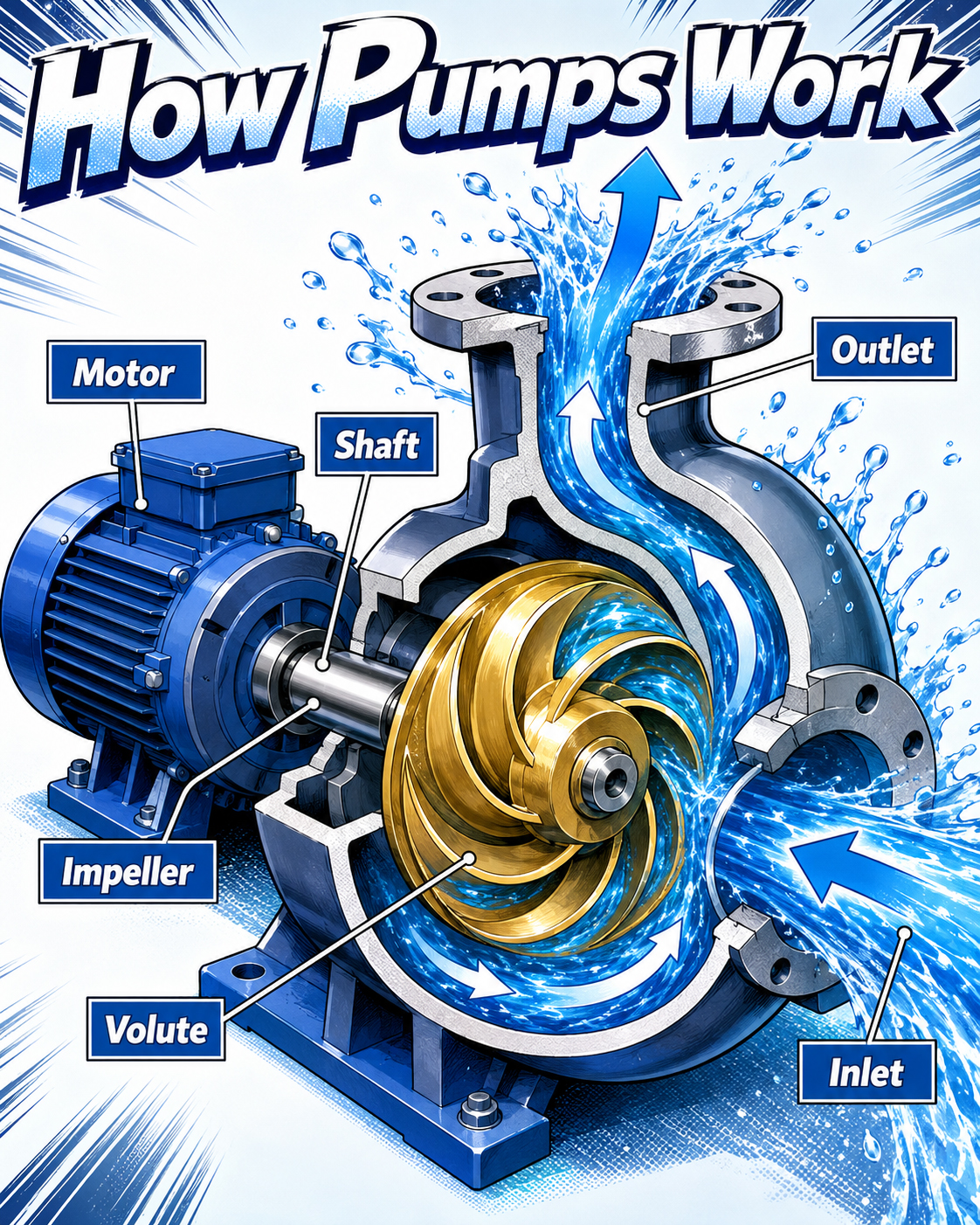
Cutaway view of a pump impeller showing how water moves through a centrifugal pump

Plain-English answer

A pump works by adding useful energy to liquid.

The pump does not “make pressure” in isolation. It adds energy. The system then converts that energy into movement, pressure, velocity, elevation gain, and friction losses.

That is why two pumps with similar horsepower can behave very differently in two different systems.
Step 1

Power enters the system.

The pump needs a power source. That may be utility electricity, a generator, an engine, a solar array, a battery system, or a combination of sources.

Power availability matters. A pump that needs more starting or running power than the source can provide will not behave.
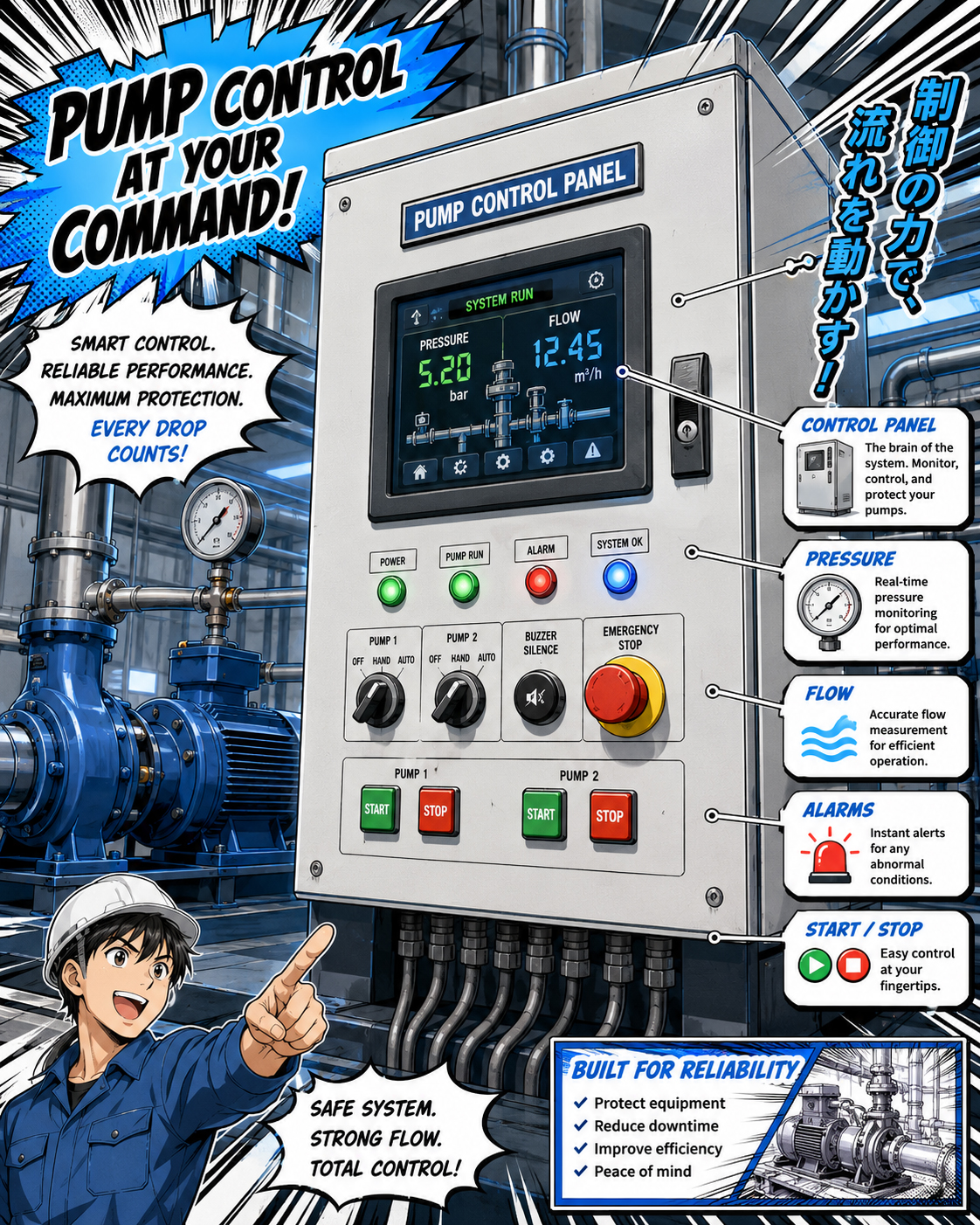
Pump control panel showing switches, gauges, and warning lights
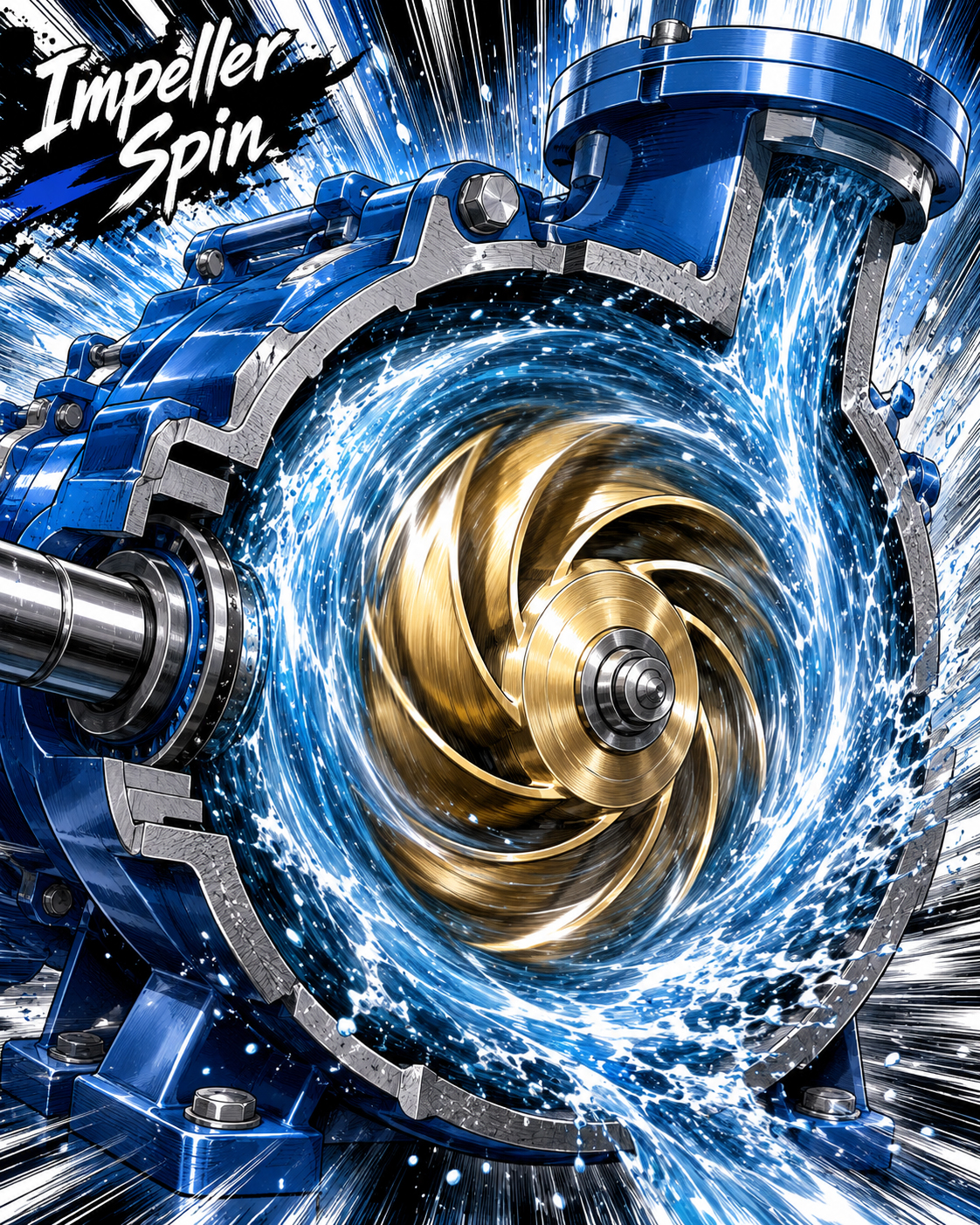
Centrifugal pump impeller spinning with dramatic water movement
Step 2

The motor turns the pump.

In many common water pumps, an electric motor turns a shaft connected to an impeller. The rotating impeller gives water velocity and energy.

Other pump types use different internal mechanics, but the idea remains the same: mechanical motion transfers energy into the liquid.

Step 3

Water enters through the suction side.

The inlet side must deliver water smoothly. A clogged strainer, undersized pipe, air leak, low source level, too much suction lift, or partly closed valve can starve the pump.

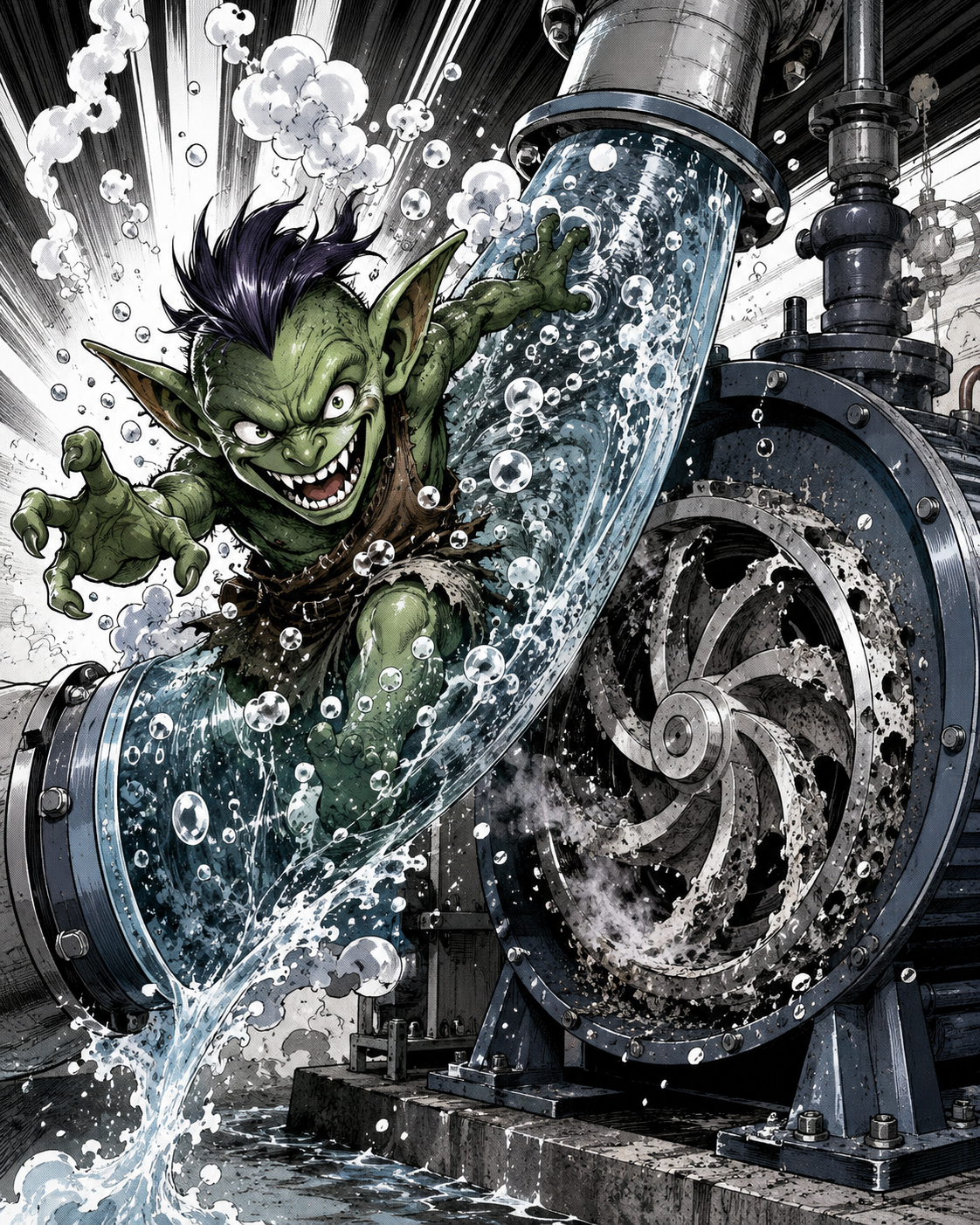
Bad suction conditions are where the Cavitation Goblin likes to live.
Cavitation Goblin hiding in a pump suction line
Manga diagram showing pump suction and discharge flow arrows
Step 4

The pump casing guides the water.

In a centrifugal pump, water is thrown outward from the impeller and guided through the casing toward the discharge. The shape of the pump body helps convert velocity into useful pressure.

Step 5

Water leaves through the discharge side.

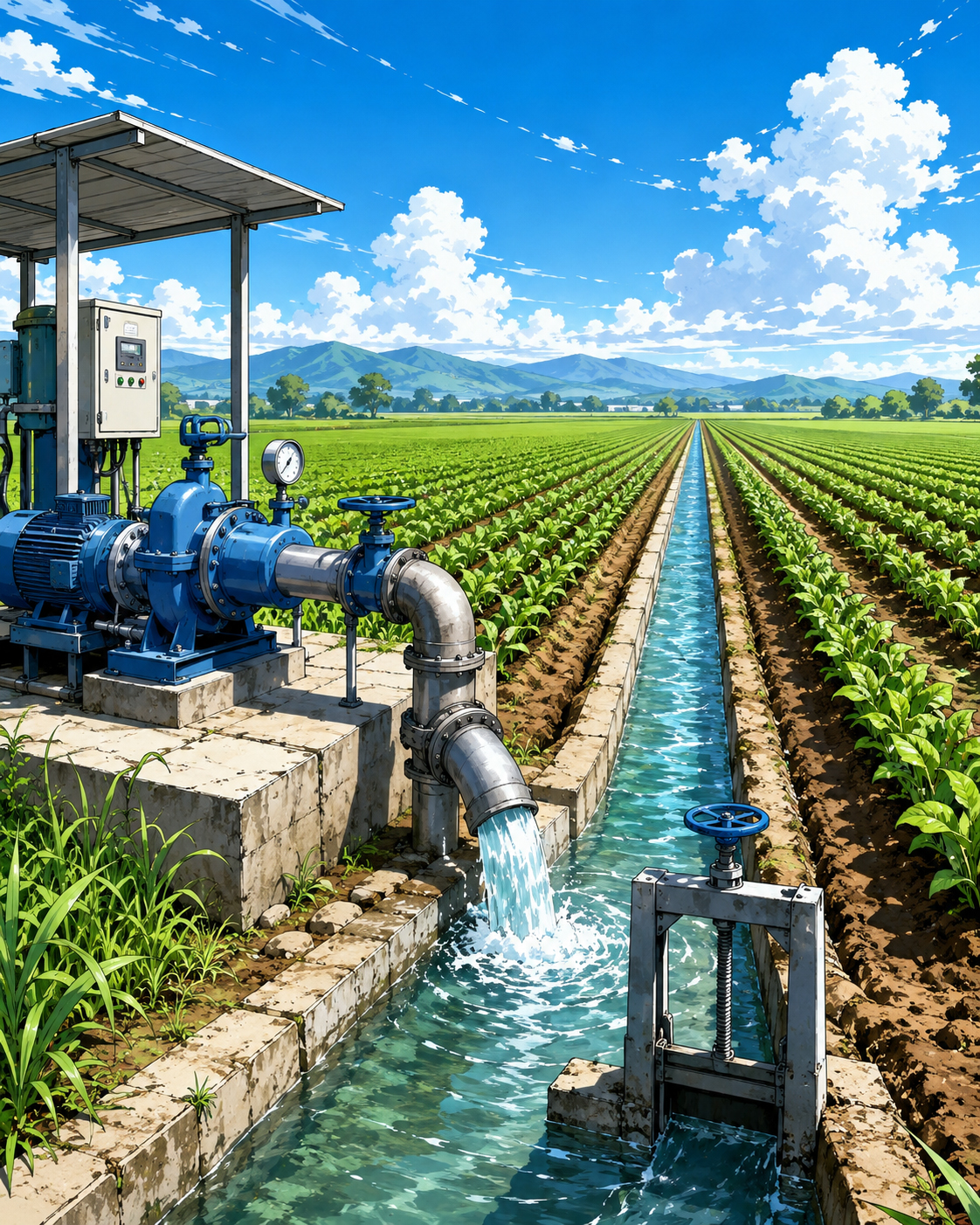
The discharge side is where the system gets the result: water into a tank, pool, filter, irrigation line, pressure system, sprinkler system, drain line, or process loop.

Long pipe, small pipe, dirty filters, elevation, valves, nozzles, and fittings all change the result.

Irrigation pump moving water through field lines
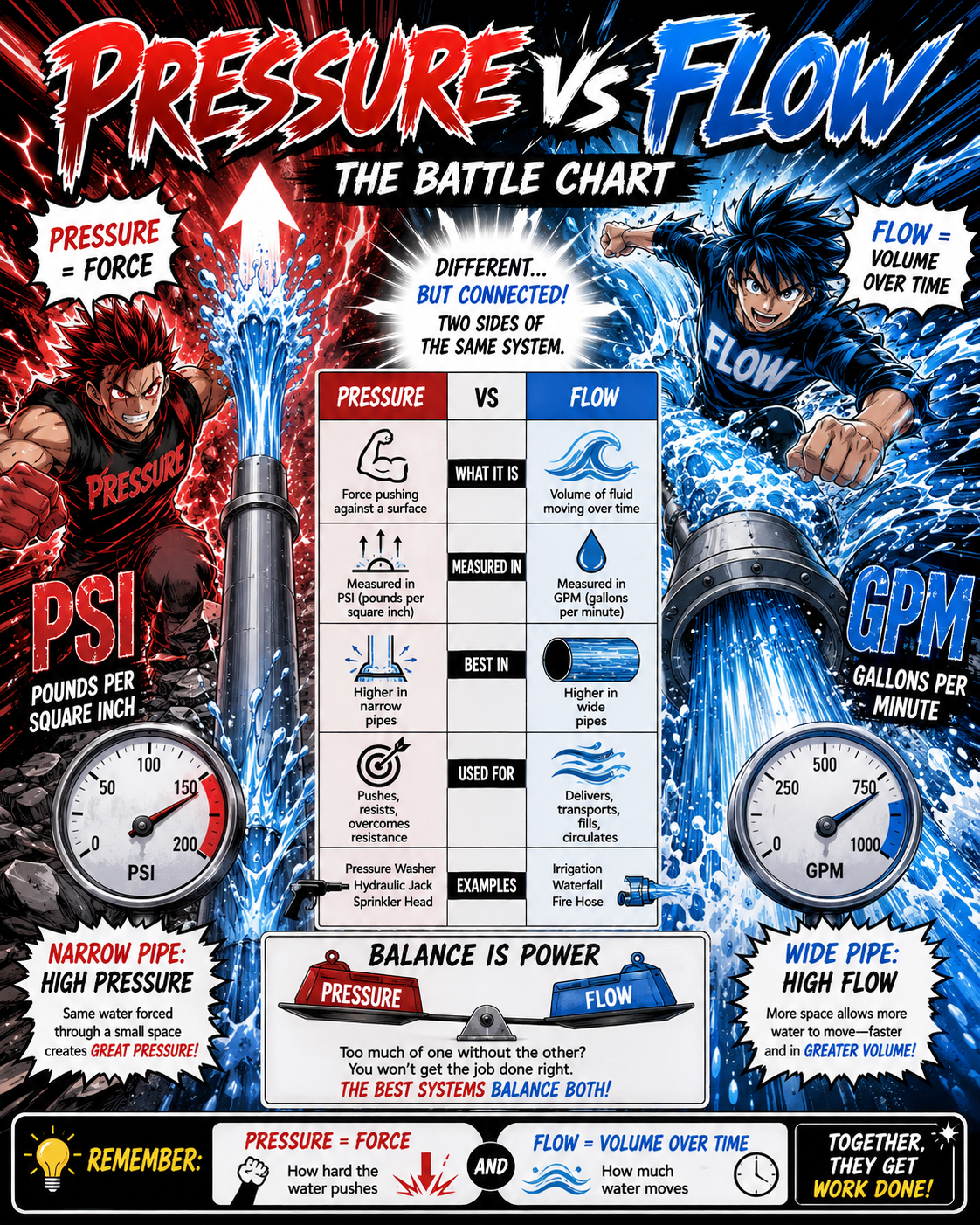
Pressure versus flow battle chart explaining PSI and GPM
Step 6

The system decides pressure and flow.

The pump does not operate in a vacuum. It meets the system curve. If resistance increases, flow may fall. If demand changes, the operating point changes.

The pump curve and the system curve meet at the real operating point.

The pump process in one table

Stage What happens Common problem
Power Electricity, engine power, solar, or stored energy becomes available. Undersized circuit, weak generator, low voltage, poor controls.
Motor The motor turns the shaft or drive mechanism. Overload, bad capacitor, wrong voltage, failed bearing.
Suction Water enters the pump from the source. Air leak, clogged strainer, low source, excessive lift.
Pumping element The impeller or internal mechanism adds energy to the liquid. Worn impeller, debris, cavitation, wrong pump selection.
Discharge Water exits toward the job. Closed valve, dirty filter, undersized pipe, high elevation.
Controls Switches, sensors, drives, relays, or controllers manage operation. Bad float, failed pressure switch, bad relay, wrong settings.
Controls

Controls tell the pump when to run.

A pump may be controlled by a pressure switch, float switch, timer, level sensor, controller, variable frequency drive, fire pump controller, solar pump controller, or building automation system.

A perfectly good pump can look broken when the control system is wrong.

Float Switch Fairy explaining how a sump pump float switch works
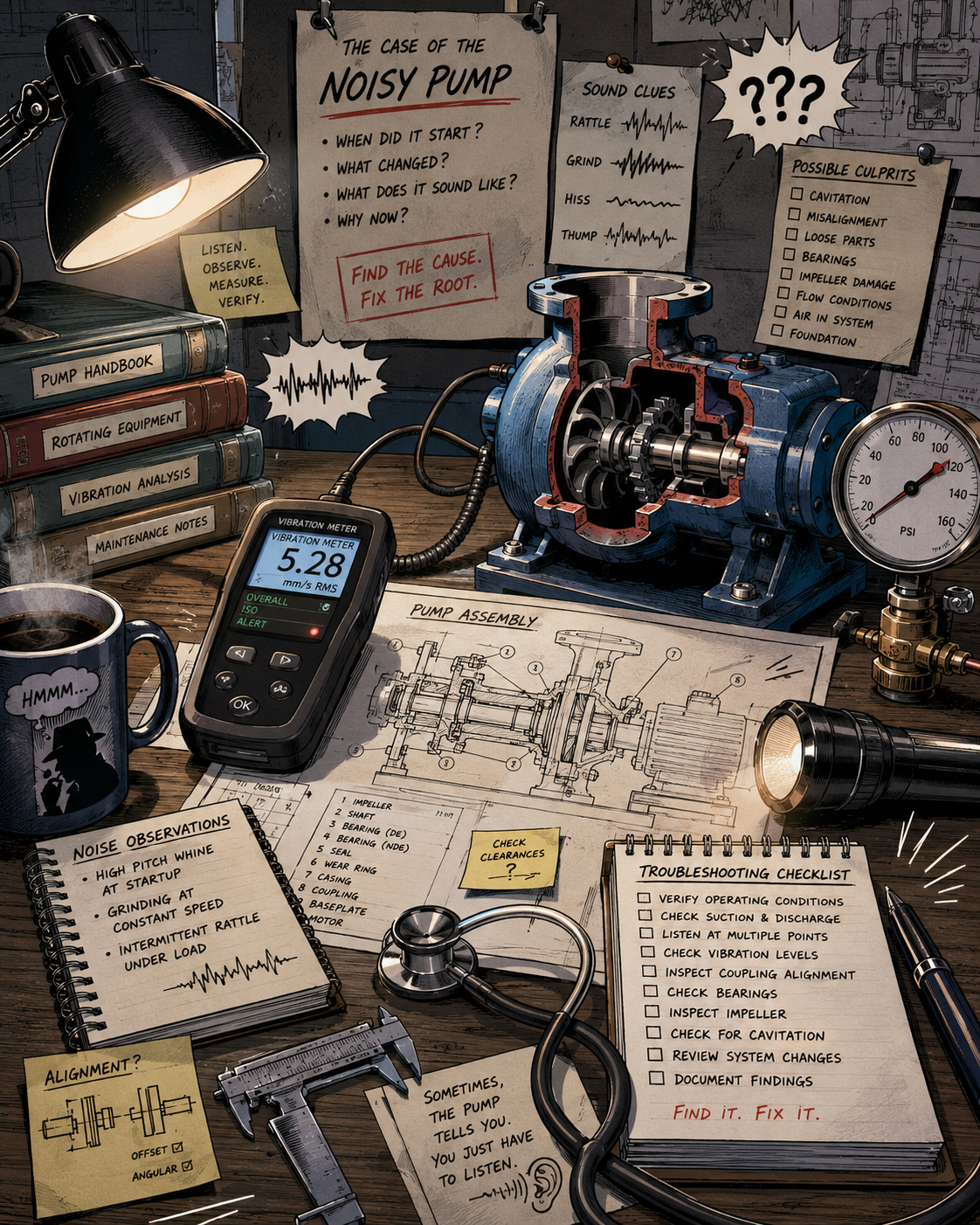
Pump troubleshooting desk with gauges and diagnostic notes
Diagnostics

Good troubleshooting follows the path.

Start with the power source, then the controls, then the suction side, pump body, discharge side, check valves, filters, pressure tanks, and final water destination.

Do not replace a pump until you understand the system it is fighting.

Keep learning

Where to go next

Safety note: Pump systems may involve electricity, pressure, moving parts, water damage, potable water, wastewater, and code-regulated installations. PumpDaily is educational only.