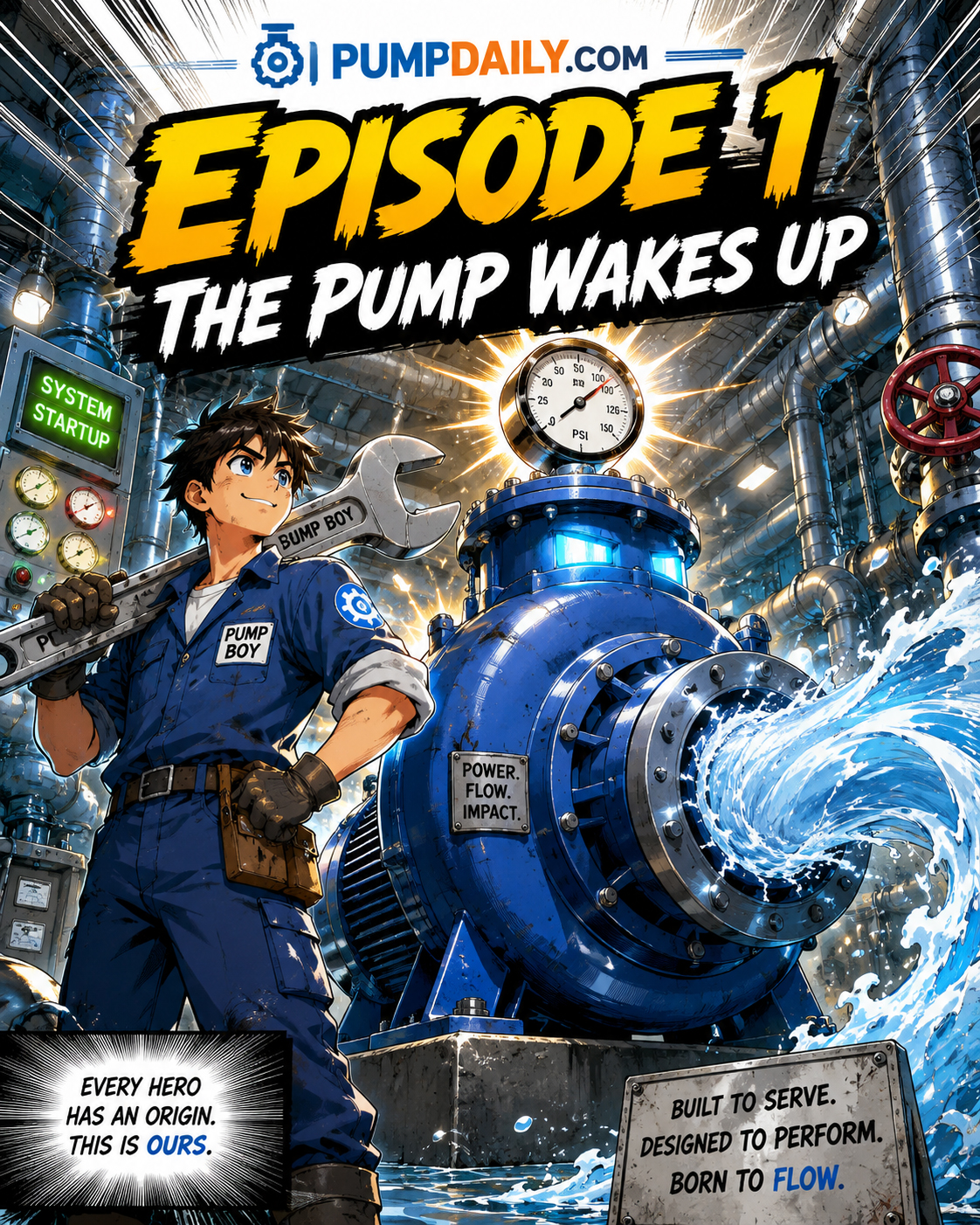
Episode 1

The Pump Wakes Up

Pump Boy enters the pump room and learns the core lesson: a pump adds energy to water so it can move through a system.

Episode 1 cover showing a heroic pump waking up in a dramatic manga pump room

Manga lesson

The machine in the corner starts humming.

Pump Boy walks into the pump room holding a wrench that is far too large for his current level of responsibility. The gauges are quiet. The valves are waiting. The pipe is full of possibility.

Then the motor starts. The pump does not create water. It takes energy and gives that energy to liquid, pushing water through the system toward the job it is supposed to do.

Panel 1

The silent pump room

Before startup, Pump Boy sees pipes, valves, gauges, and a machine with a motor bolted to a pump body. Every pump system has a path: source, suction side, pump, discharge side, valves, controls, and destination.

Dramatic PumpDaily pump room with pressure, flow, and gauges
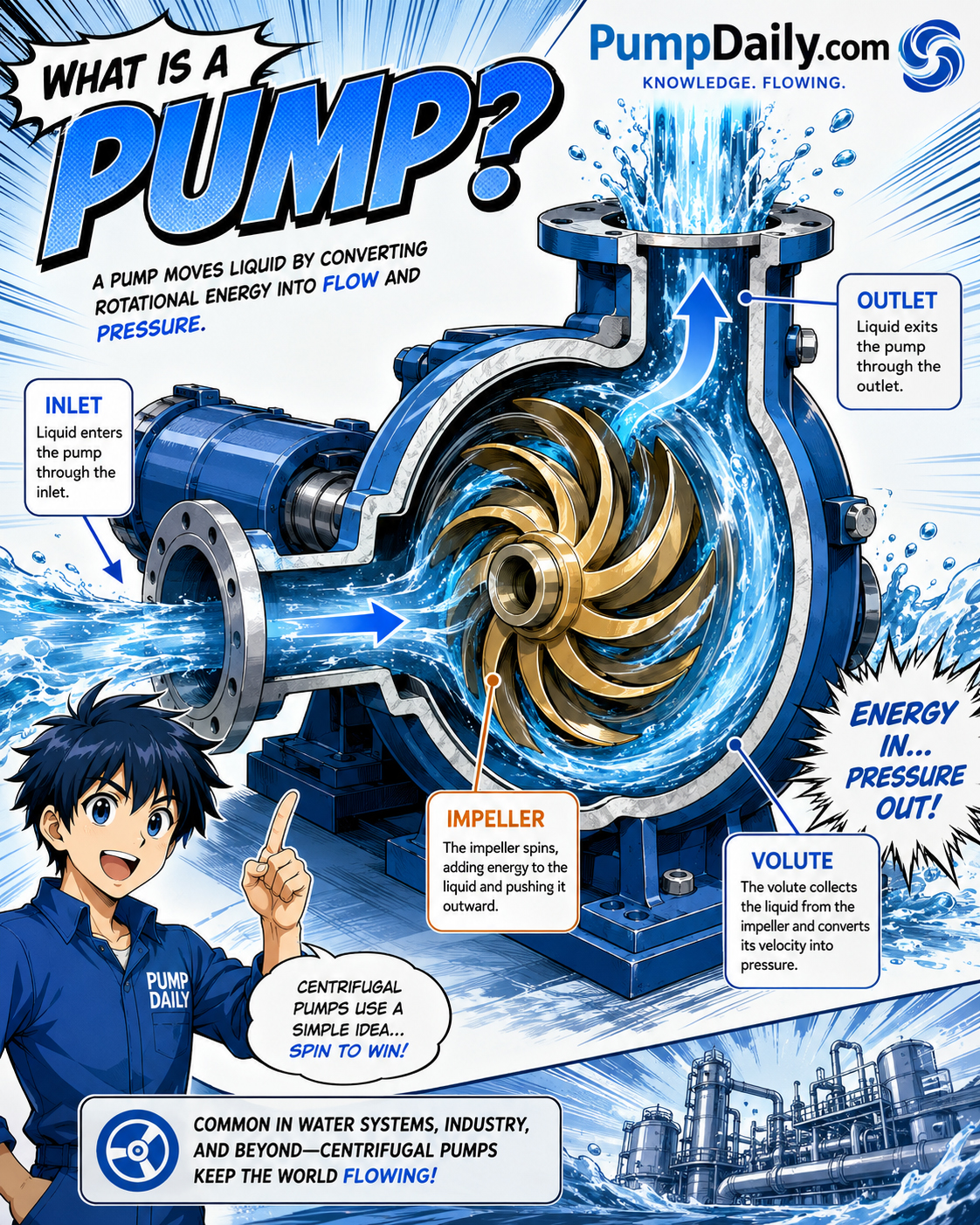
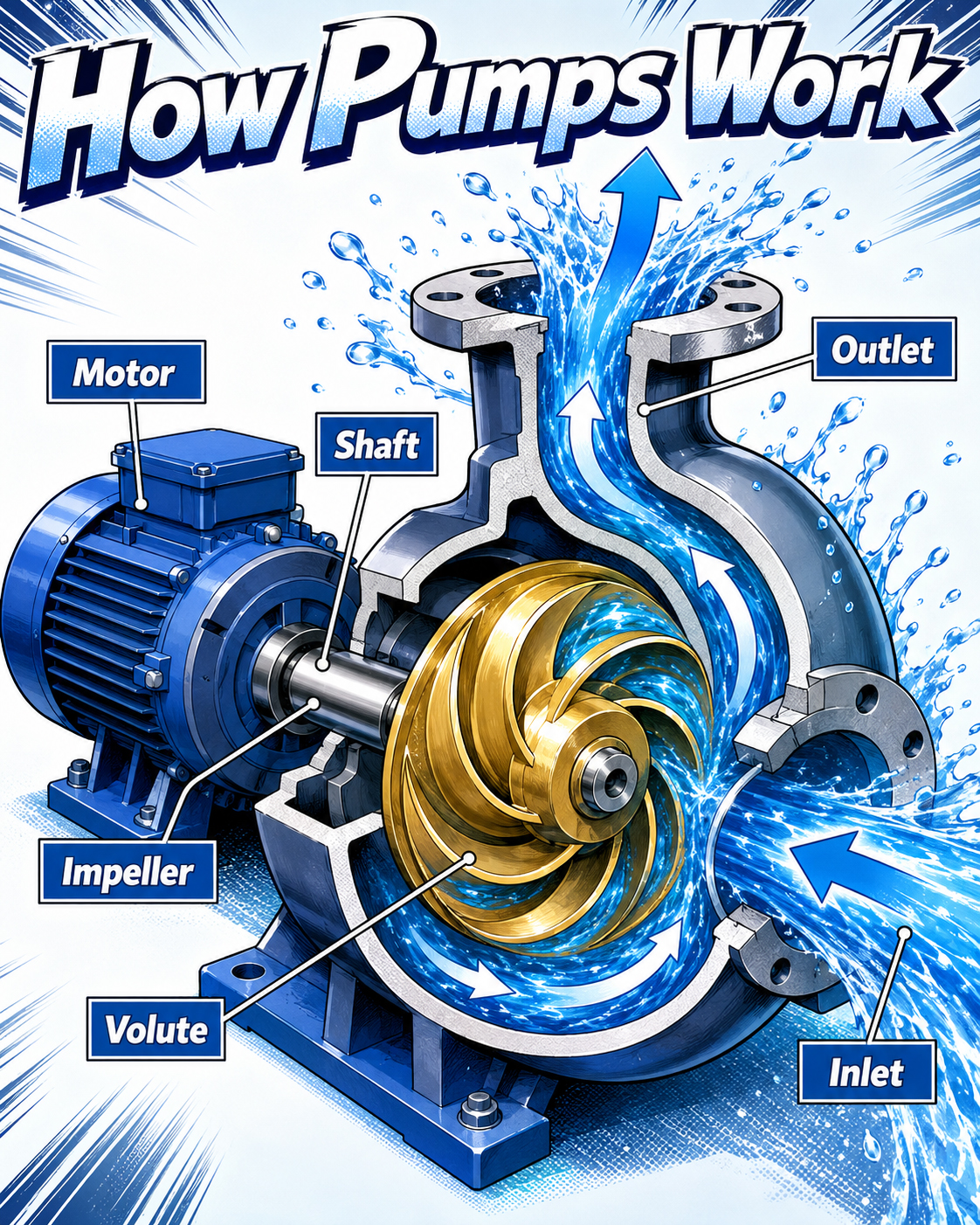
Cutaway image showing water entering a pump impeller and moving through the casing
Panel 2

The motor gives the signal

A pump needs power. That power may come from an electric motor, engine, solar system, battery system, or another source. The motor turns the shaft and the impeller begins to spin.

Pump Boy learns the first rule: the pump is an energy-transfer machine.
Panel 3

Water enters the suction side

Water enters through the suction side. This does not mean the pump can magically pull water through bad pipe, clogged screens, closed valves, or air leaks. The pump needs water to arrive properly.

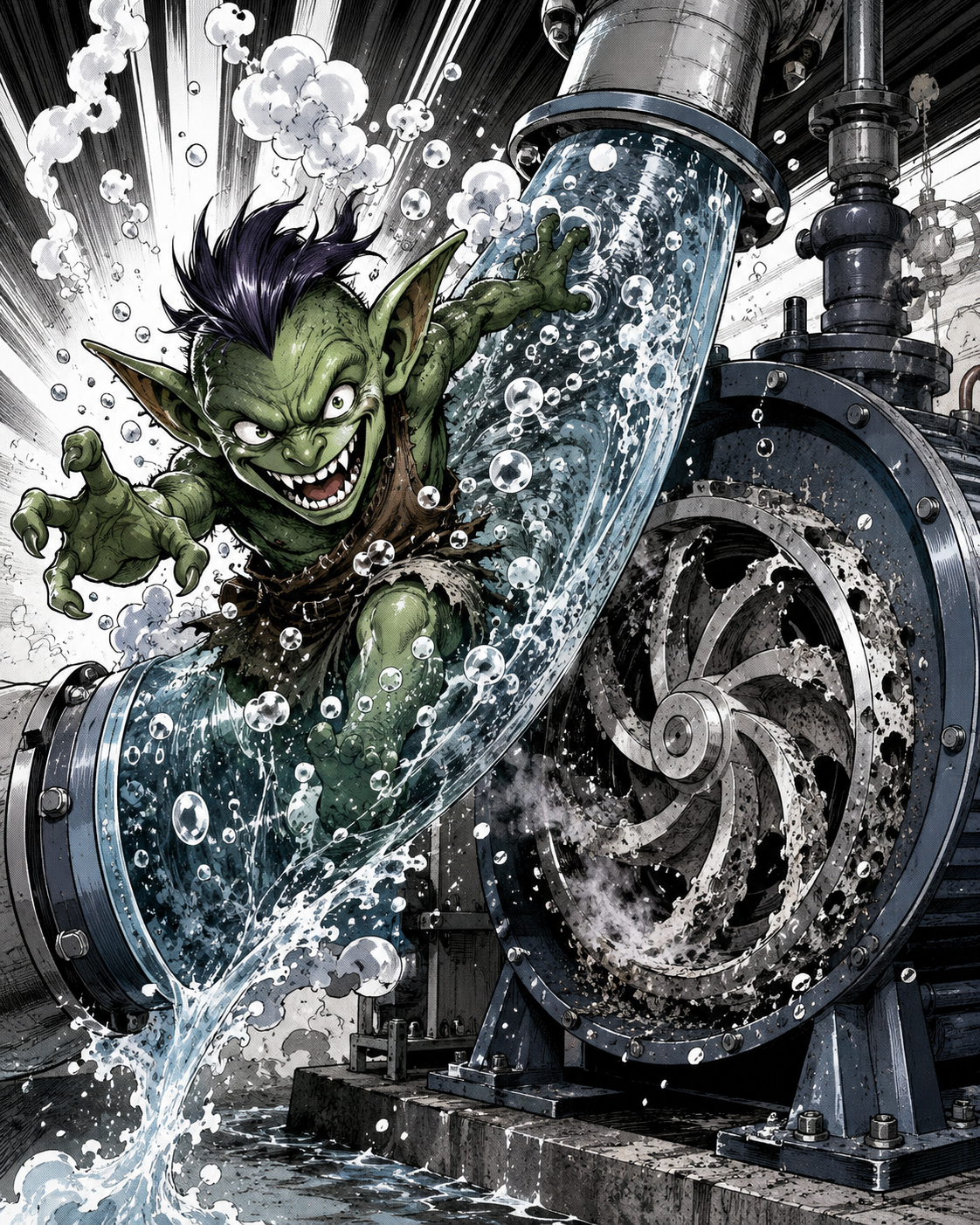
Cavitation Goblin hiding in a pump suction line
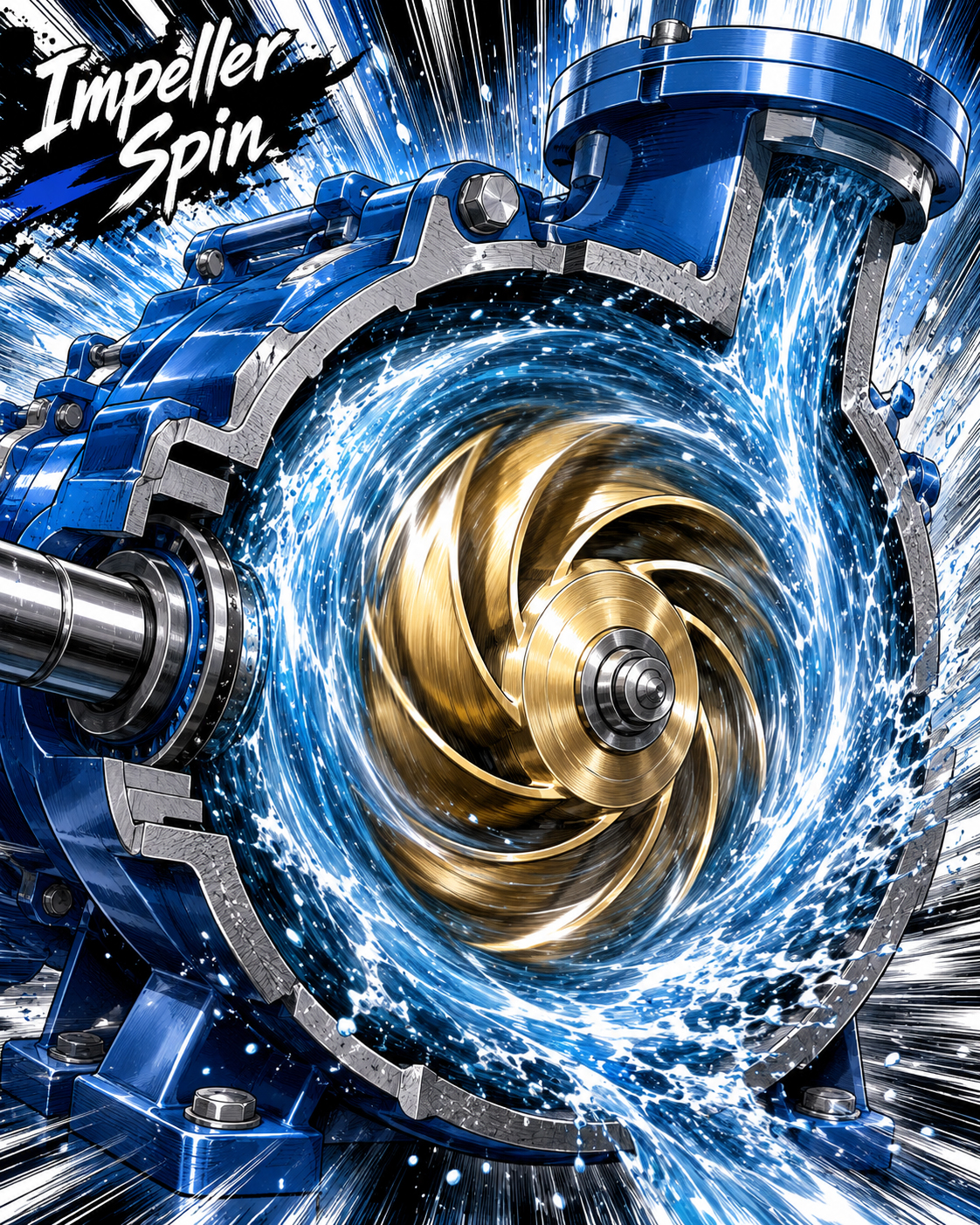
Centrifugal pump impeller spinning with dramatic water movement
Panel 4

The impeller starts the drama

The impeller spins and throws water outward. The casing guides the moving water toward the discharge outlet. Suddenly the quiet system has movement, sound, pressure, and purpose.

“The impeller does not argue. It spins. The system does the arguing.”
Panel 5

Water leaves the discharge side

On the discharge side, water heads toward the job: a tank, filter, field, fixture, pool return, fire line, pressure tank, or drain line. The pump has added energy, but the system still decides how much useful flow reaches the destination.

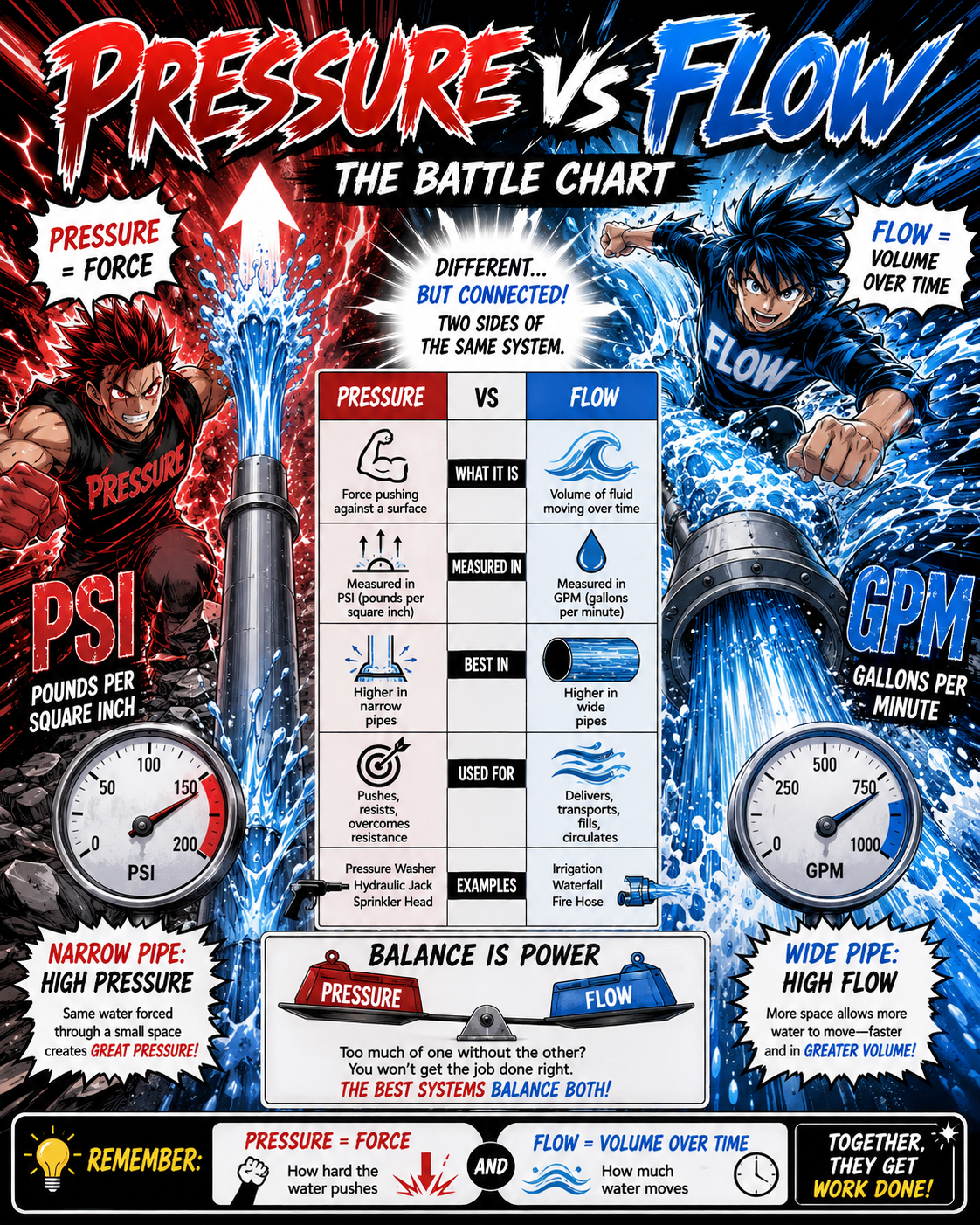
Pressure versus flow battle chart showing the difference between PSI and GPM
Manga diagram explaining basic pump operation with water flow arrows
Panel 6

The system is the story

Pump Boy thinks the pump is the hero. Madame Flow corrects him gently. The pump matters, but so do pipe size, valves, controls, source water, filters, elevation, check valves, and the pump curve.

What Episode 1 teaches

Lesson Plain-English takeaway
A pump adds energy It uses power to move liquid through a system.
The suction side matters The pump needs water to arrive smoothly and adequately.
The impeller moves water In many pumps, a spinning impeller gives water velocity and energy.
The discharge side does the job Water leaves the pump and moves toward the actual use.
Pressure and flow are different PSI is force; GPM is the amount of water moving.
The system decides performance Pipe, valves, filters, elevation, controls, and source conditions matter.

Episode ending

The pump room lights glow. The gauge needles move. Pump Boy smiles because the water is moving. In the shadows, a small goblin hears a restriction forming on the suction side.

Episode 2 begins there.

Safety note: PumpDaily is educational only. Real pump systems can involve electricity, pressure, water damage, fire protection, potable water, wastewater, and code requirements.

Season guide

Continue the PumpDaily season