Manga lesson
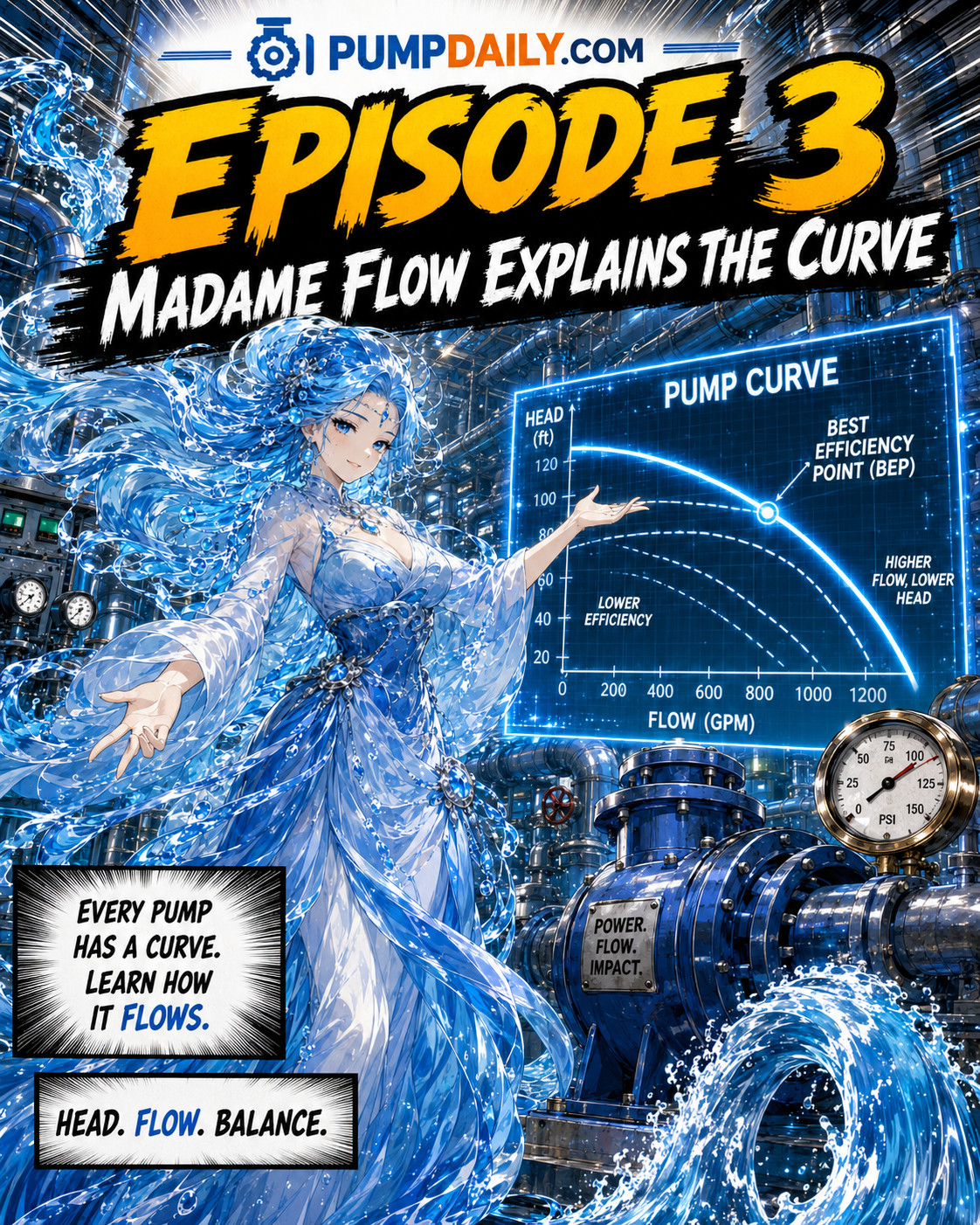
The curve appears on the wall.
Pump Boy thinks the pump room mystery is over. The pump runs. The water moves. Then Madame Flow unrolls a chart across the wall.
“This,” she says, “is where the pump tells the truth.”
Episode 3
The pump is awake and the Goblin has retreated. Now Madame Flow unrolls the map that tells what the pump can actually do: the pump curve.
Manga lesson
Pump Boy thinks the pump room mystery is over. The pump runs. The water moves. Then Madame Flow unrolls a chart across the wall.
“This,” she says, “is where the pump tells the truth.”
A giant horsepower badge enters the scene and flexes like it solved everything. Madame Flow smiles politely and asks one question: “At what flow and what head?”
The pump curve shows how much flow the pump can deliver at different head or pressure conditions. As the system asks for more head, the pump usually delivers less flow.
The system curve represents the resistance of the real installation: pipe length, pipe size, fittings, valves, filters, elevation, nozzles, emitters, tanks, and equipment.
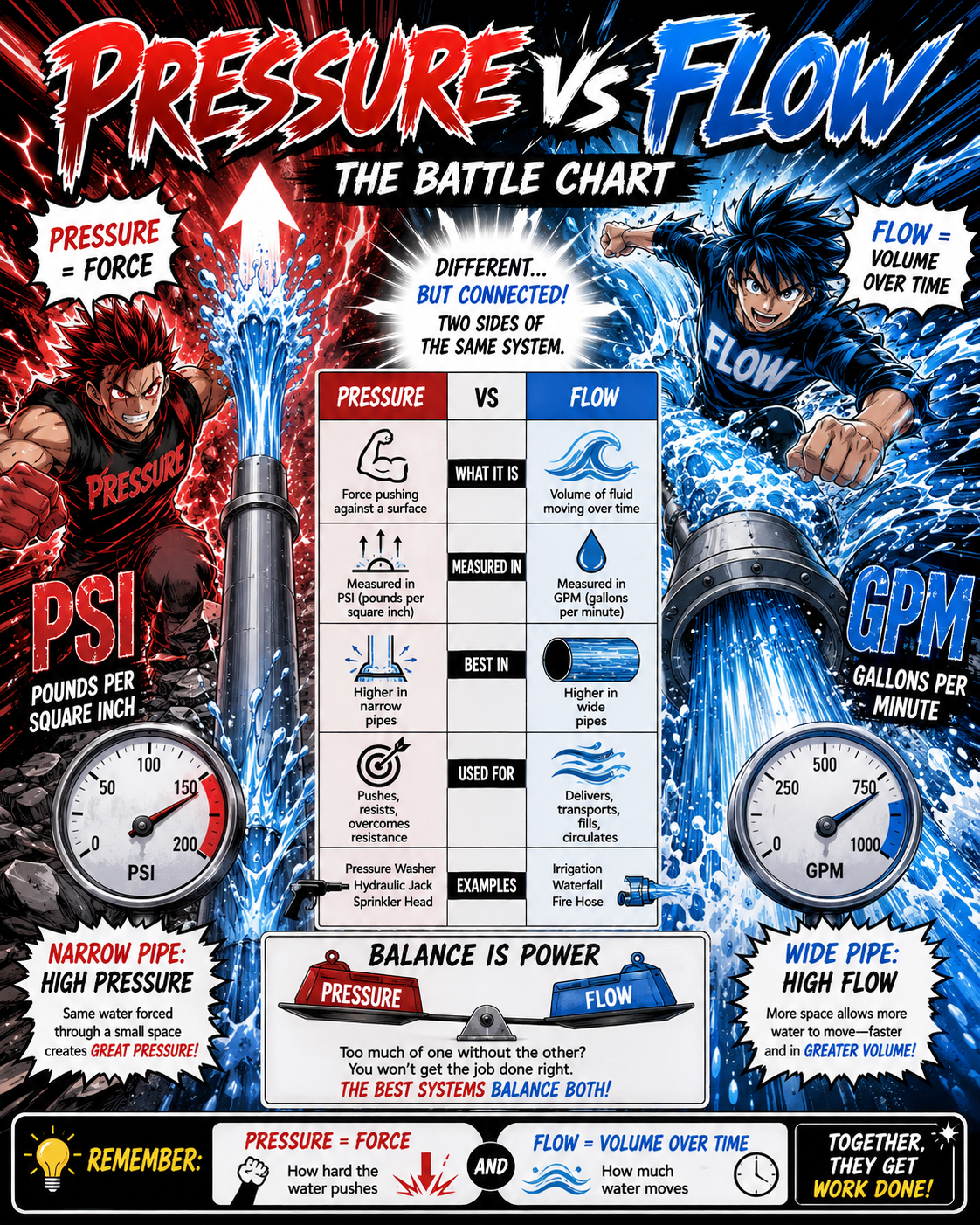
Madame Flow circles a point on the chart. This is the target flow and head the system actually needs. The question is no longer “Can this pump move water?” It is “Can it move this water through this system?”
A dirty filter waddles in. A long pipe rolls across the floor. A half-closed valve clears its throat. Each one adds resistance, and the system curve climbs.
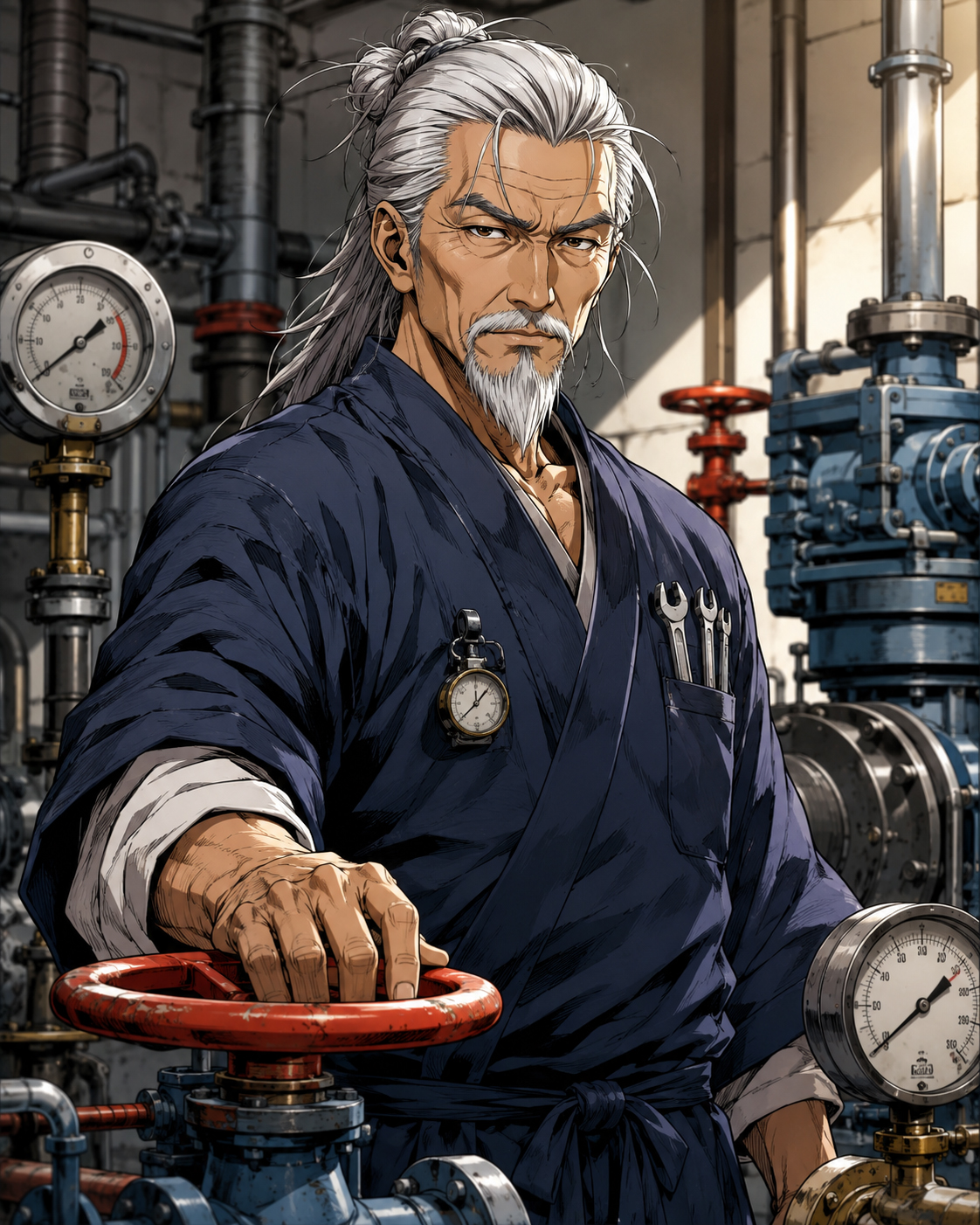
Pump Boy suggests a bigger pump. Pressure Sensei appears from behind a gauge: “Sometimes bigger creates bigger problems.”
| Lesson | Plain-English takeaway |
|---|---|
| Pump curve | A chart showing how the pump performs at different flow and head conditions. |
| System curve | The resistance created by piping, fittings, valves, filters, elevation, and equipment. |
| Duty point | The target flow and pressure/head the system needs. |
| Operating point | Where pump performance and system resistance meet. |
| Horsepower | Useful information, but not a full pump design. |
| Oversizing | A bigger pump can create cycling, pressure, velocity, energy, and control problems. |
Pump Boy pins the curve to the wall. The pump room feels less mysterious now, but Pressure Sensei is already standing next to a valve.
“Next lesson,” he says, “we close this.”