Episode 2

Cavitation Goblin Enters

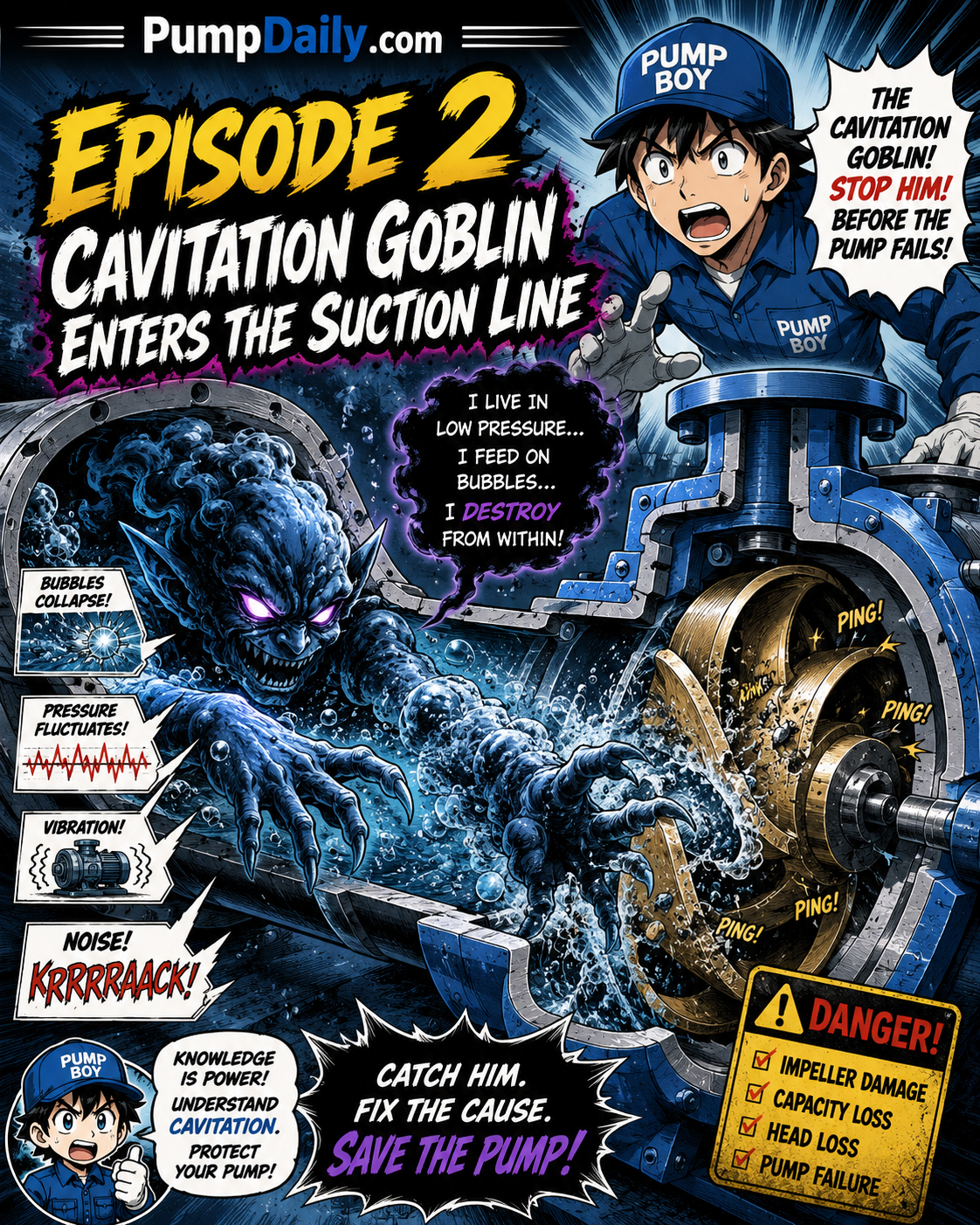
The pump is awake, but the suction side is not happy. A restriction appears, inlet pressure drops, bubbles form, and the Cavitation Goblin starts dancing.

Episode 2 cover showing Cavitation Goblin entering a pump suction line

Manga lesson

The suction line starts whispering.

Pump Boy hears it first: a rough, gravelly sound from inside the pump casing. The gauge needle trembles. The pipe vibrates. Somewhere near the inlet, water is not arriving the way it should.

The Cavitation Goblin appears in a cloud of bubbles and points at the suction side: “You ignored my favorite neighborhood.”
Panel 1

The pump wants more than the line can give.

The pump is running, but the suction side is restricted. Maybe the pipe is too small, the strainer is clogged, a valve is partly closed, or air is sneaking in through a fitting.

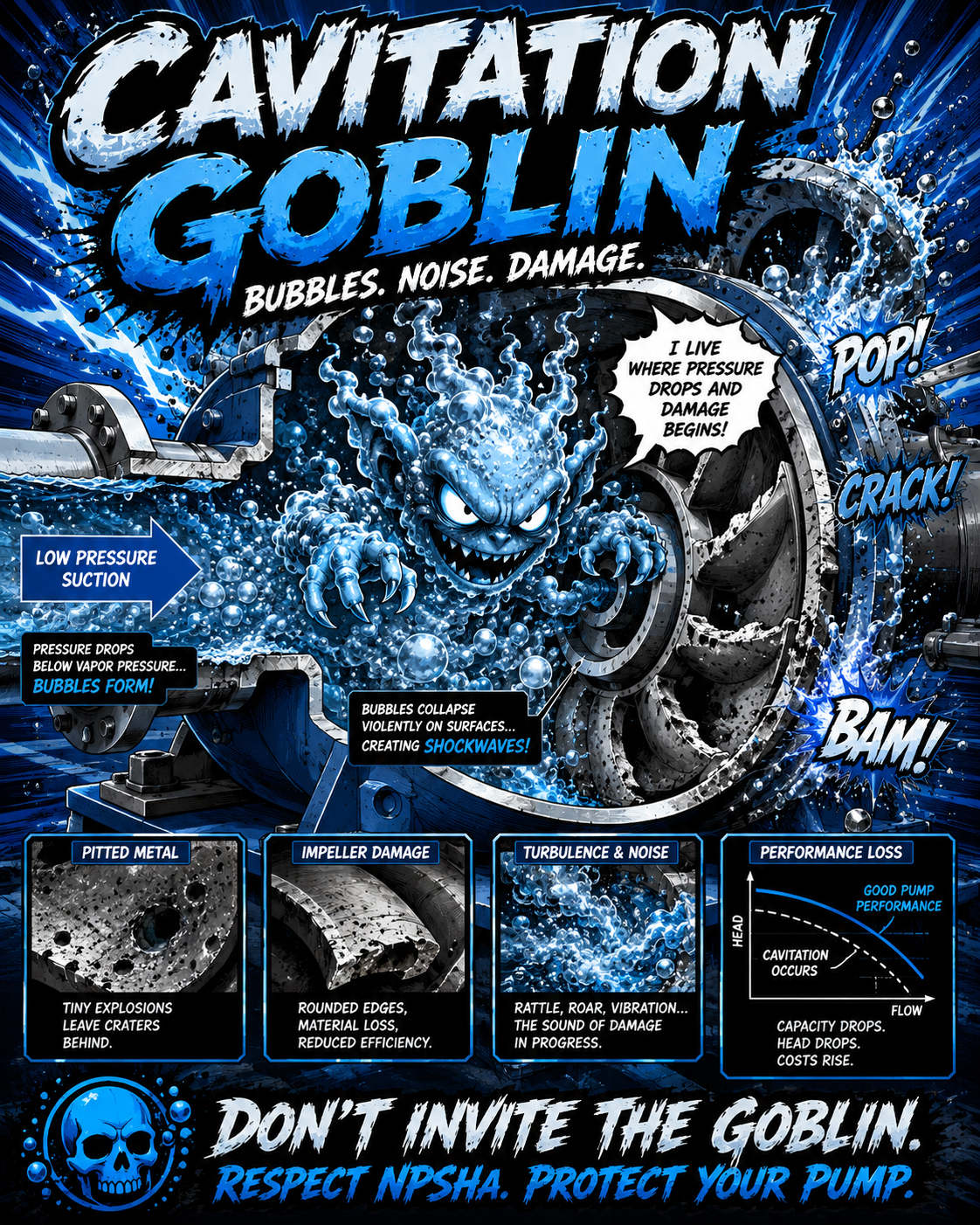
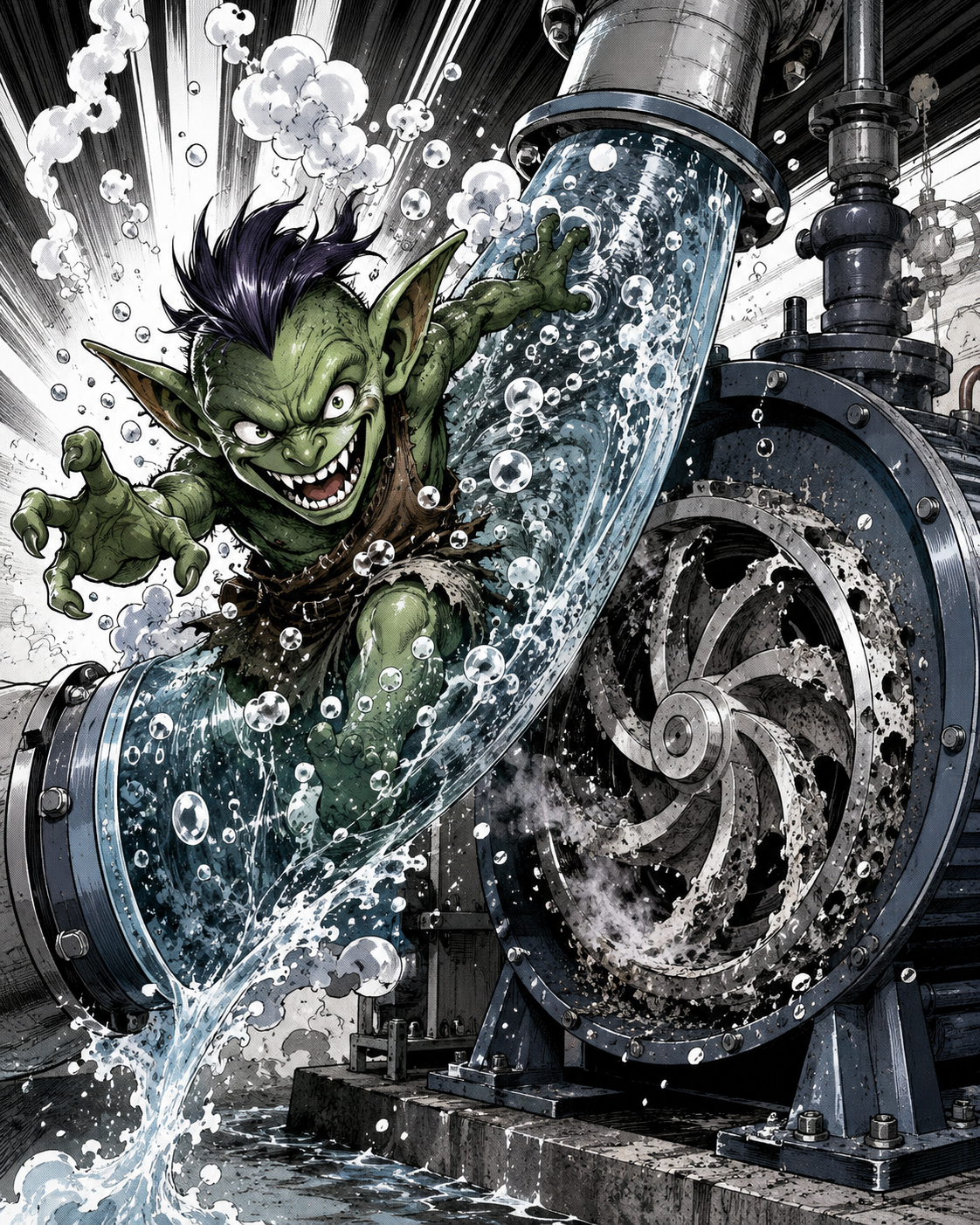
Cavitation Goblin causing trouble inside a pump suction line
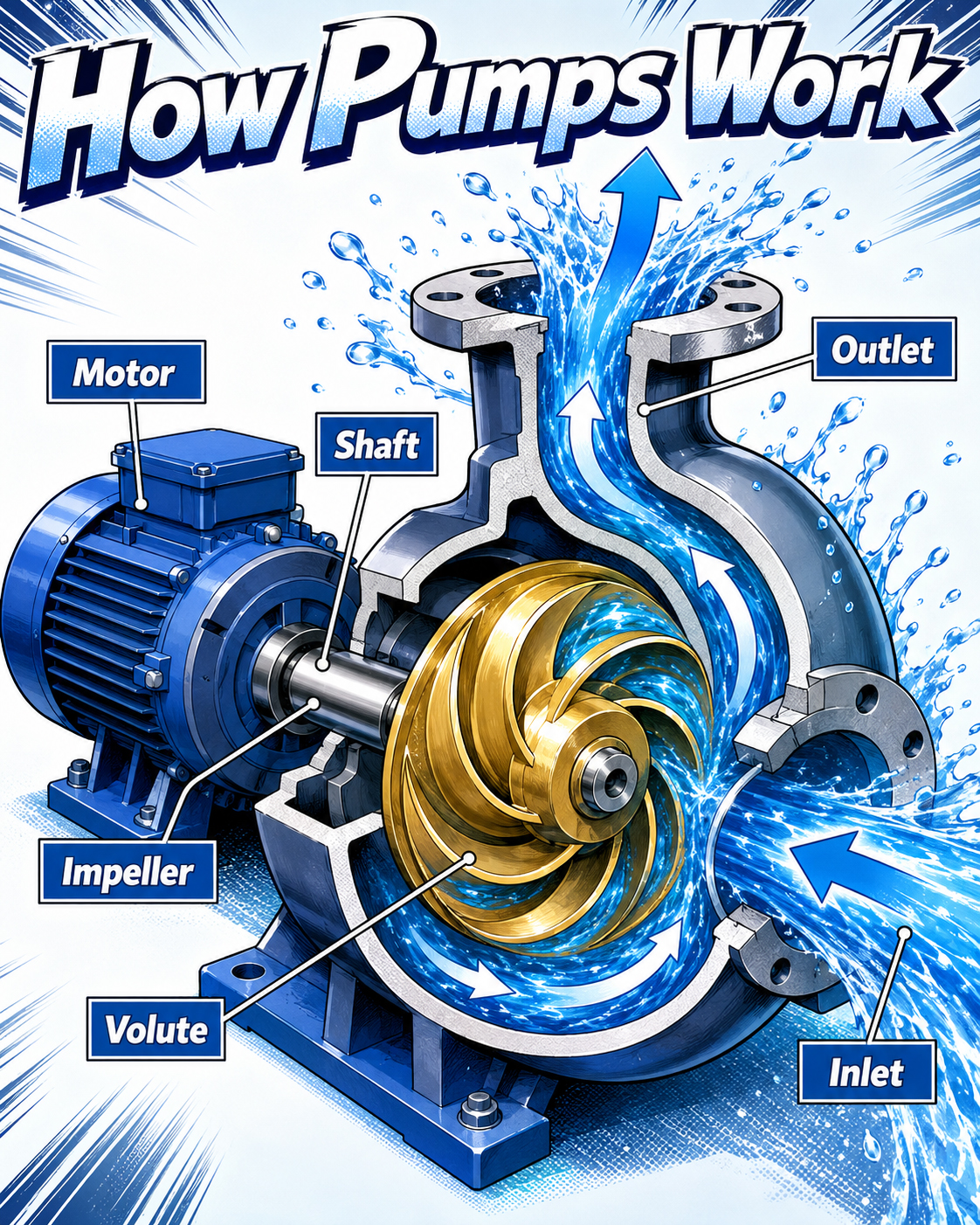
Pump impeller cutaway showing the inlet and water path
Panel 2

Pressure drops too low.

Inside the pump, local pressure can drop low enough for vapor bubbles to form. These are not friendly bubbles. They are the beginning of cavitation.

Pump Boy writes: “The pump needs enough inlet pressure to keep water acting like water.”
Panel 3

The bubbles collapse.

The vapor bubbles move into a higher-pressure region and collapse. That collapse can create shock, noise, vibration, pitting, and damage. The impeller takes the punishment.

Cavitation bubbles and Goblin damaging a pump system
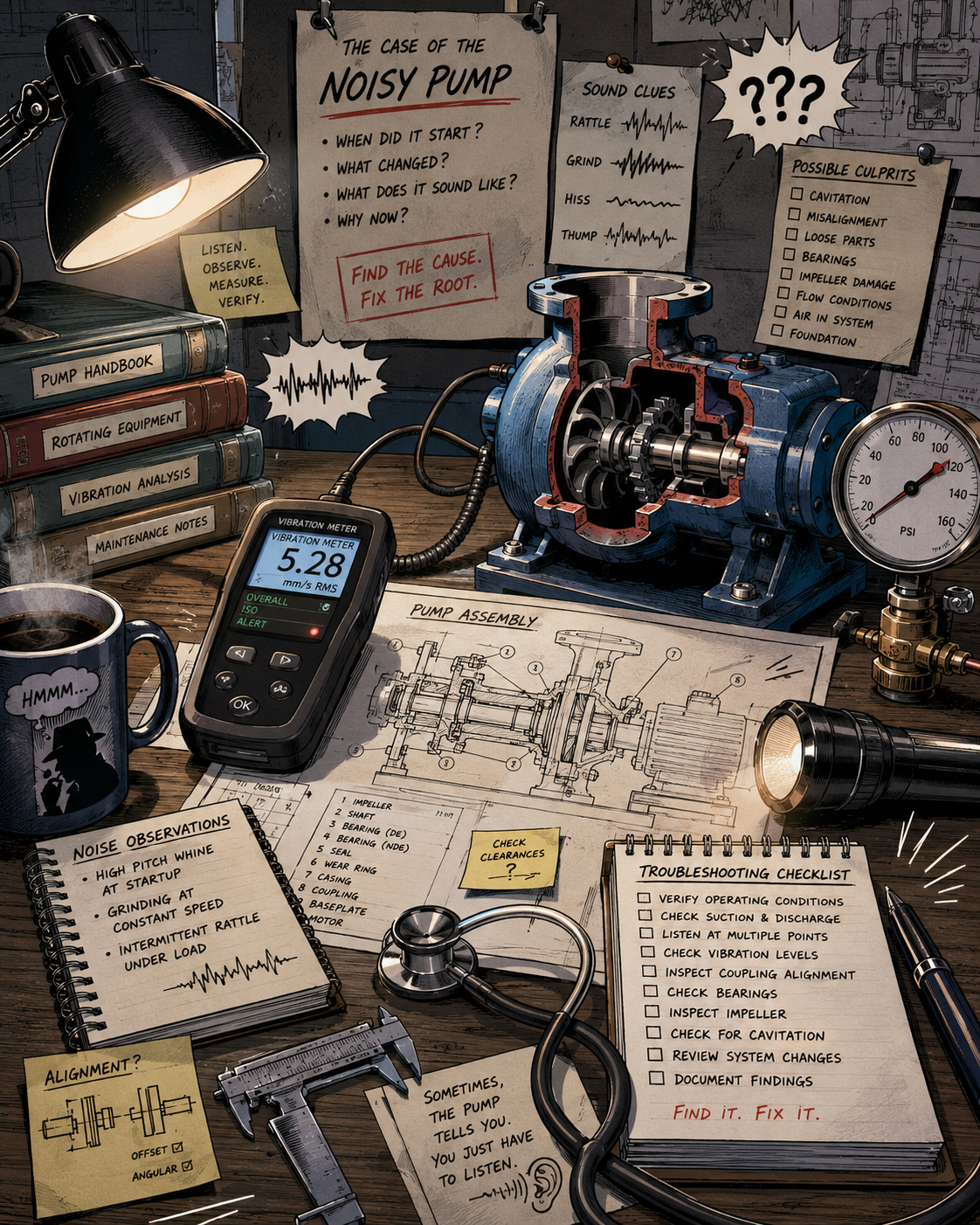
Pump troubleshooting desk with gauges and diagnostic clues
Panel 4

Pump Boy blames the wrong thing first.

Pump Boy immediately blames the motor. Pressure Sensei shakes his head. A noisy pump does not always mean the motor is the villain. The trouble may begin before water reaches the impeller.

“When the pump sounds like rocks, ask what the inlet is suffering.”
Panel 5

The suspects line up.

The episode turns into a pump-room mystery: clogged basket, undersized suction pipe, too many elbows, air leak, low source water, partly closed valve, excessive suction lift, or operation outside the pump curve.

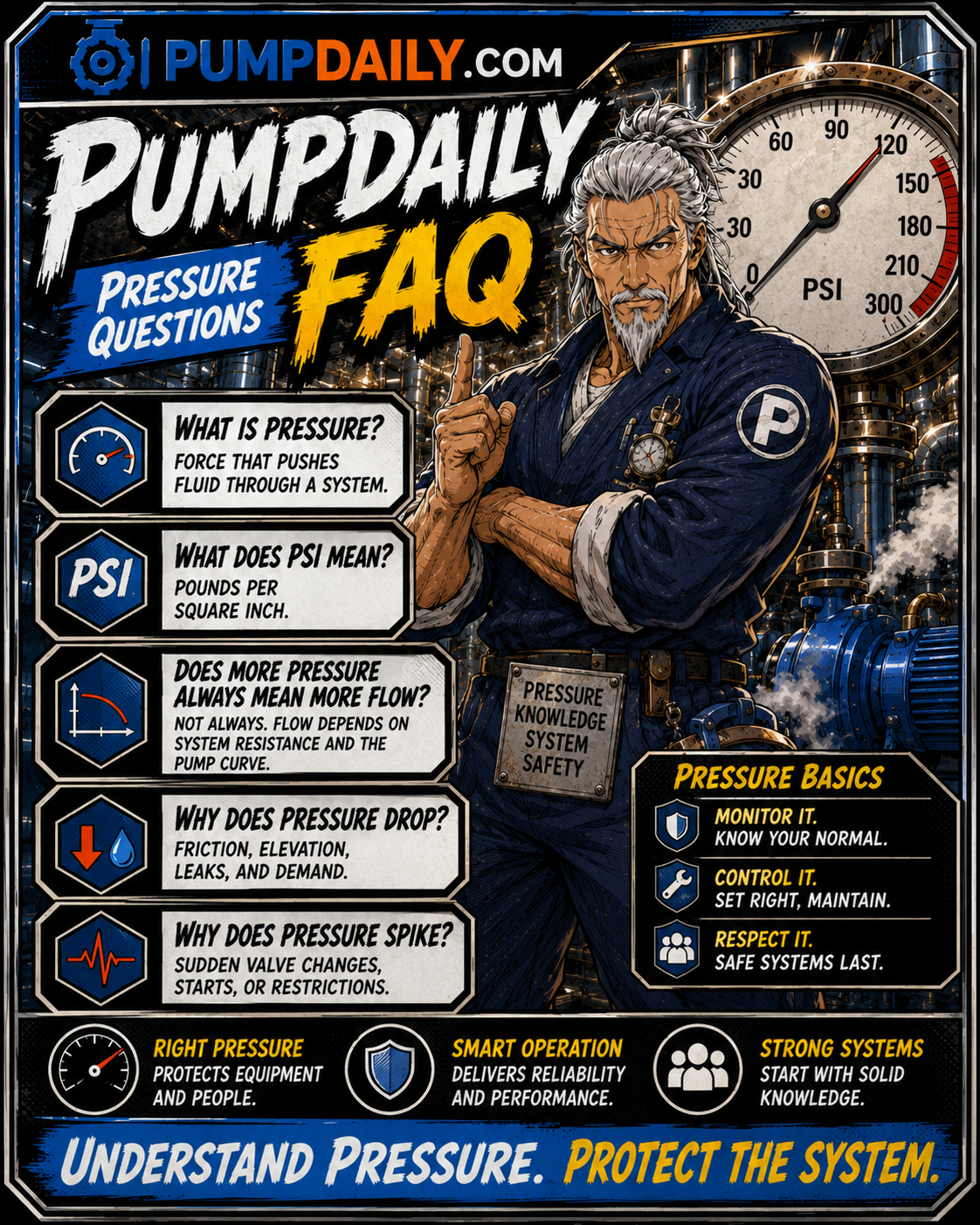
PumpDaily FAQ pressure questions with gauges and clues
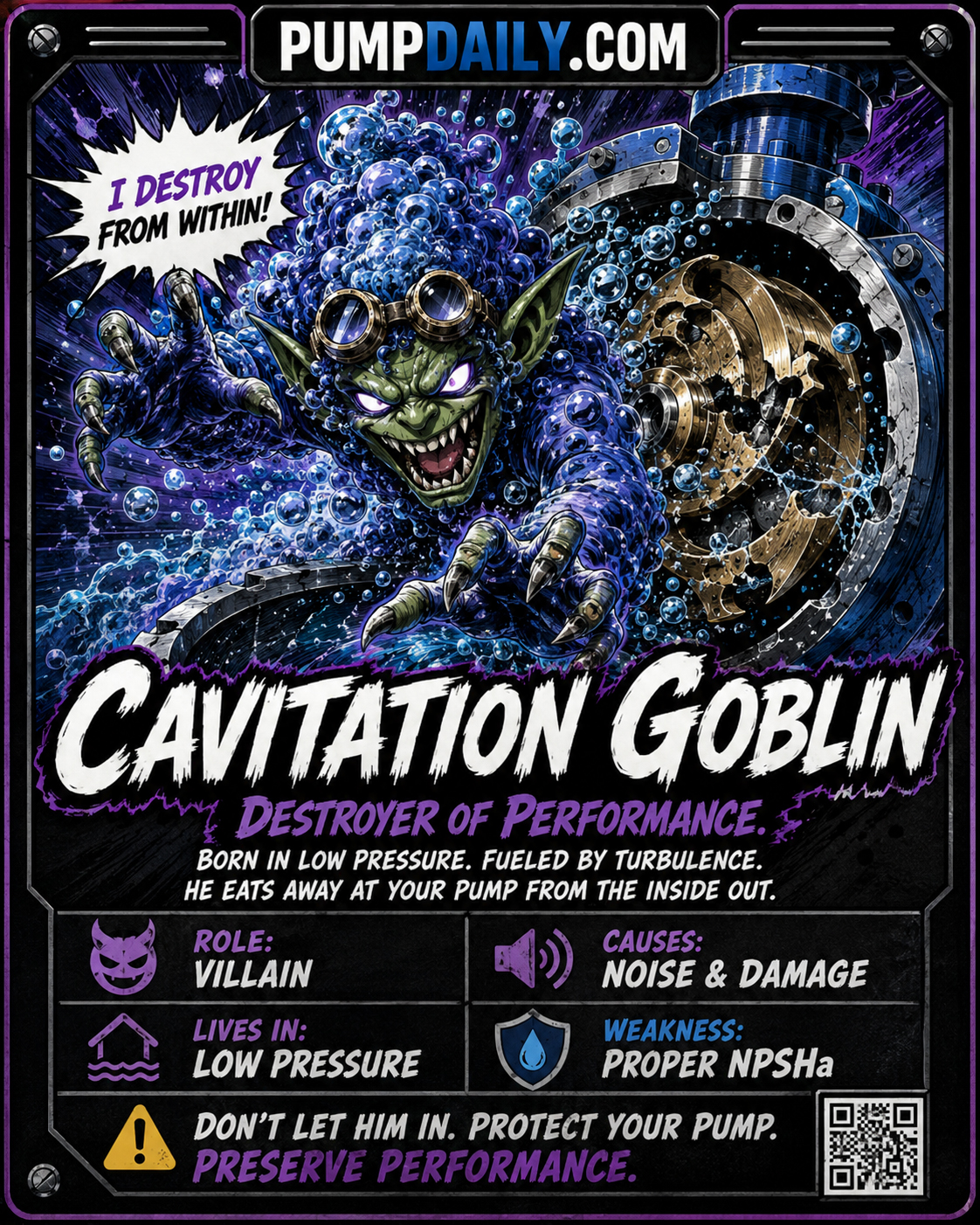
Cavitation Goblin character card
Panel 6

The Goblin hates clean suction piping.

The team opens the valve fully, clears the strainer, checks the water level, and fixes a suction-side air leak. The gravel sound fades. The pump runs smoother. The Goblin retreats into a bubble.

What Episode 2 teaches

Lesson Plain-English takeaway
Cavitation starts with bubbles Vapor bubbles form and collapse inside the pump.
The suction side matters Bad inlet conditions can starve the pump and invite damage.
Noise is a clue A gravel-like sound may point to cavitation or other serious issues.
Restrictions are dangerous Clogged strainers, closed valves, and undersized pipe can reduce inlet pressure.
Air leaks confuse everything Air entering the suction side can reduce performance and mimic other problems.
Do not ignore the pump curve Operating far from the intended range can create hydraulic trouble.

Episode ending

The pump room quiets. Pump Boy learns that water must arrive smoothly before it can leave usefully. Madame Flow looks at the pump curve pinned on the wall.

“Next,” she says, “we read the map.”

Safety note: Cavitation can damage equipment. For large, expensive, critical, code-regulated, or unfamiliar systems, use qualified professional help.

Season guide

Continue the PumpDaily season