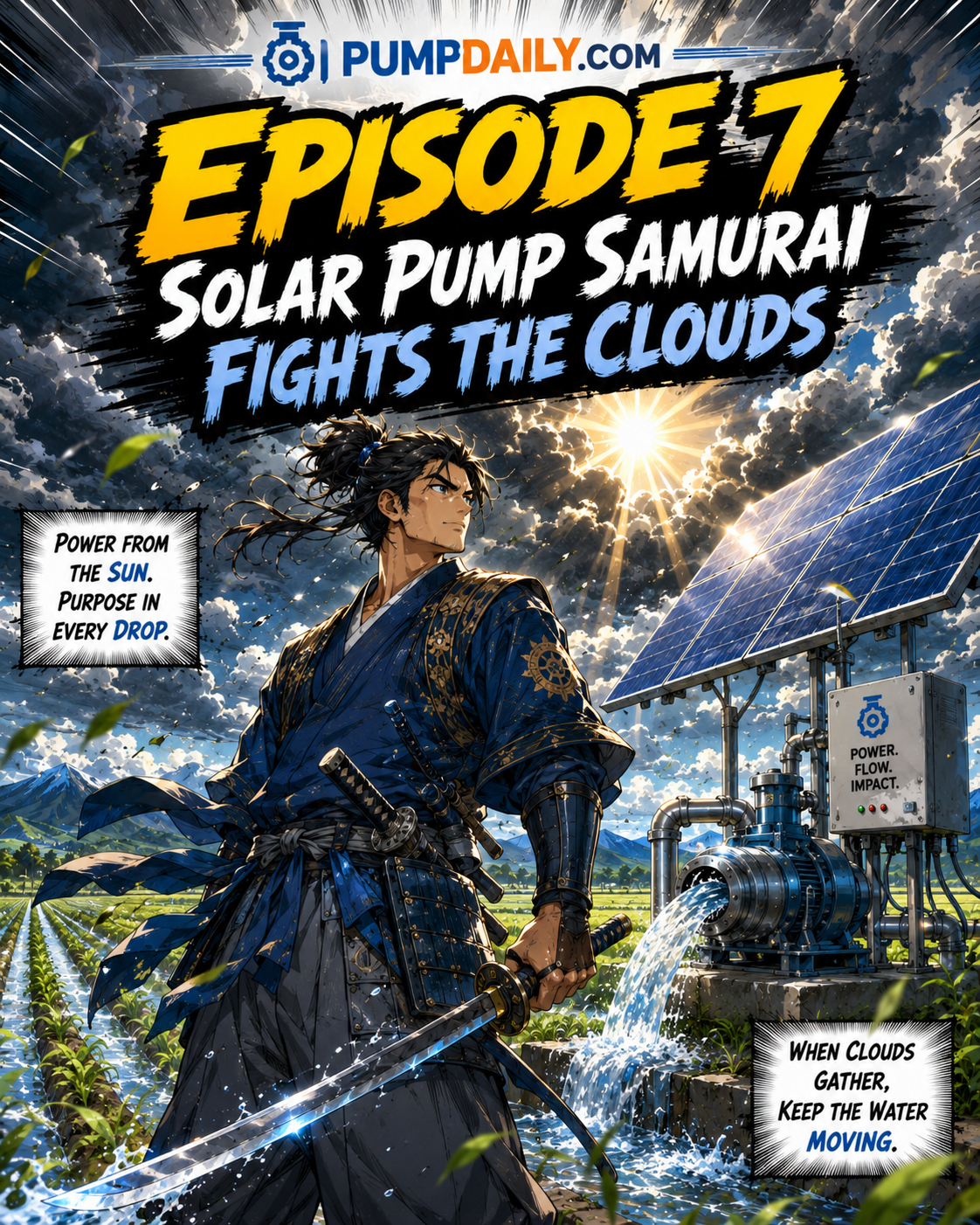
Episode 7

Solar Pump Samurai Fights the Clouds

The field needs water, the panels need sun, and a cloud has just stepped between them. Solar Pump Samurai teaches the difference between peak power and dependable water delivery.

Episode 7 cover showing Solar Pump Samurai fighting clouds over a solar pumping field

Manga lesson

The sun is bright. The field is thirsty.

Solar Pump Samurai stands between a PV array and a water tank. Pump Boy sees sunlight and assumes the system is solved.

Then one cloud crosses the sun. The pump slows. The field waits. The Samurai does not panic.
Panel 1

Solar power changes all day.

A solar pump system depends on available sunlight. Morning, evening, heat, shade, clouds, panel angle, dust, and season can all change how much power is available.

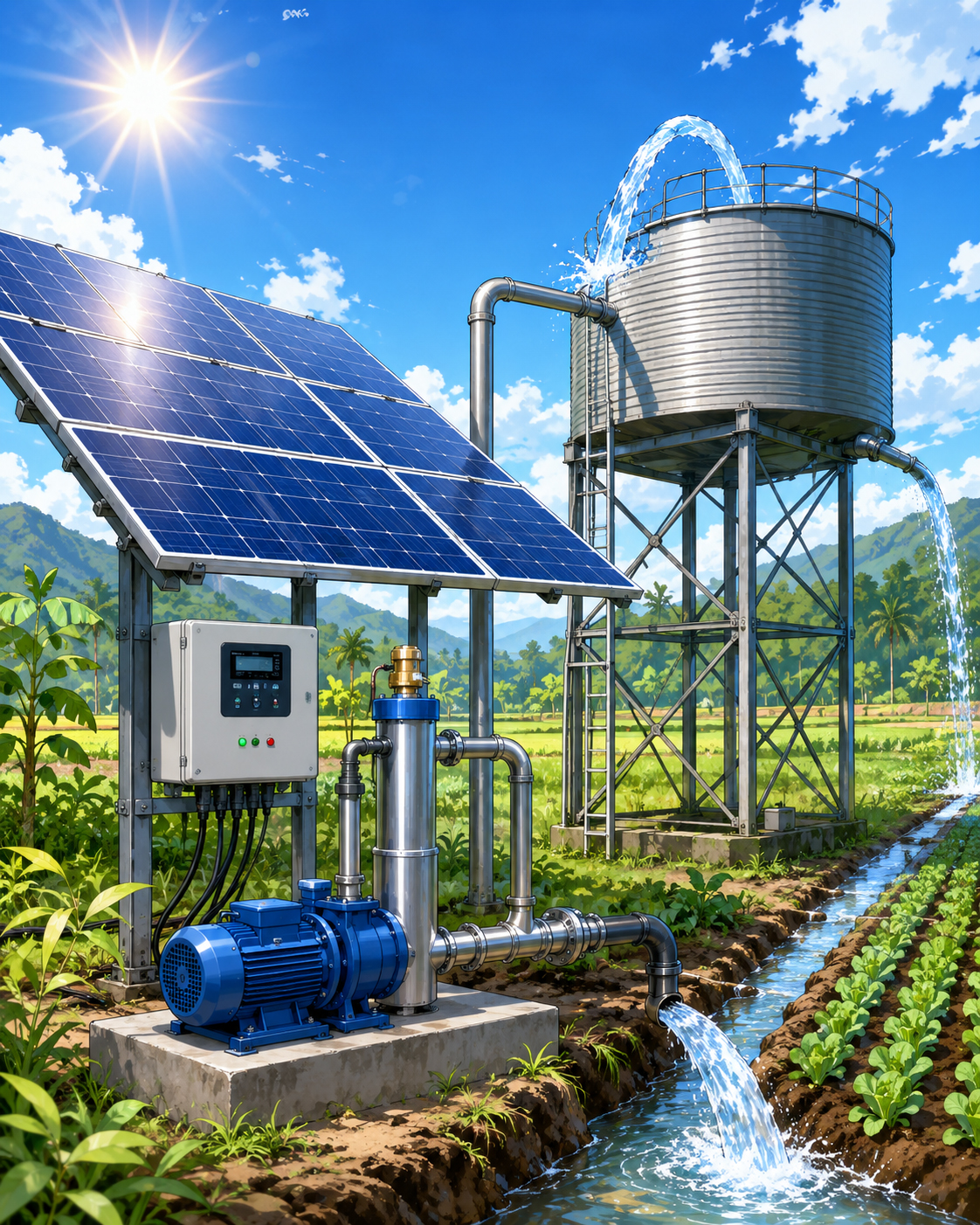
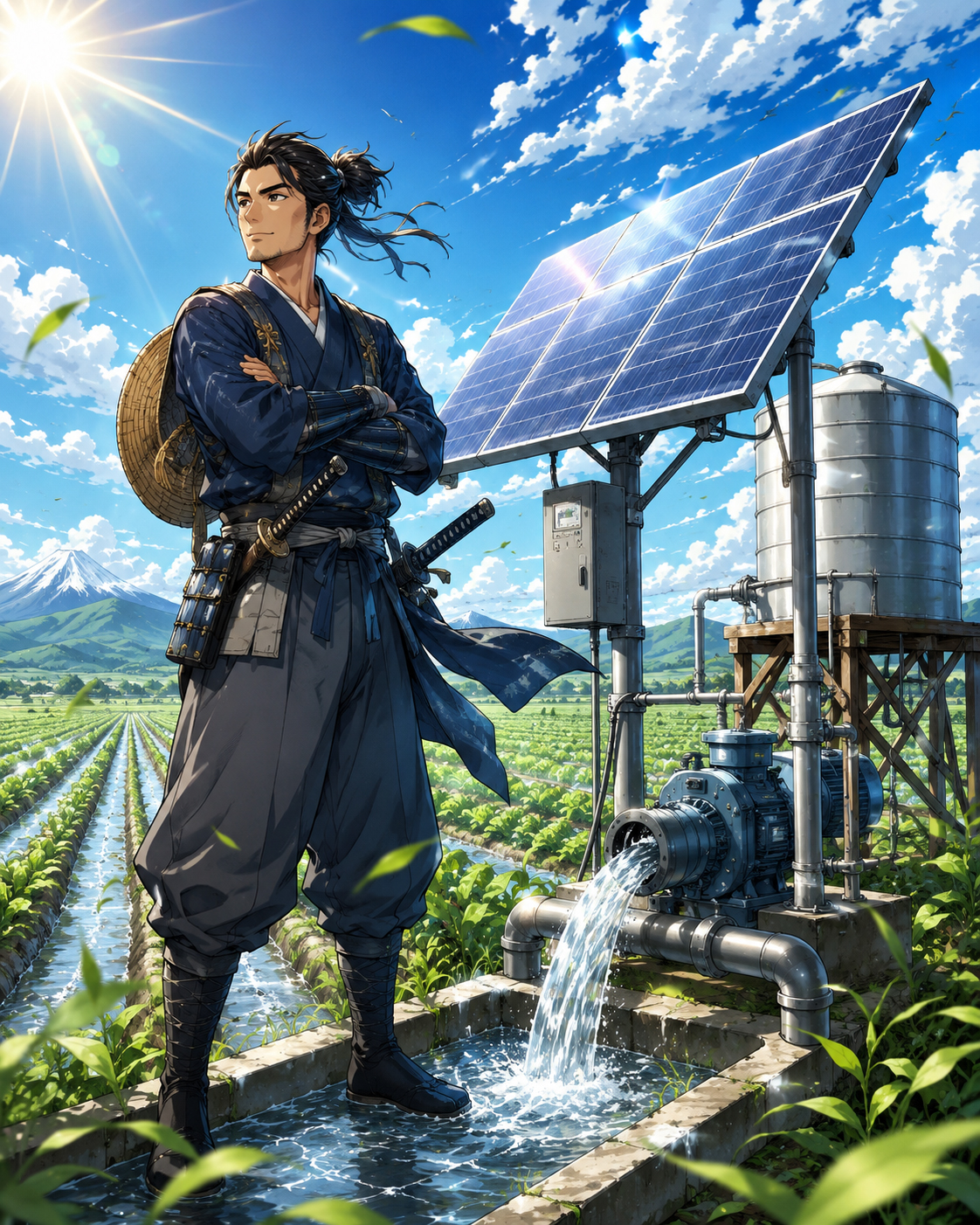
Solar Pump Samurai standing in an irrigation field with solar panels
Solar panels powering a pump system with a water tank
Panel 2

Water storage becomes the battery.

For many solar pumping systems, a tank is the simplest storage strategy. Pump when the sun is available. Store water for when demand and sunshine do not line up.

“Do not ask the cloud to sign a performance guarantee.”
Panel 3

The controller translates sunlight.

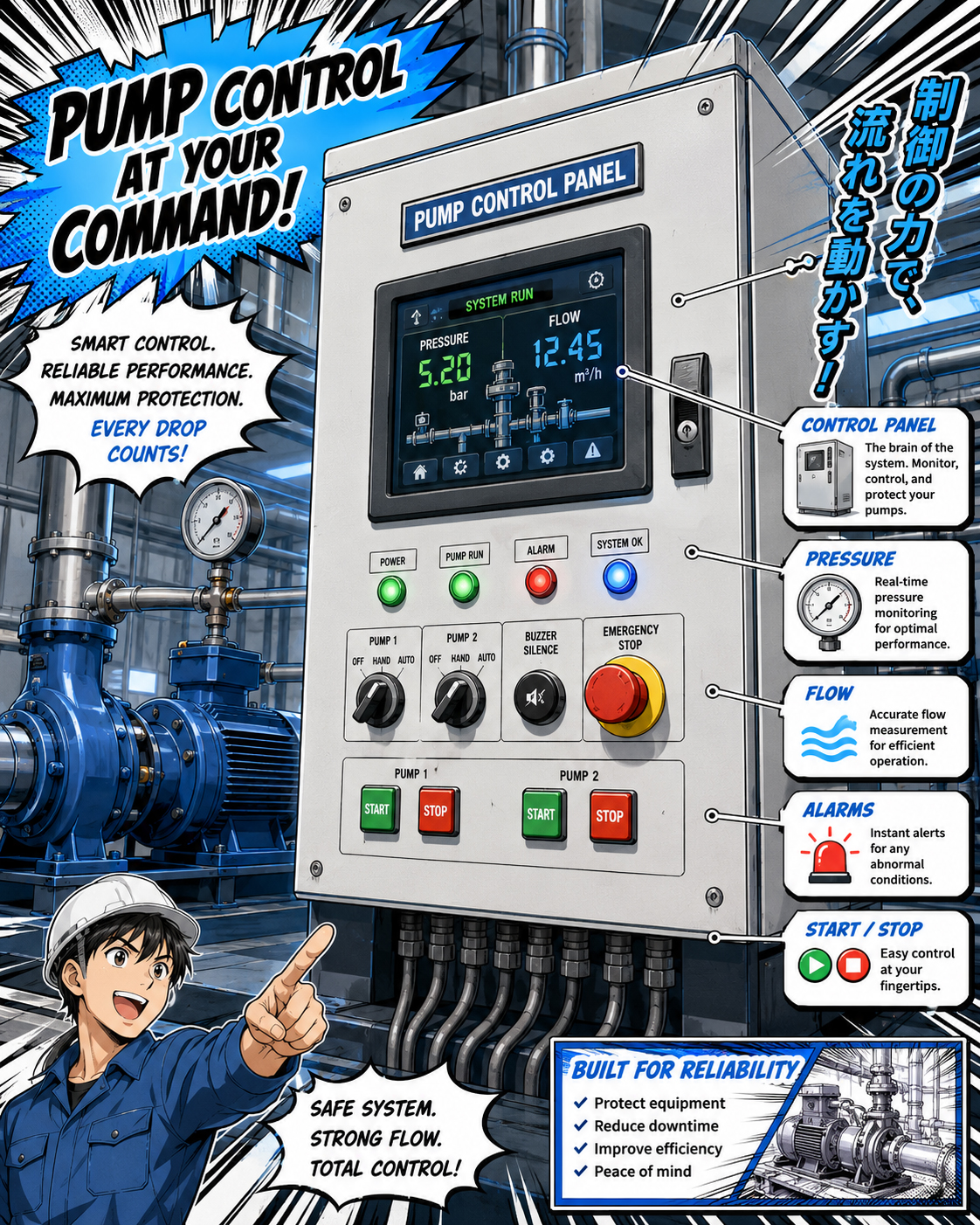
A solar pump controller helps match PV power to motor demand. It may provide soft starting, protection, and speed control depending on the system type.

Pump control panel with switches, warning lights, and gauges
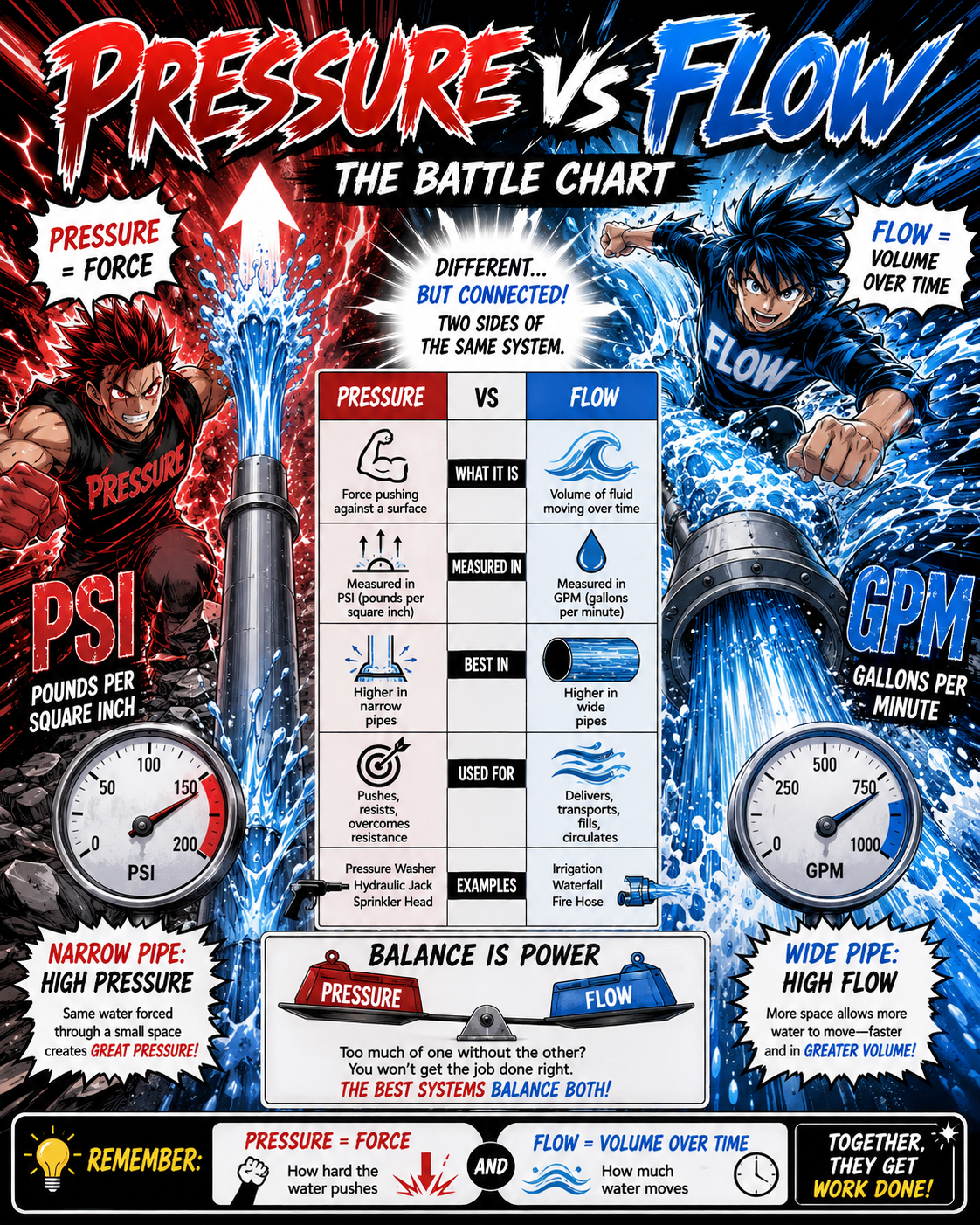
Pressure versus flow chart showing system battle
Panel 4

The pump still has a curve.

Solar does not erase pump math. Head, flow, pipe friction, elevation, valves, and demand still decide whether water reaches the tank, field, trough, or building.

Panel 5

Batteries enter carefully.

Batteries can help when pumping must continue without sun, but they add cost, controls, maintenance, space, safety rules, and design complexity. Sometimes a bigger tank is smarter.

Solar pump panels, controller, and water storage tank
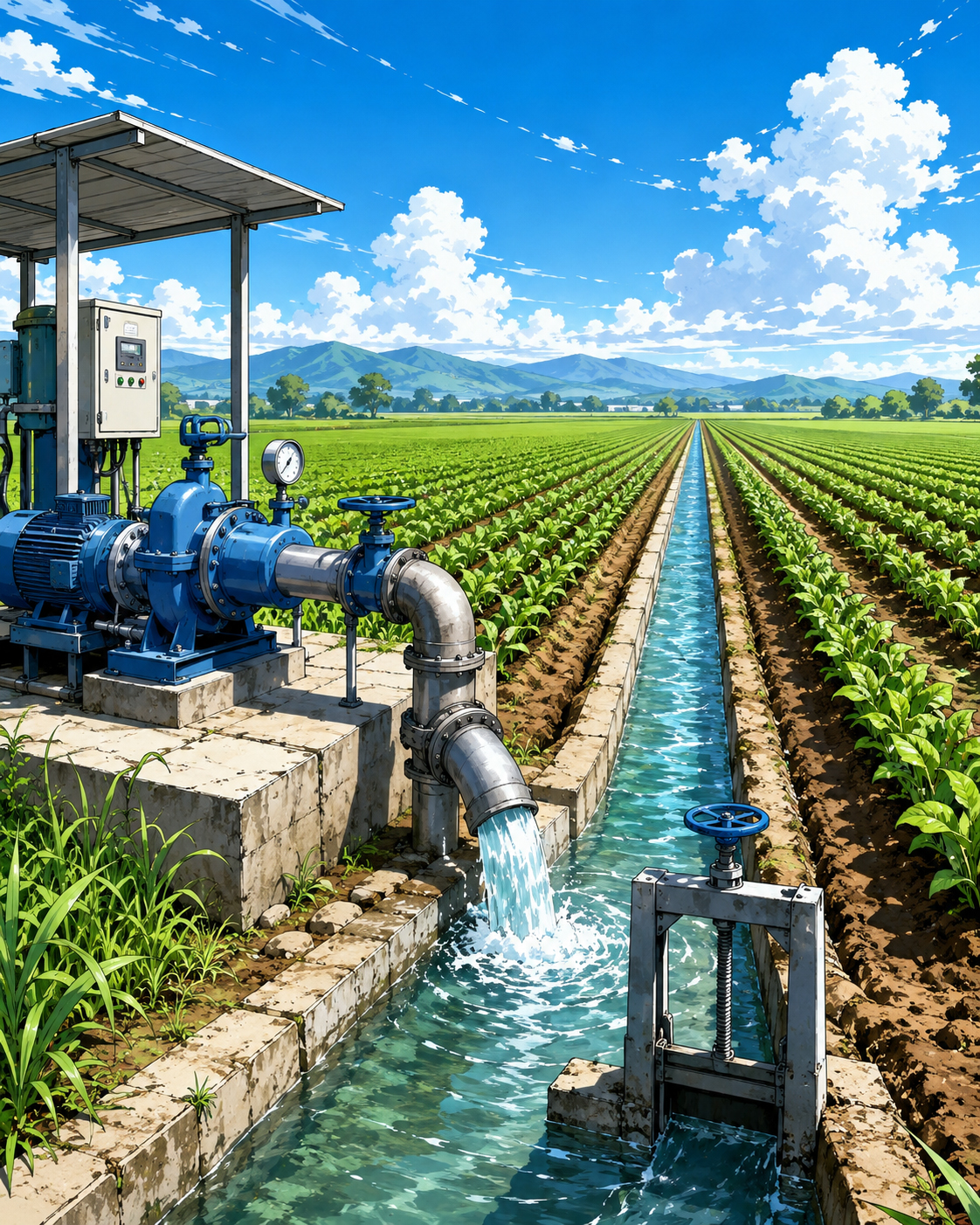
Irrigation pump field lines showing water delivery demand
Panel 6

The real question is gallons per day.

Solar Pump Samurai asks the practical question: how much water is needed each day, at what pressure or head, during what season, and with what reserve?

Peak watts are exciting. Delivered water is the mission.

What Episode 7 teaches

LessonPlain-English takeaway
Sunlight variesPV output changes by time, weather, temperature, shading, orientation, dust, and season.
Water storage helpsTanks can store useful work as water, often simpler than storing electricity.
Controllers matterThe pump and PV array need the right control strategy to work well together.
Pump curves still applySolar power does not eliminate head, friction, pressure, or flow requirements.
Batteries add complexityBattery-backed pumping can be valuable but must be designed carefully.
Daily water demand is keyDesign around gallons per day, head, pressure, seasonal need, and reserve.

Episode ending

The cloud passes. The pump speeds up. The tank continues filling. Pump Boy finally understands: a good solar pump system plans for the cloudy parts, not just the sunny brochure photo.

At the tank outlet, Check Valve Cat hears water trying to go the wrong way.

Safety note: Solar pumping may involve DC power, motors, wells, batteries, water quality, pressure, grounding, and code requirements. PumpDaily is educational only.

Season guide

Continue the PumpDaily season