Pump basics

What Is a Pump?

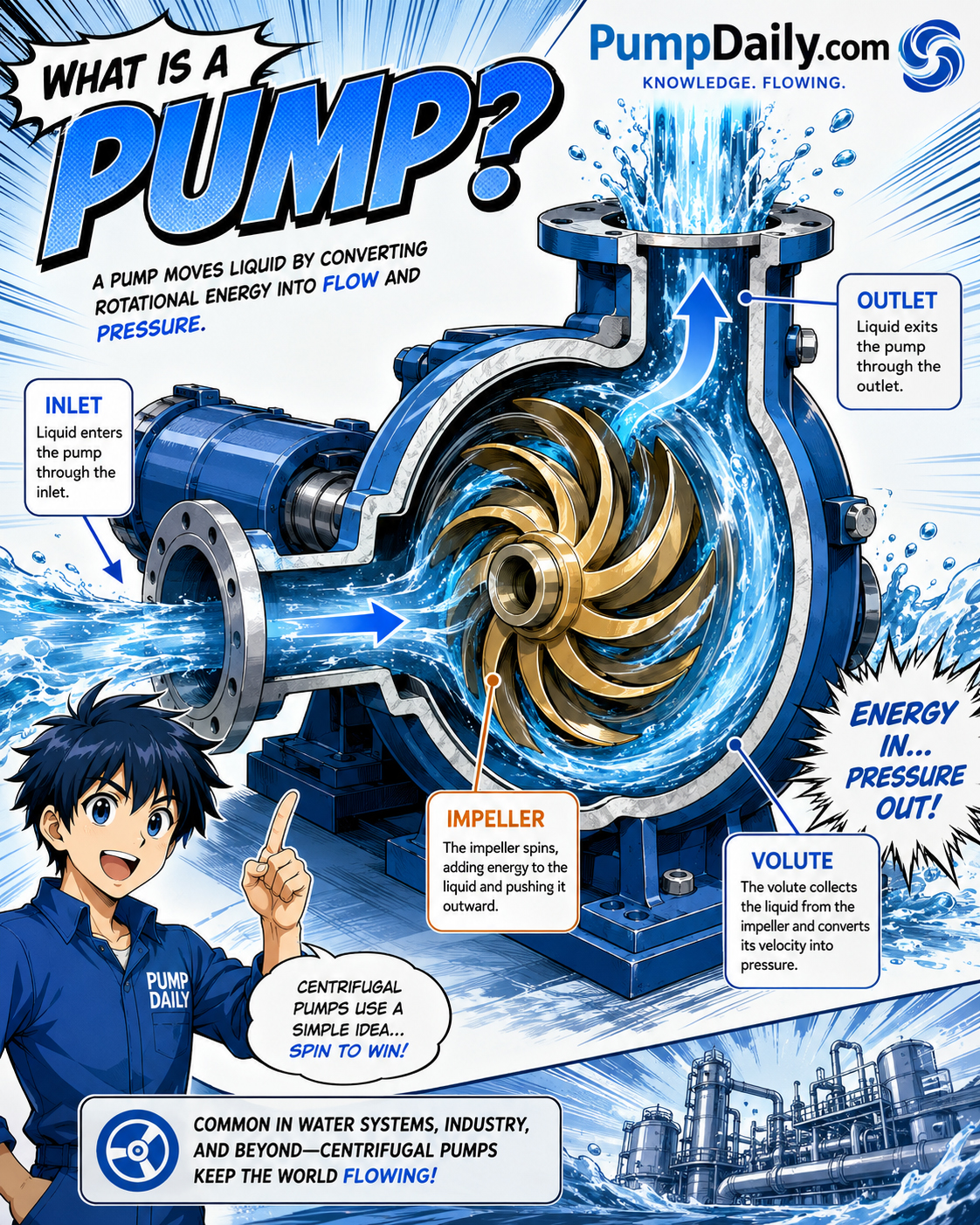
A pump is a machine that adds energy to liquid so it can move from one place to another. It does not create water. It helps water overcome distance, elevation, friction, pressure, restrictions, and system demand.

Manga diagram explaining what a pump does with water flow arrows

Plain-English answer

A pump is an energy-transfer machine.

The shortest useful definition is this: a pump takes energy from a motor, engine, solar system, battery system, or other power source and transfers that energy into liquid.

Once the liquid has more energy, it can move through pipe, climb elevation, pass through filters, feed fixtures, fill tanks, irrigate fields, drain basements, circulate pools, or support fire protection systems.
Core idea

The pump does not make water.

Pumps are often blamed for every water problem, but the pump is only one part of the system. It can move available water, but it cannot invent supply, ignore a clogged screen, defeat a closed valve, or fix undersized piping by magic.

The pump adds energy. The system decides how useful that energy becomes.
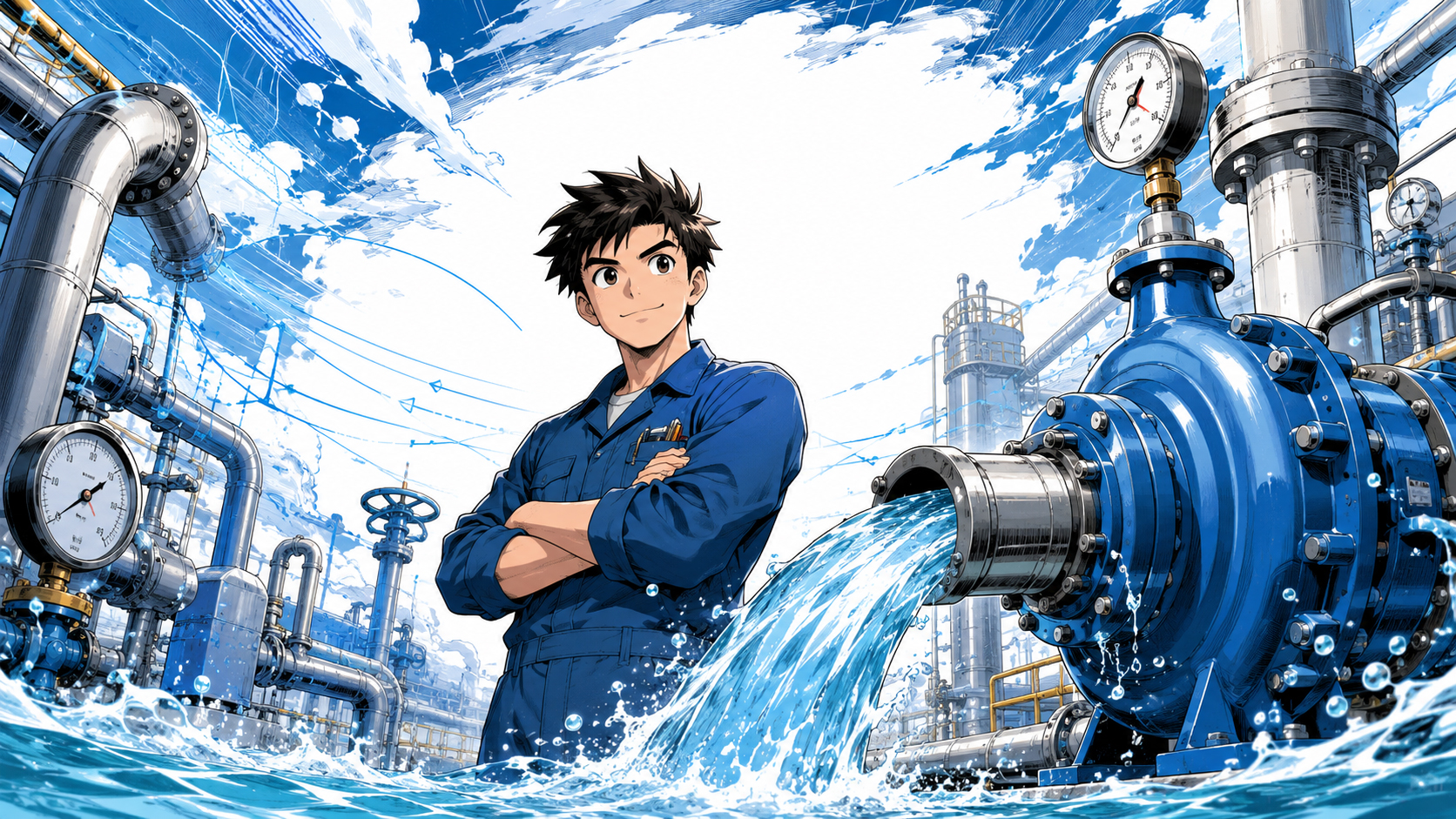
PumpDaily dramatic pump room with pressure and flow gauges
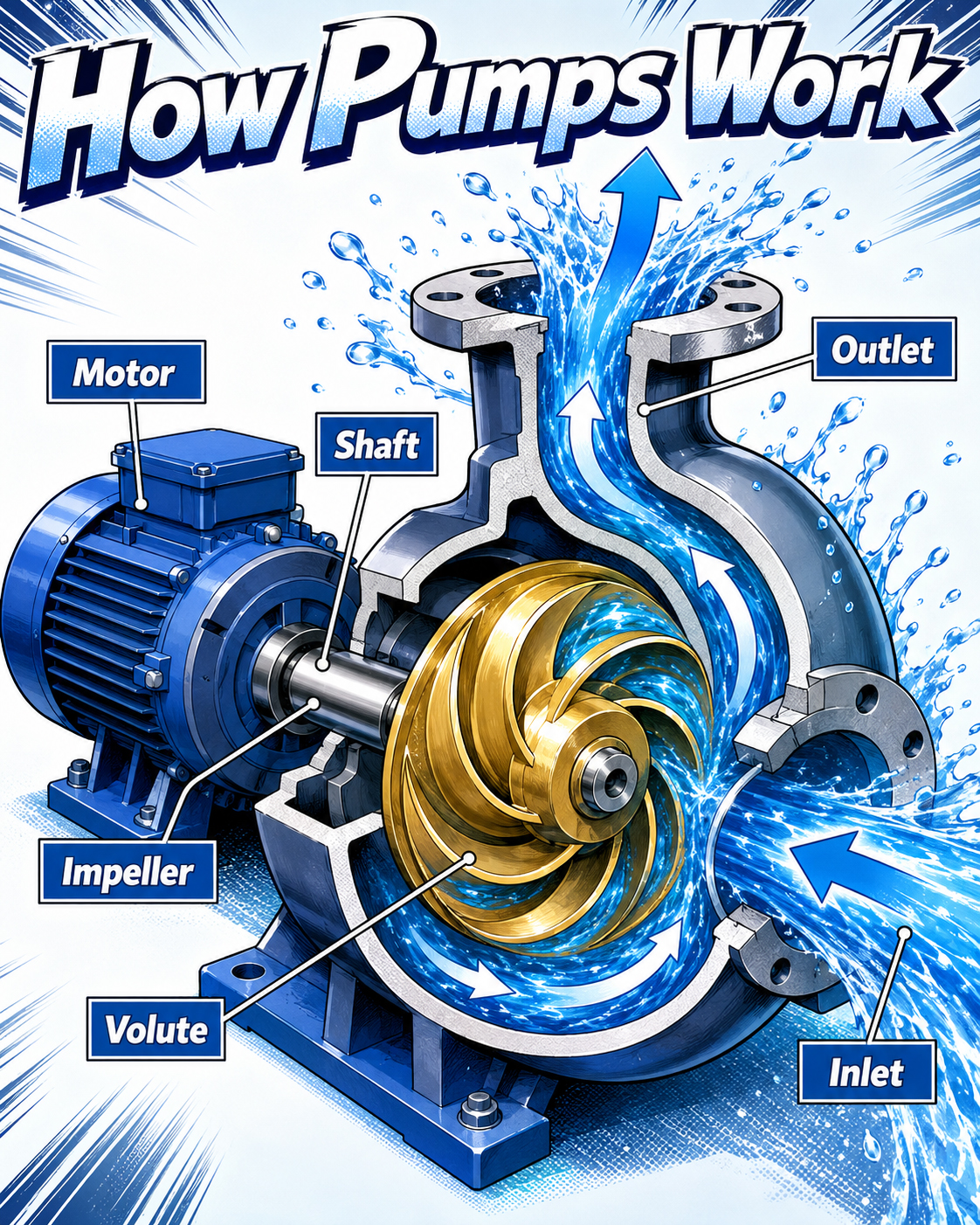
Cutaway view of a pump impeller moving water
Inside the pump

Many pumps use a spinning impeller.

In a common centrifugal pump, water enters near the center of the impeller. The spinning impeller throws water outward, and the pump casing guides that moving water toward the discharge outlet.

Not every pump works this way, but it is the basic picture behind many pool pumps, booster pumps, irrigation pumps, and circulation pumps.

System path

Water enters one side and leaves the other.

The inlet side is commonly called the suction side. The outlet side is commonly called the discharge side. Problems on either side can make a pump look weak, noisy, oversized, undersized, or broken.

A healthy pump still needs good suction conditions and a realistic discharge path.
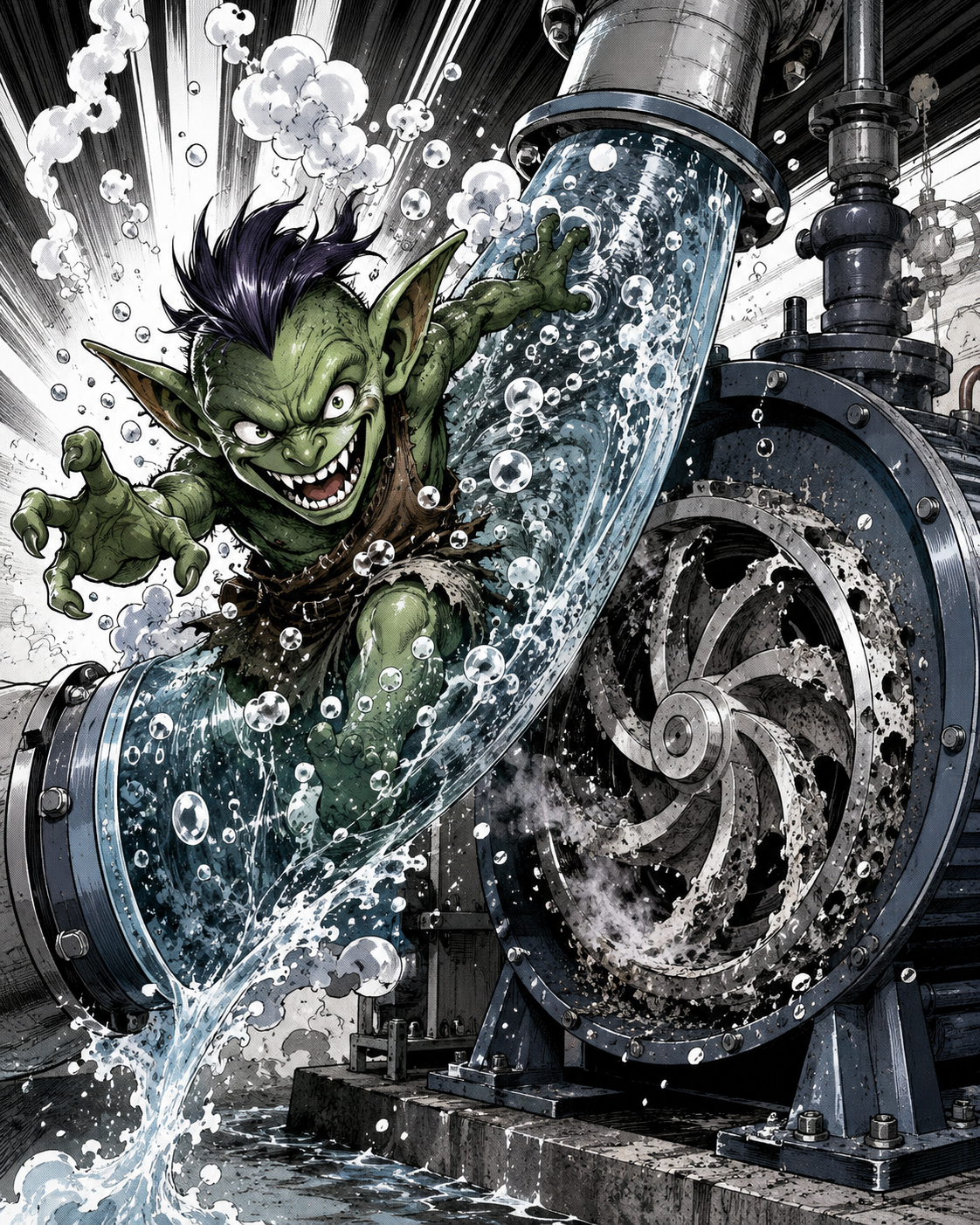
Cavitation Goblin hiding in a pump suction line
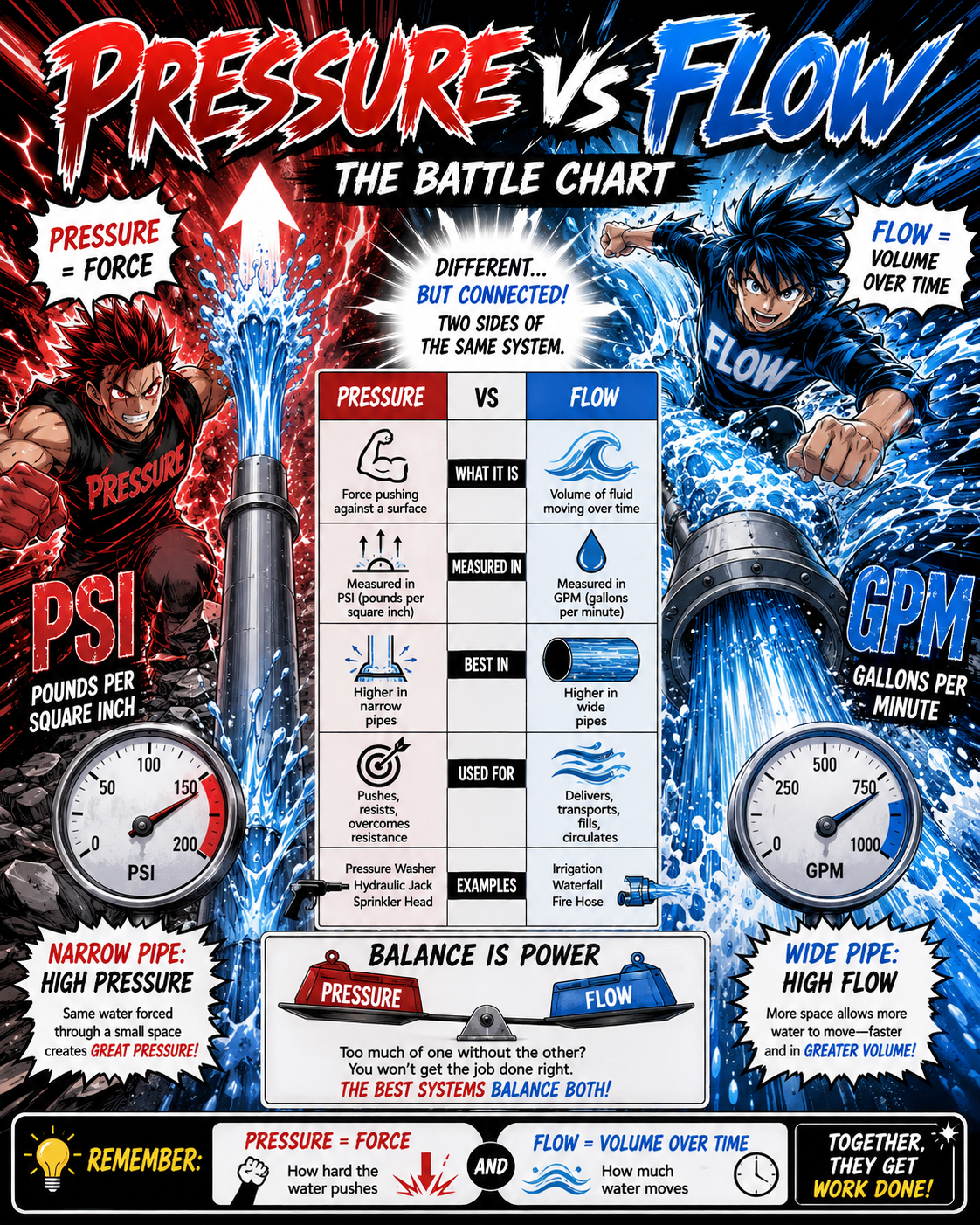
Pressure versus flow manga battle chart
Two measurements

Pressure and flow are not the same thing.

Pressure is force in the system. Flow is how much liquid moves over time. A pump may show pressure while delivering poor flow, or move plenty of water at low pressure, depending on the system.

This is why PumpDaily separates the two words early. Confusing PSI and GPM causes bad troubleshooting.

Real-world examples

Pumps show up everywhere.

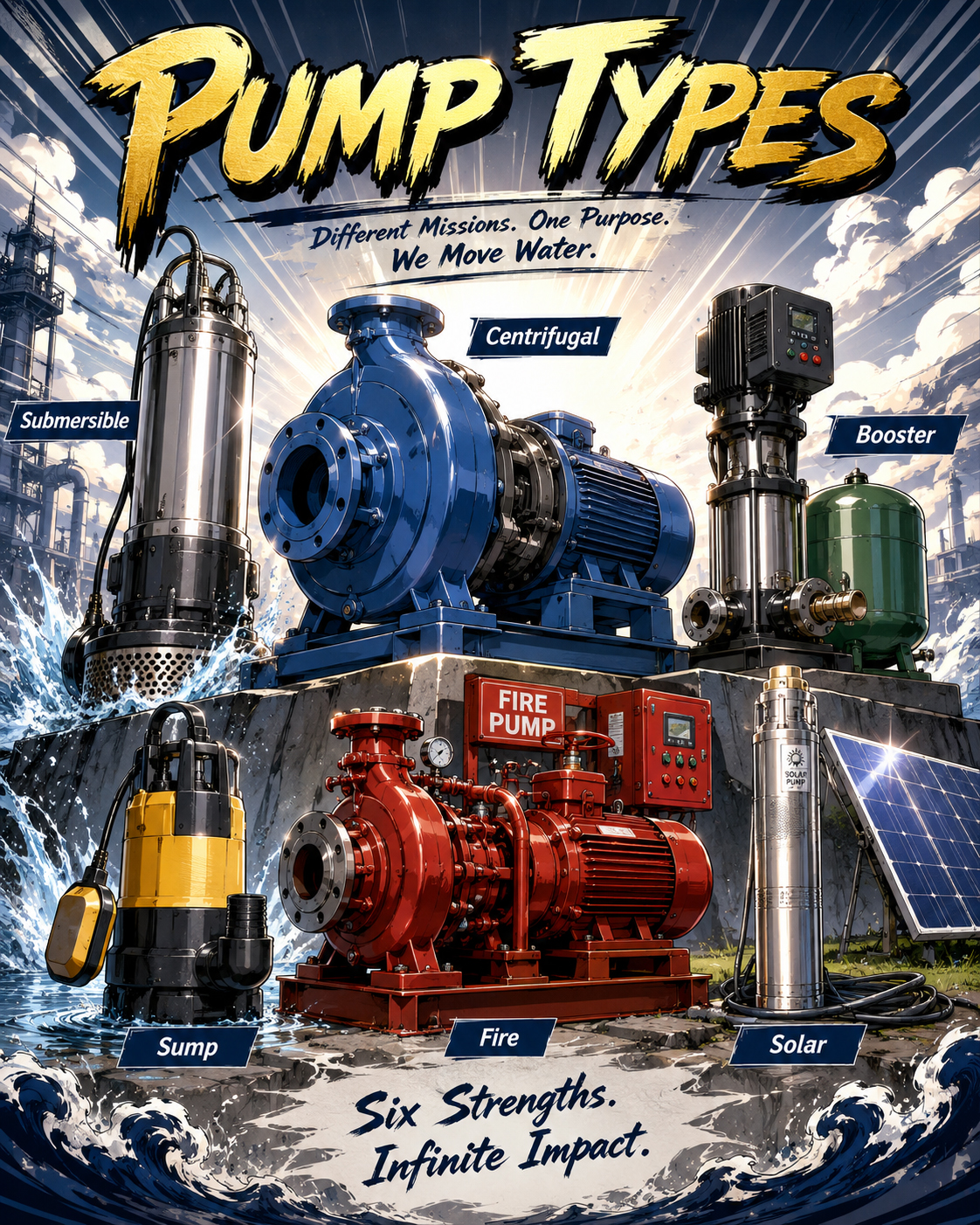
Pumps circulate pools, drain basements, supply wells, boost building pressure, move irrigation water, support fire systems, handle wastewater, feed fountains, circulate heating and cooling loops, and move process fluids.

Manga portrait of many different pump types

Basic pump vocabulary

Term Plain-English meaning
Pump A machine that adds energy to liquid so the liquid can move through a system.
Motor The power source that turns the pump shaft or drive mechanism.
Impeller A rotating part that helps move water in many centrifugal pumps.
Suction side The inlet side where water enters the pump.
Discharge side The outlet side where water leaves the pump.
Pressure Force in the system, often shown as PSI.
Flow The amount of water moving over time, often shown as GPM.
Pump curve A chart showing how a pump performs at different flow and head conditions.
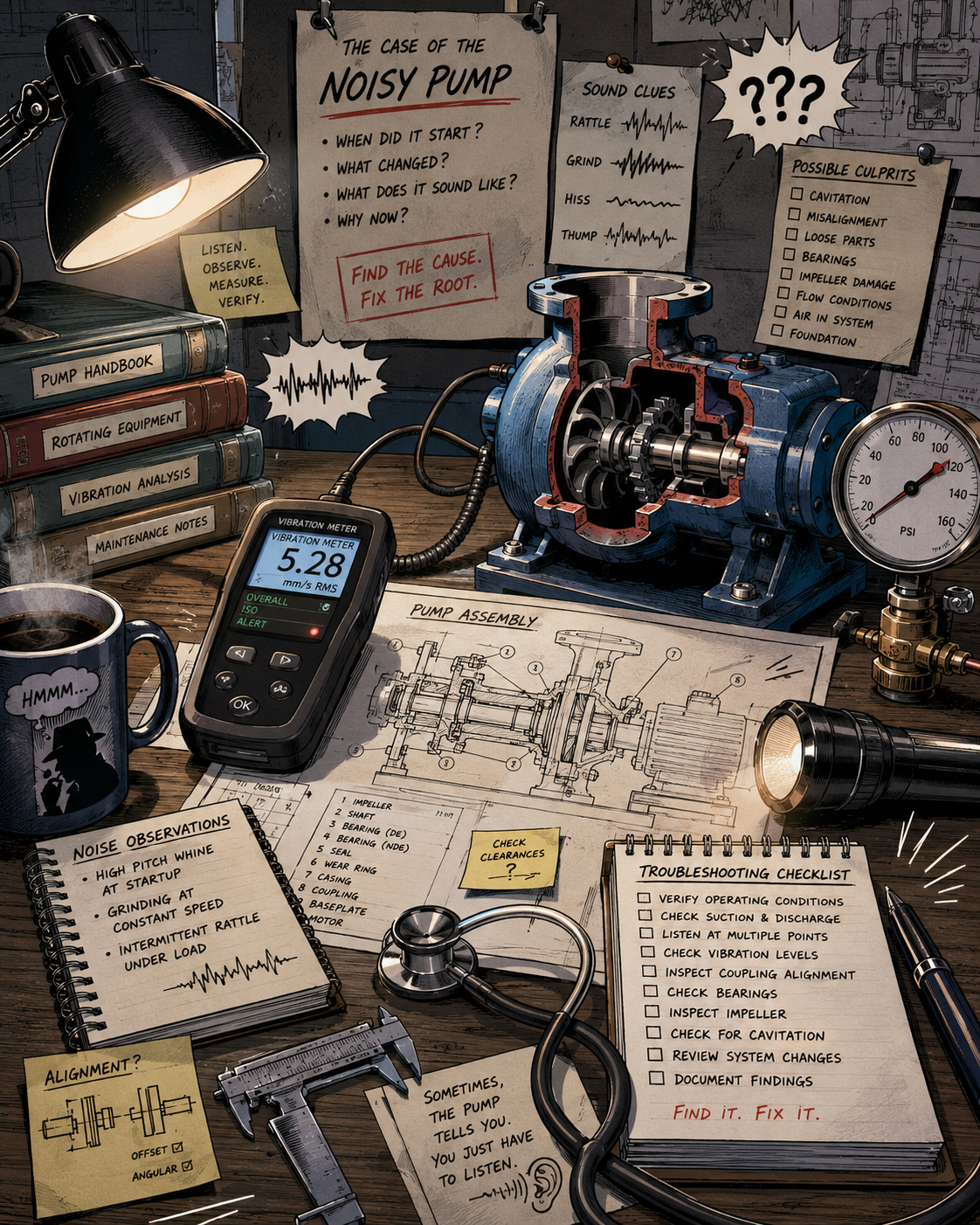
Pump troubleshooting desk with gauges, notes, and diagnostic clues
Troubleshooting mindset

Do not blame the pump too quickly.

A pump complaint may actually be a system complaint. Check power, water source, valves, filters, pipe size, air leaks, controls, check valves, pressure tanks, discharge conditions, and maintenance history.

The pump is the actor. The piping, controls, and demand are the plot.

Keep learning

Where to go next

Safety note: Pump systems may involve electricity, pressure, water damage, potable water, wastewater, fire protection equipment, confined spaces, and code-regulated installations. PumpDaily is educational only.