Pump family

Centrifugal Pumps

A centrifugal pump uses a spinning impeller to add energy to liquid. It is one of the most common pump types because it can move water smoothly through pools, irrigation systems, booster systems, circulation loops, and many clean-water applications.

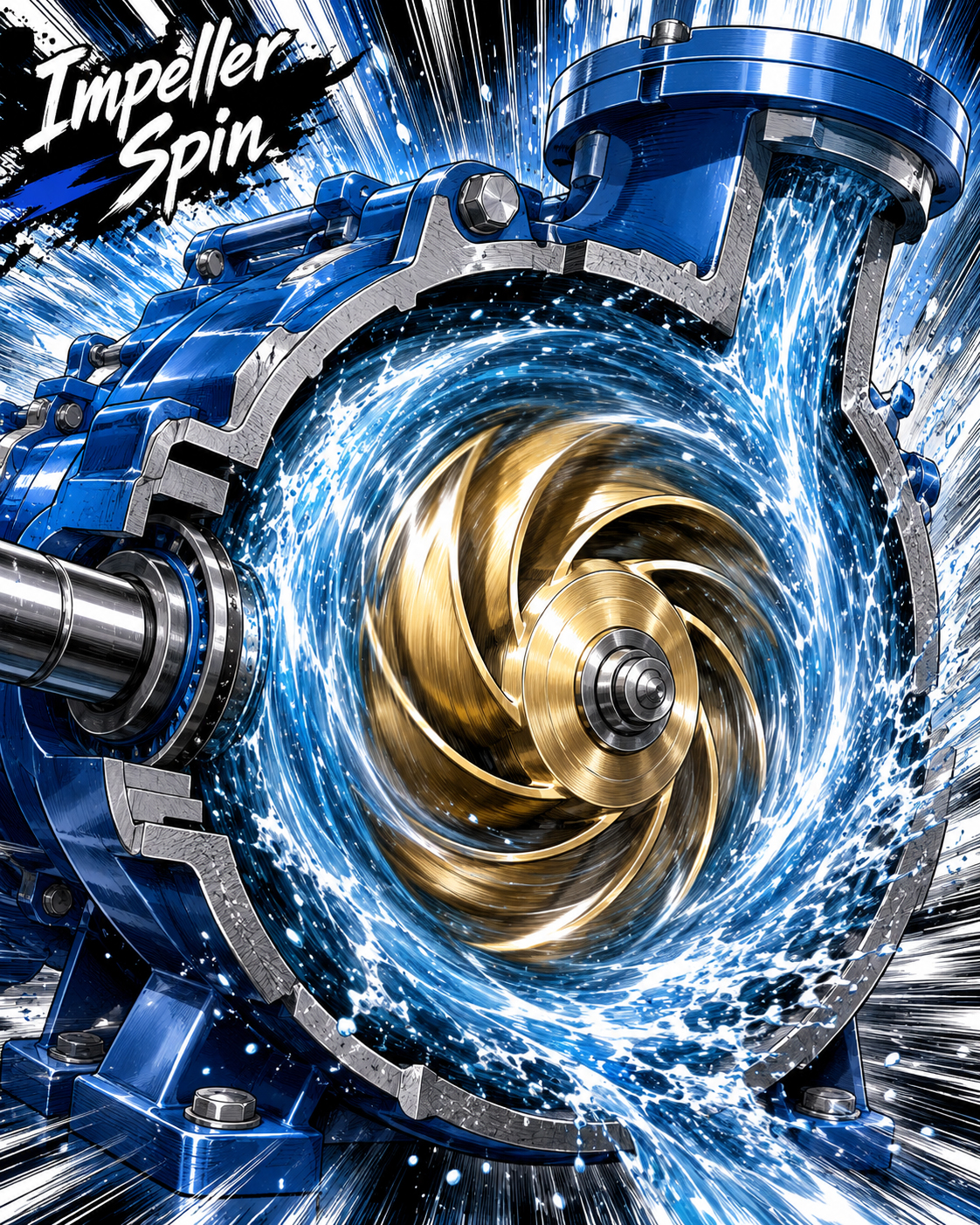
Centrifugal pump impeller spinning with dramatic water movement

Plain-English answer

A centrifugal pump turns rotation into water movement.

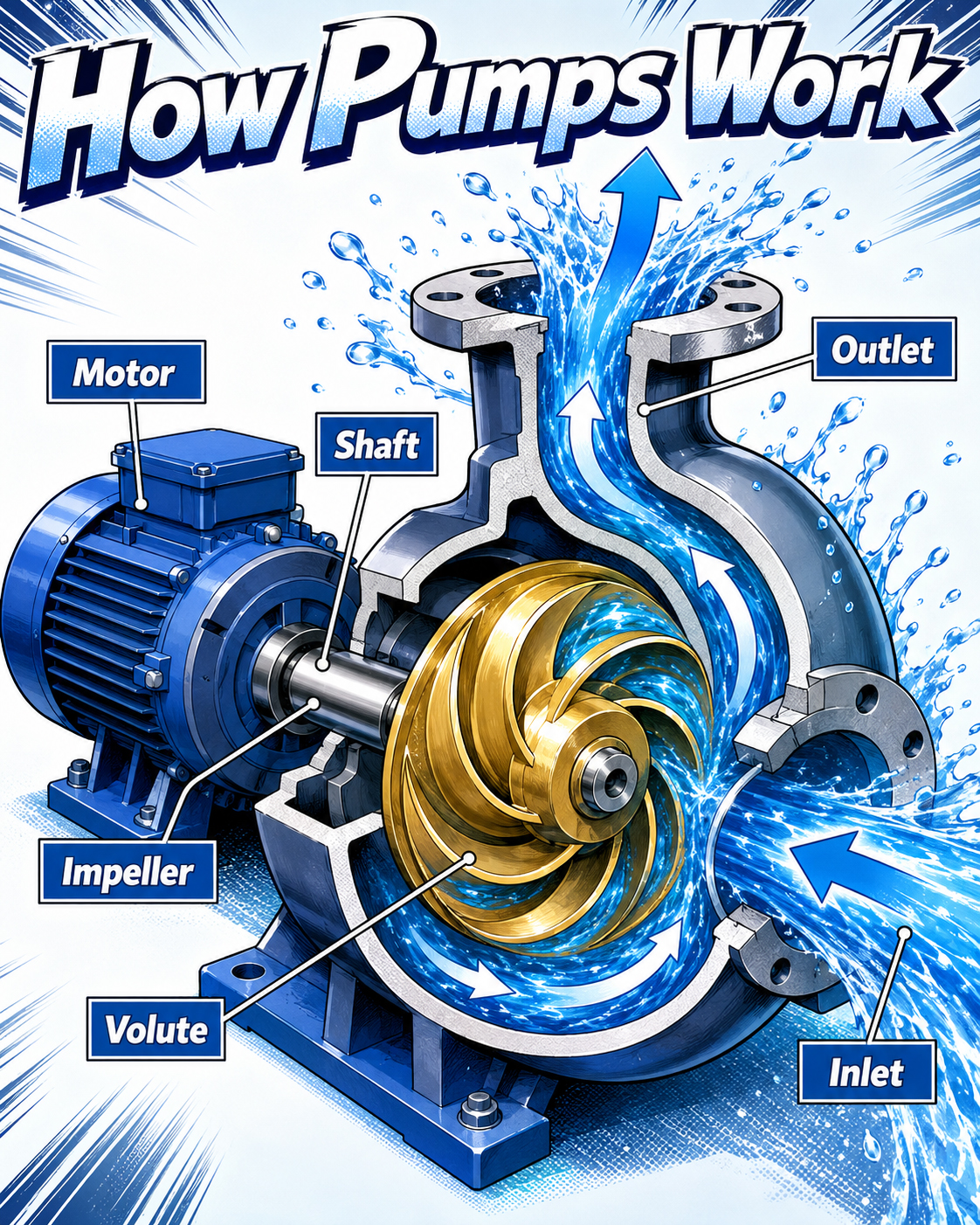
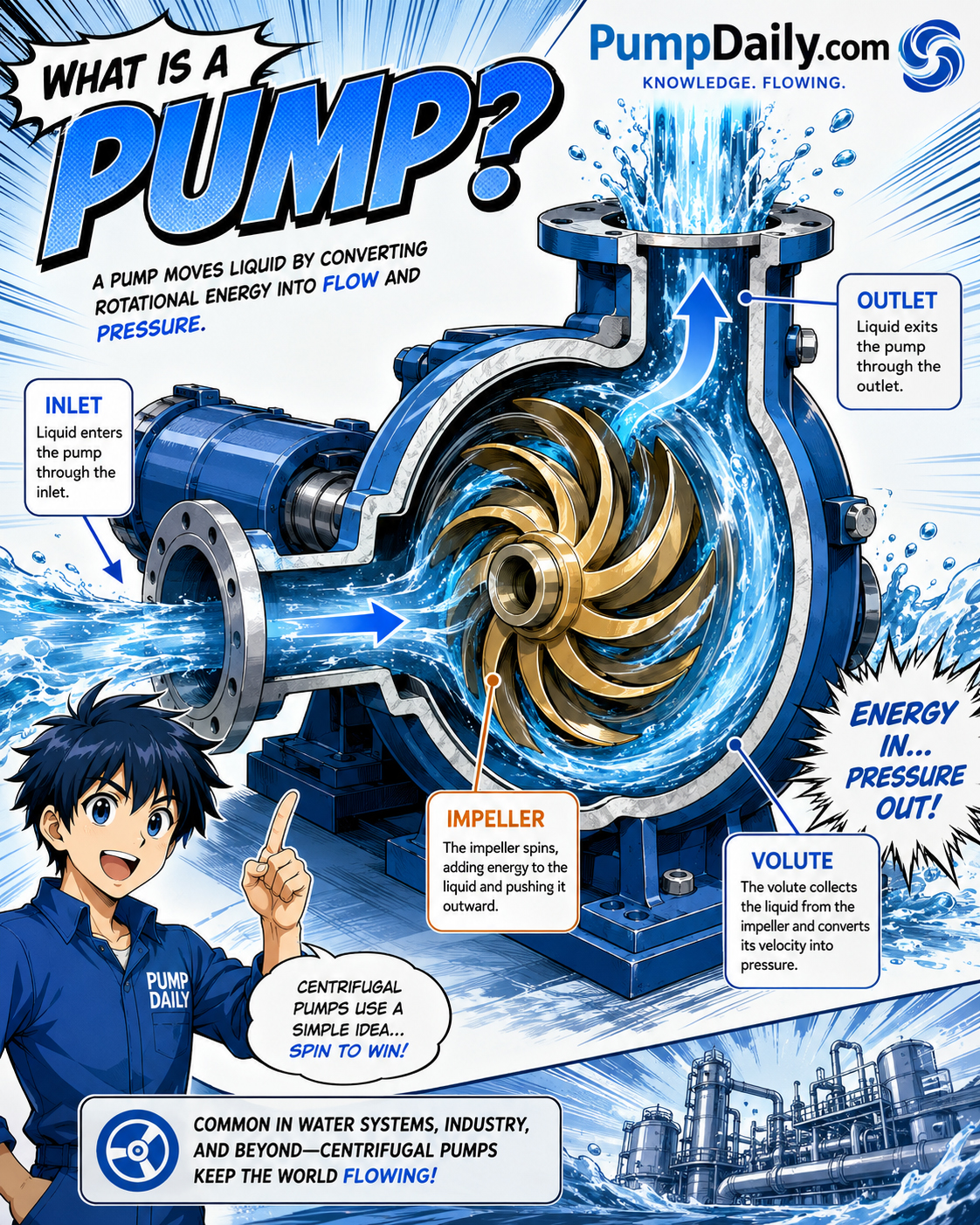
Water enters near the center of the impeller. The spinning impeller throws the water outward. The casing guides that moving water toward the discharge outlet and helps turn velocity into useful pressure.

That simple idea powers many everyday systems, but the pump still has to match the piping, source, elevation, pressure, flow, and duty cycle.
Impeller

The impeller is the spinning heart.

The impeller rotates inside the pump casing. As it spins, it gives water velocity and energy. The exact impeller design affects flow, head, efficiency, solids tolerance, and application fit.

The impeller does not solve bad suction conditions. It still needs water to arrive properly.
Cutaway view showing water entering a centrifugal pump impeller
Manga diagram showing suction and discharge through a pump
Flow path

Water enters at suction and exits at discharge.

The suction side must bring water to the pump smoothly. The discharge side must carry water to the job. Restrictions, air leaks, clogged strainers, closed valves, and undersized piping can make a good pump perform badly.

Curve

The pump curve tells what it can actually do.

A centrifugal pump does not deliver one fixed flow at every condition. As required head or pressure changes, available flow changes too. The pump curve shows that relationship.

A pump must be selected for the system’s real duty point, not just horsepower or pipe size.

Madame Flow explaining the pump curve
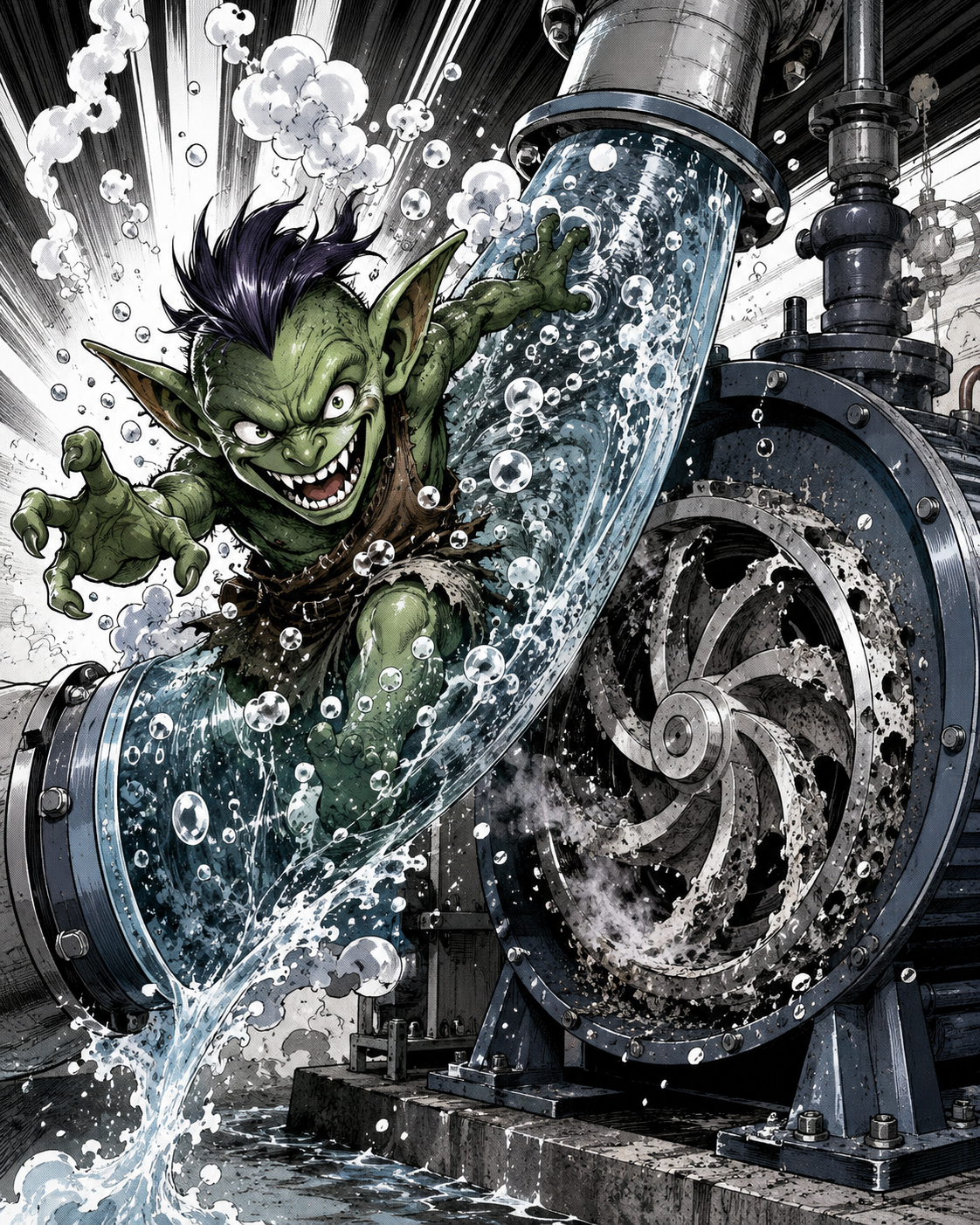
Cavitation Goblin hiding in a suction line
Cavitation

Bad inlet conditions can summon the Goblin.

Centrifugal pumps can suffer when the suction side is starved. If local pressure drops too low, vapor bubbles may form and collapse inside the pump. That is cavitation.

Gravel-like noise, vibration, and damage risk are clues to stop and investigate.
Common uses

They are common because they are versatile.

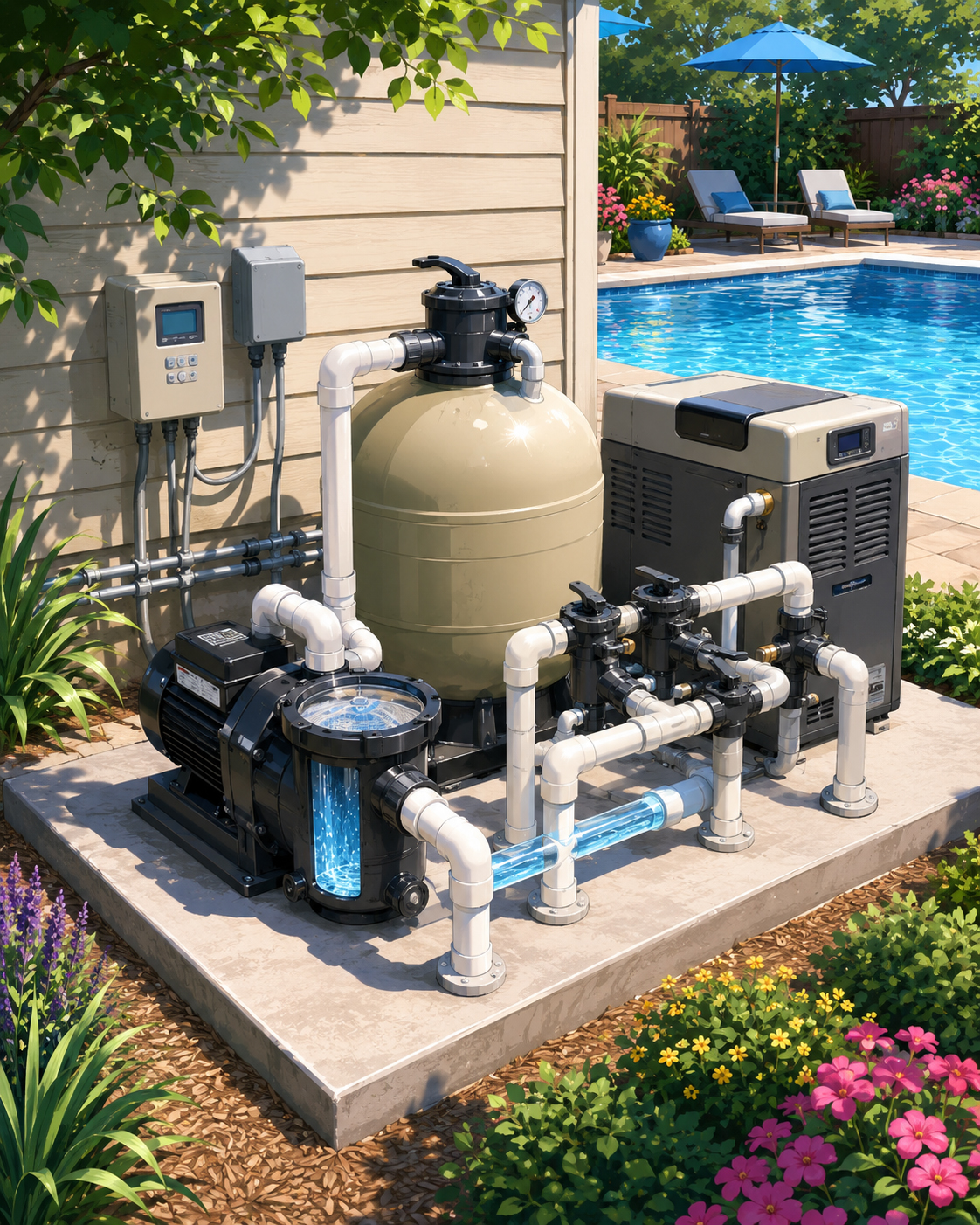
Centrifugal pumps show up in pool systems, booster systems, irrigation, HVAC circulation, fountains, transfer systems, filtration, cooling, and many clean-water applications.

They are not automatically right for every liquid, every solids condition, every suction lift, or every pressure requirement.

Pool pump equipment pad showing a common centrifugal pump application

Centrifugal pump quick guide

Topic Plain-English meaning Watch for
Impeller The rotating part that adds energy to water. Wear, debris, wrong design, cavitation damage.
Casing The pump body that guides water toward discharge. Leaks, cracks, wrong material, trapped air.
Suction side The inlet path into the pump. Air leaks, restrictions, clogged strainers, low source water.
Discharge side The outlet path from pump to destination. Closed valves, dirty filters, undersized pipe, excessive head.
Pump curve Performance chart showing flow versus head. Wrong duty point, poor efficiency, oversized or undersized pump.
Cavitation Vapor bubbles forming and collapsing in the pump. Noise, vibration, pitting, impeller damage.
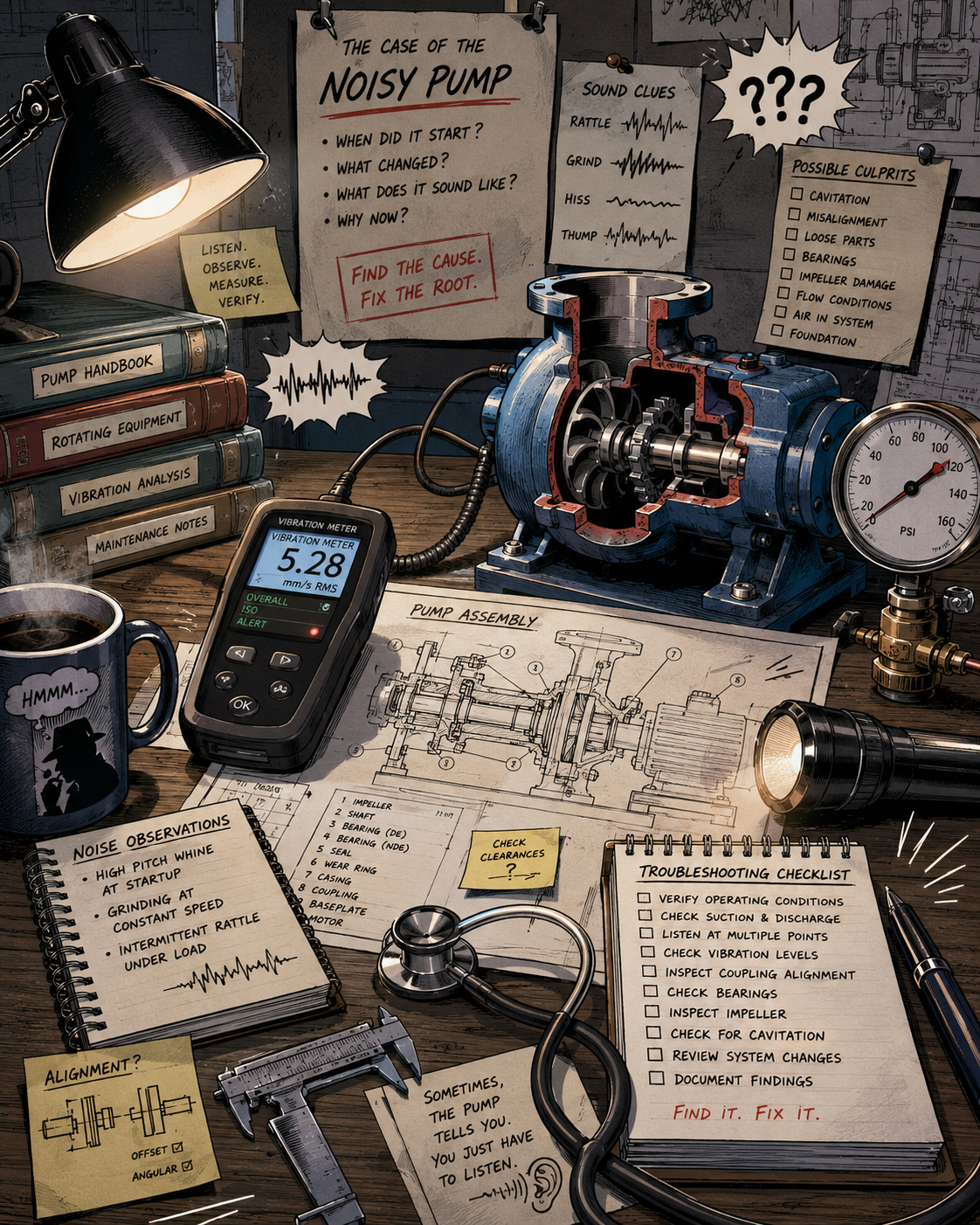
Pump troubleshooting desk with gauges and notes
Troubleshooting

Do not blame the pump before checking the system.

A centrifugal pump may look weak because of a closed valve, clogged filter, suction leak, wrong rotation, air in the system, poor source water, dirty strainer, or operation far from its curve.

The pump is the actor. The system is the plot.

Keep learning

Related PumpDaily guides

Safety note: Centrifugal pump systems may involve electricity, pressure, moving parts, flooding, hot water, chemicals, potable water, or code-regulated work. PumpDaily is educational only.