Pump family

Submersible Pumps

A submersible pump is designed to work while submerged in water or liquid. That makes it useful for wells, sump pits, drainage, fountains, dewatering, and some wastewater applications — but water plus electricity demands respect.

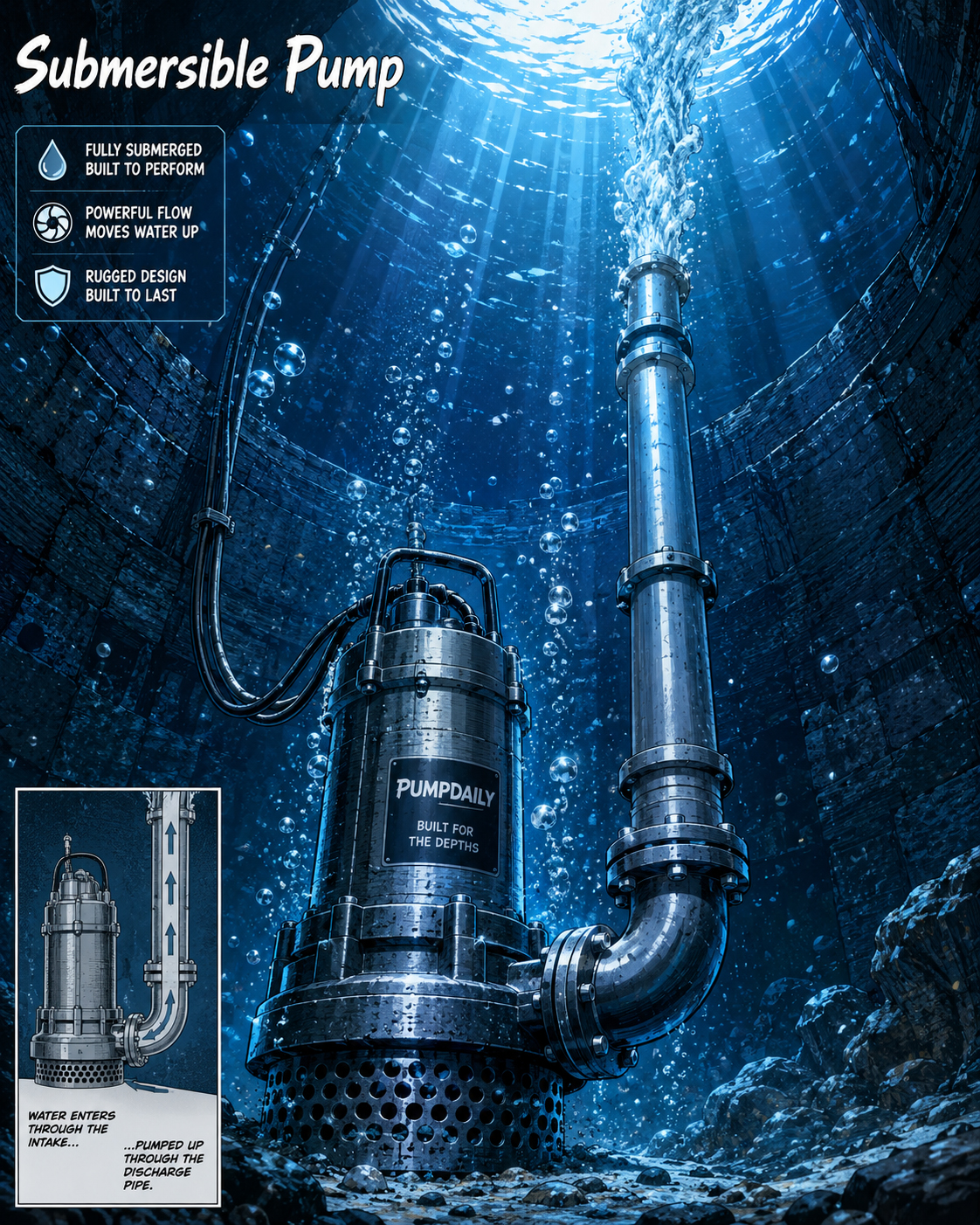
Submersible pump operating underwater in a dramatic PumpDaily scene

Plain-English answer

A submersible pump works from inside the water.

Unlike a surface pump that pulls from outside the water source, a submersible pump sits in the liquid it is moving. The motor and pump assembly are built for wet operation when used as intended.

This can solve suction-lift problems, but it adds other concerns: electrical safety, cable condition, seals, access, solids, corrosion, and correct application.
Underwater work

The pump is below the liquid level.

A submersible pump is placed in a well, basin, sump, tank, pond, pit, or other liquid source. Because the pump is submerged, water can enter directly at the pump intake.

Submerged does not mean invincible. The pump must match the liquid and the job.
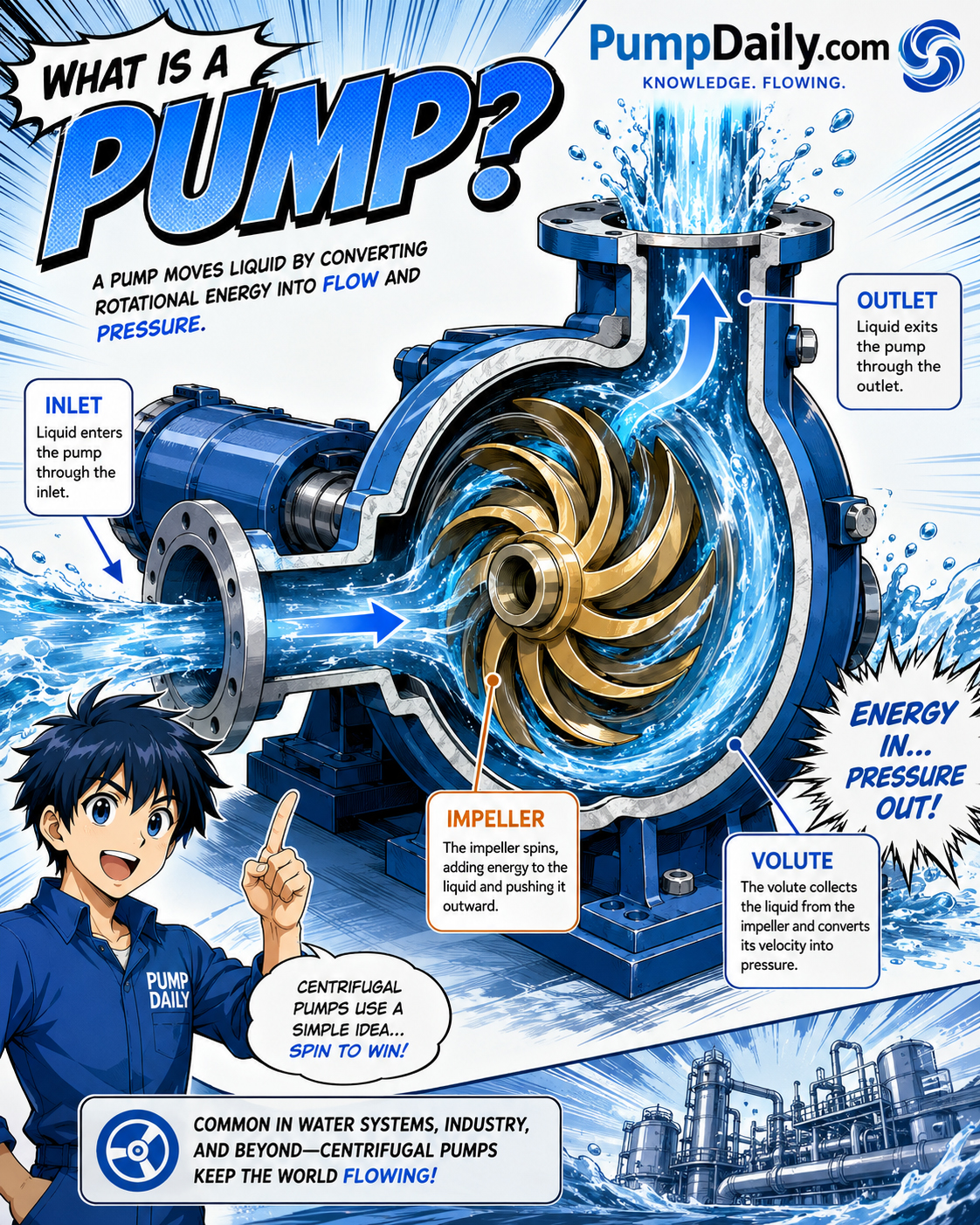
Manga pump diagram showing water flow through a pump
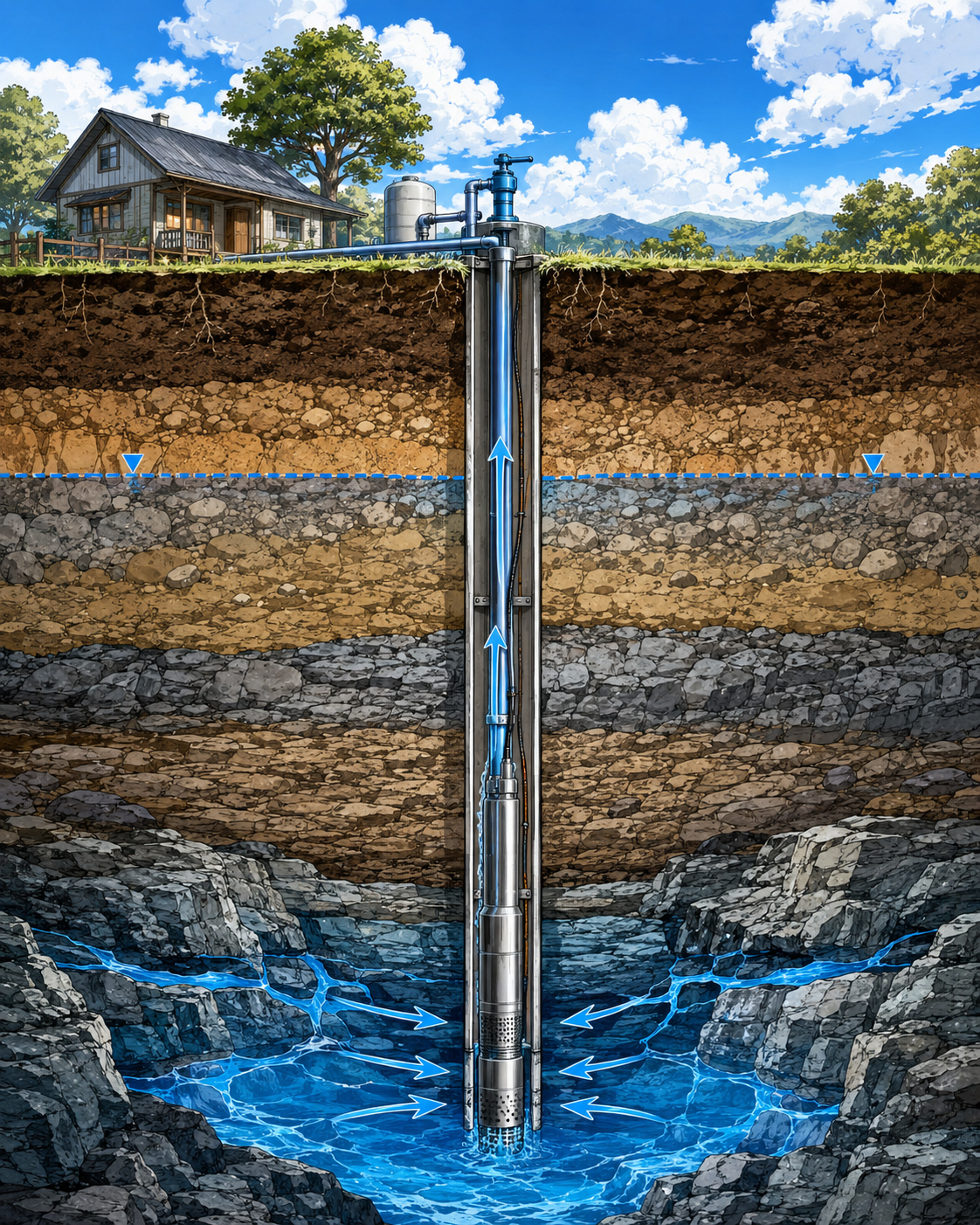
Deep earth cutaway showing a submersible well pump
Wells

Many well pumps are submersible.

In a drilled well, a submersible pump may sit deep below ground and push water upward to a pressure tank, storage tank, or distribution system.

Well depth, pumping water level, recovery rate, wire size, pipe size, pressure, and water quality all matter.

Sumps

Sump pumps are often submersible too.

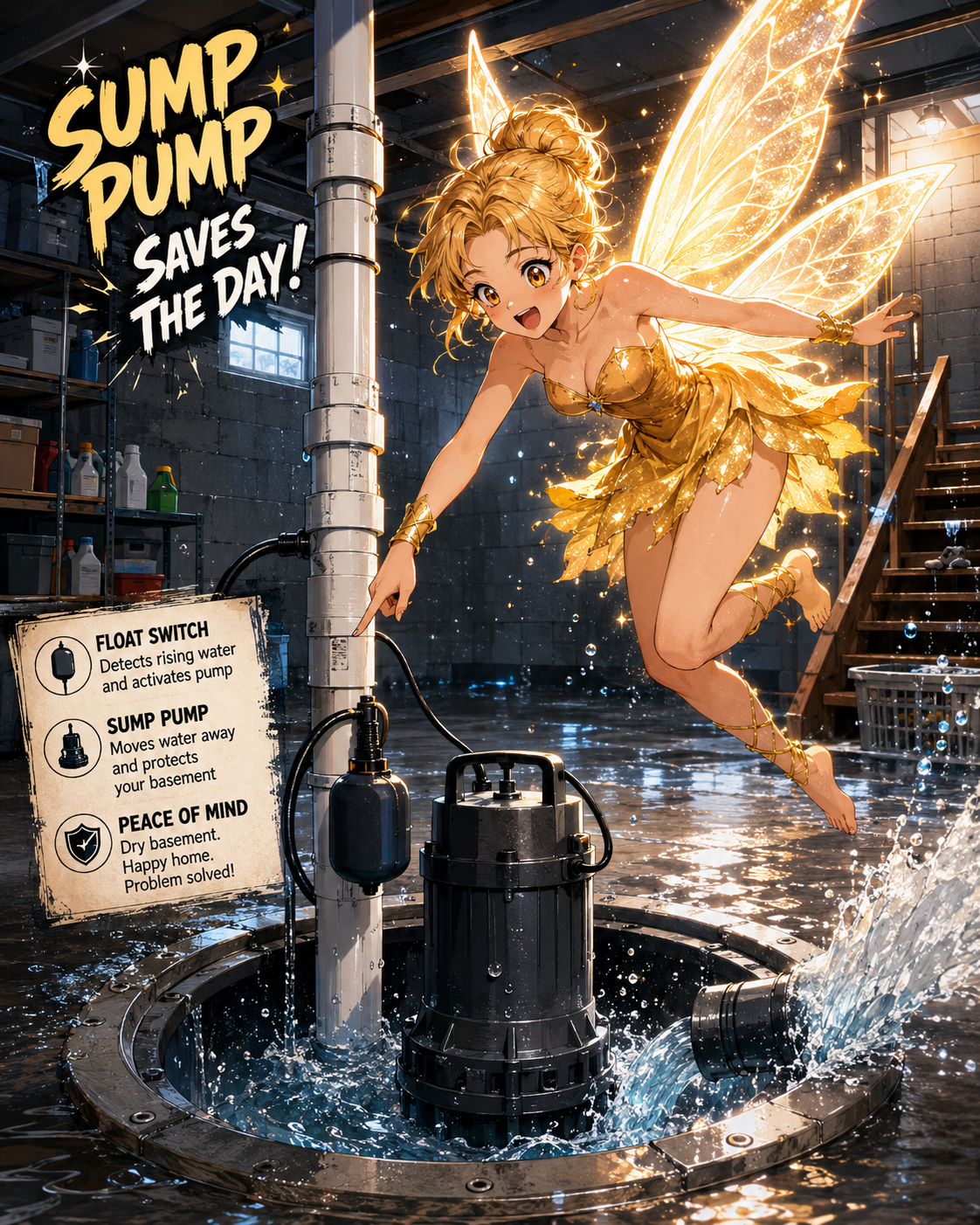
In a basement or drainage pit, a submersible sump pump sits in the basin and turns on when water rises. The float switch, check valve, discharge route, alarm, and backup plan are part of the system.

Submersible sump pump and Float Switch Fairy preventing basement flooding
PumpDaily warning panel with electrical and water safety symbols
Safety

Water and electricity are the main caution.

Submersible pumps combine electrical equipment and wet environments. Cords, seals, grounding, bonding, disconnects, GFCI protection where required, controls, and installation rules matter.

Do not handle energized pump equipment in water. Use qualified help for real electrical work.
Solids

Not every submersible pump handles dirty water.

Clear-water pumps, sump pumps, sewage ejector pumps, grinder pumps, dewatering pumps, and utility pumps are not interchangeable. Solids size, debris, temperature, chemistry, and duty cycle must match the pump.

A pump that handles clean water may clog or fail quickly in dirty water.

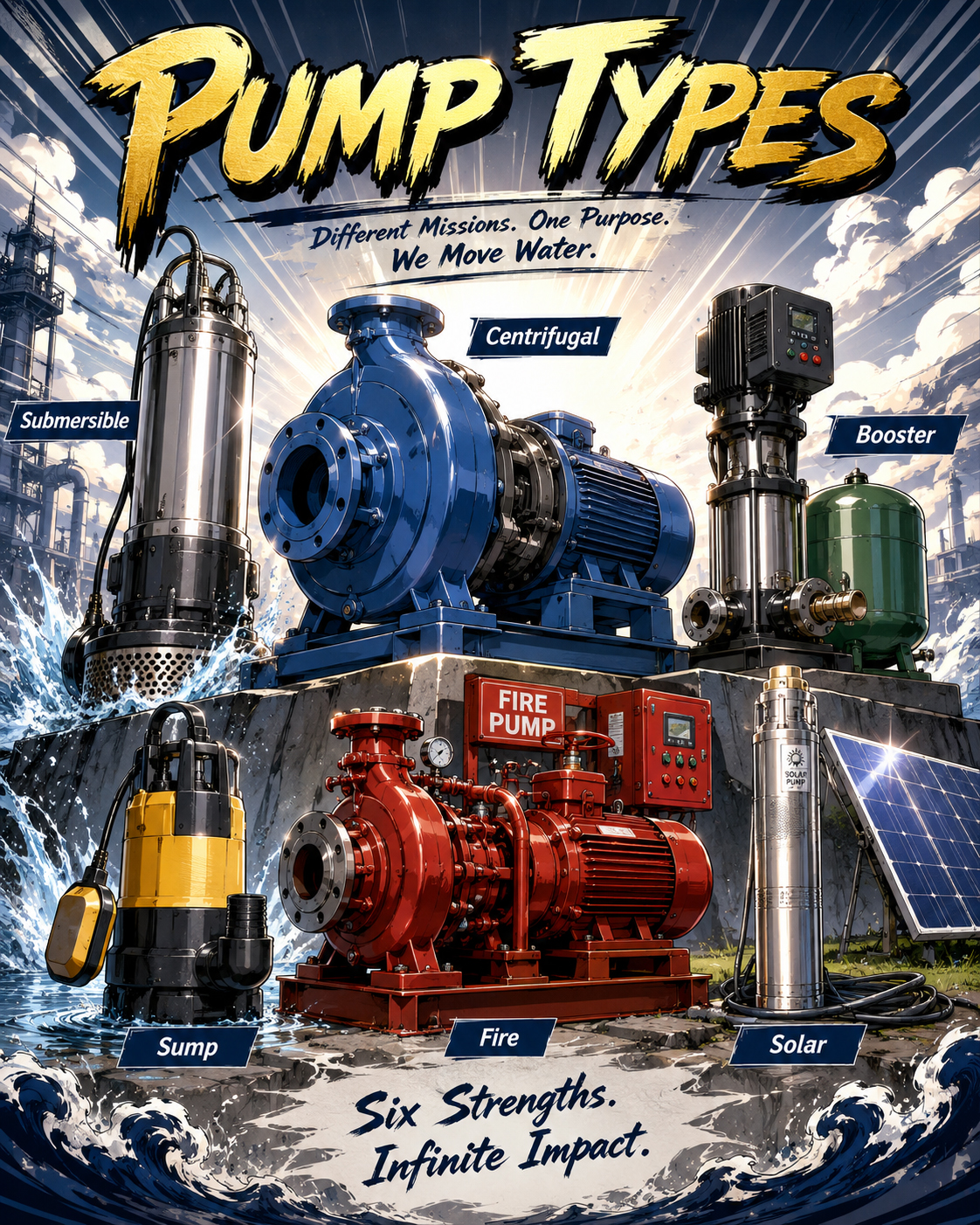
Manga family portrait of different pump types

Submersible pump quick guide

Application Typical job Watch for
Well pump Moves groundwater from a well to a pressure or storage system. Depth, water level, recovery rate, wire, pipe, pressure tank.
Sump pump Removes unwanted water from a pit or basement basin. Float switch, check valve, discharge route, backup power.
Dewatering pump Moves water from pits, excavations, or low areas. Debris, run time, hose size, power, discharge location.
Sewage ejector Moves wastewater where gravity drainage is not available. Solids rating, venting, basin, health risk, code requirements.
Fountain / pond pump Circulates water for display or aeration. Debris screens, service access, continuous duty, water quality.
Utility pump Temporary water movement for small jobs. Not for every liquid, solids, unattended use, or permanent installation.
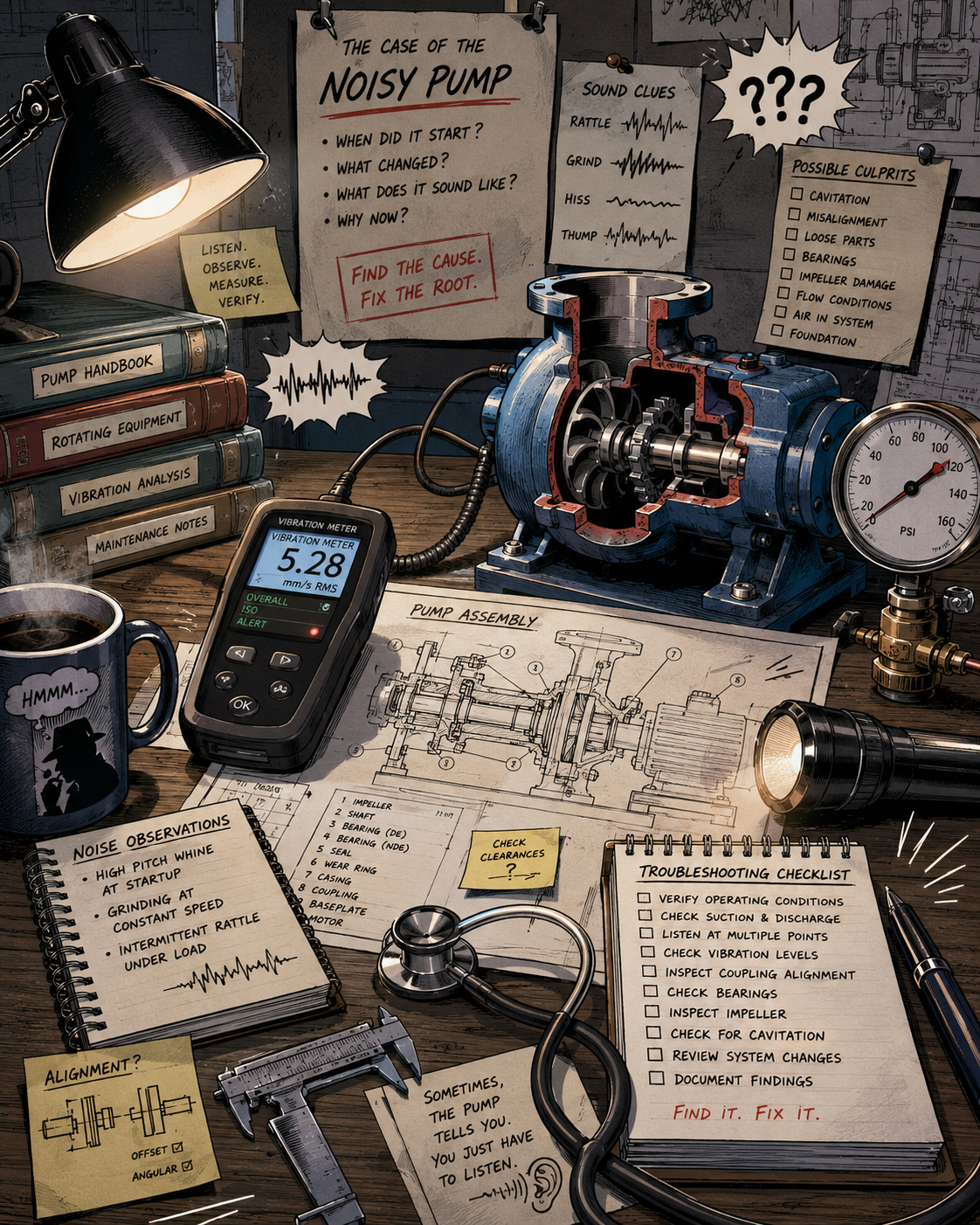
Pump troubleshooting desk with notes and gauges
Troubleshooting

Submersible problems can be hidden.

Because the pump is underwater or down a well, symptoms may show up as low flow, no water, tripped protection, short cycling, strange noise, high power use, or failure to start.

The cause may be electrical, mechanical, hydraulic, control-related, or source-water related.

Hidden equipment needs careful diagnosis, not guesswork.

Keep learning

Related PumpDaily guides

Safety note: Submersible pumps may involve electricity in wet locations, confined spaces, wells, wastewater, contamination, flooding, and code requirements. PumpDaily is educational only.